
Topics for Personality Development: Your Complete Guide

DoReset
May 25, 2026
Developing your personality isn't just about changing who you are; it's about uncovering who you can become. I understand that you might feel stuck in patterns that no longer serve you, struggling with confidence, or searching for ways to communicate more effectively. The journey of personal transformation begins with understanding which topics for personality development deserve your attention and energy. When you focus on the right areas, you create lasting change that ripples through every aspect of your life, from relationships to career success to inner peace.
Understanding the Foundation of Personality Growth
Your personality isn't fixed. It's a dynamic collection of traits, behaviors, and thought patterns that evolve throughout your lifetime. The American Psychological Association provides extensive research showing that personality can shift significantly when you engage in intentional development work.
Key foundational elements include:
- Self-awareness and introspection
- Behavioral pattern recognition
- Value identification and alignment
- Emotional regulation capabilities
- Adaptive thinking strategies
The concept of personality development encompasses multiple dimensions that work together. You don't need to perfect everything at once, but understanding how these pieces fit together helps you build a comprehensive approach to growth.
Why Topics for Personality Development Matter Now
In 2026, the challenges you face require more than surface-level changes. Whether you're navigating career transitions, rebuilding after setbacks, or simply feeling misaligned with your current trajectory, focusing on structured personality development gives you tools that last.
Research shows that intentional personality work leads to improved relationships, greater career satisfaction, and enhanced overall well-being. When you commit to growth in specific areas, you're not just changing behaviors but rewiring the underlying patterns that shape your daily experience.
Emotional Intelligence and Self-Awareness
Emotional intelligence stands as perhaps the most crucial among all topics for personality development. This isn't about suppressing emotions or always staying positive; it's about understanding what you feel, why you feel it, and how to respond constructively.

Developing Your Emotional Vocabulary
Many people struggle because they lack the language to describe their internal experiences accurately. When you expand your emotional vocabulary, you gain precision in understanding yourself.
| Emotional Category | Specific Emotions | Development Focus |
|---|---|---|
| Sadness | Disappointment, grief, loneliness | Recognition and healthy expression |
| Anger | Frustration, resentment, irritation | Channeling into constructive action |
| Fear | Anxiety, worry, insecurity | Building courage and resilience |
| Joy | Contentment, gratitude, excitement | Amplifying positive experiences |
Self-awareness requires consistent practice. Start by checking in with yourself three times daily, naming what you're feeling without judgment. This simple habit transforms how you navigate challenges and make decisions.
Practical Self-Awareness Exercises
- Morning intention setting - Identify one emotion you want to cultivate today
- Midday check-ins - Pause to notice physical sensations and emotional states
- Evening reflection - Review emotional patterns and triggers from your day
- Weekly pattern analysis - Identify recurring emotional themes and their sources
The personal development resources you explore should support this foundational work. Without emotional intelligence, other personality improvements lack the depth needed for lasting transformation.
Communication Skills and Interpersonal Effectiveness
How you communicate shapes every relationship in your life. Among critical topics for personality development, communication skills determine whether you can express your needs, build trust, and navigate conflicts successfully.
Active Listening as a Transformative Practice
Most people listen to respond rather than to understand. When you shift this pattern, your relationships deepen almost immediately.
Active listening components:
- Maintaining present-moment focus without planning your response
- Asking clarifying questions that show genuine curiosity
- Reflecting back what you've heard to ensure understanding
- Noticing non-verbal cues and emotional undertones
- Resisting the urge to interrupt or redirect conversations
These skills don't just improve your relationships with others; they enhance how you relate to yourself. The same quality of attention you give others can transform your internal dialogue.
Assertiveness Without Aggression
Many people swing between passive acceptance and aggressive confrontation. Assertiveness occupies the middle ground where you honor both your needs and others' perspectives.
Learning to set boundaries, express disagreement respectfully, and advocate for yourself becomes easier when you develop emotional intelligence alongside communication skills. These topics for personality development work synergistically, each strengthening the other.
Confidence and Self-Esteem Building
Confidence isn't something you're born with; it's built through small, consistent actions that prove to yourself you're capable. This area of personality development addresses the internal narrative that either propels you forward or holds you back.

Dismantling Limiting Beliefs
Your beliefs about yourself create self-fulfilling prophecies. When you believe you're not good enough, you unconsciously sabotage opportunities. When you believe growth is possible, you take risks that lead to expansion.
Common limiting beliefs and their reframes:
- "I'm not a confident person" → "I'm building confidence through practice"
- "I always fail at this" → "I'm learning what works through experience"
- "People don't like me" → "I'm discovering my authentic community"
- "Change is too hard" → "Change requires patience and consistent effort"
The process of building self-discipline directly impacts your confidence. Each time you follow through on commitments to yourself, you strengthen the trust you have in your own reliability.
Creating Evidence of Capability
Confidence grows when you accumulate proof of your abilities. Start with challenges slightly beyond your current comfort zone, not massive leaps that invite failure.
- Identify one skill you want to develop
- Break it into small, manageable practice sessions
- Track your progress visually (charts, journals, photos)
- Celebrate small wins without diminishing their importance
- Gradually increase difficulty as competence builds
This approach works because it bypasses the need to "feel confident" before taking action. You build confidence through action, not the other way around.
Mindset and Mental Resilience
Your mindset serves as the lens through which you interpret every experience. Among essential topics for personality development, cultivating a growth-oriented, resilient mindset might be the most transformative.
Fixed vs. Growth Mindset in Daily Life
Carol Dweck's research on mindset revolutionized how we understand personality development. People with fixed mindsets believe abilities are innate and unchangeable. Those with growth mindsets see abilities as developable through effort.
| Fixed Mindset Response | Growth Mindset Response |
|---|---|
| "I'm not good at this" | "I'm not good at this yet" |
| "This is too hard" | "This requires a different strategy" |
| "I failed" | "I learned what doesn't work" |
| "They're naturally talented" | "They've practiced more than I have" |
Shifting your mindset doesn't happen through positive thinking alone. It requires catching yourself in fixed mindset moments and consciously reframing them. The work of changing your mindset becomes easier when you approach it with compassion rather than criticism.
Building Mental Resilience Through Adversity
Resilience isn't about avoiding challenges; it's about developing the capacity to recover from them. The VA's personal development overview emphasizes resilience as a cornerstone of well-being.
Resilience-building practices:
- Reframing setbacks as data rather than failures
- Maintaining perspective during difficult periods
- Developing multiple coping strategies for stress
- Building support networks before you need them
- Practicing self-compassion during struggles
When you strengthen mental resilience, other topics for personality development become more accessible because you're not derailed by inevitable obstacles.
Goal Setting and Personal Vision
Without clear direction, personal development efforts scatter. Effective goal setting provides the framework that transforms random self-improvement into intentional transformation.
Creating Your Personal Development Roadmap
The most effective personal growth plan balances aspiration with realism. You need goals that stretch you while remaining achievable enough to maintain motivation.
The SMART-ER framework:
- Specific - Define exactly what you want to develop
- Measurable - Identify how you'll track progress
- Achievable - Ensure goals match your current resources
- Relevant - Align goals with your core values
- Time-bound - Set realistic deadlines
- Evaluated - Schedule regular progress reviews
- Revised - Adjust based on learning and circumstances
Your goals should address multiple topics for personality development simultaneously. For example, joining a public speaking group develops communication skills, confidence, and resilience all at once.
Aligning Daily Actions With Long-term Vision
The gap between who you are and who you want to become closes through daily actions that align with your vision. Grand goals mean nothing without the small, consistent behaviors that build toward them.
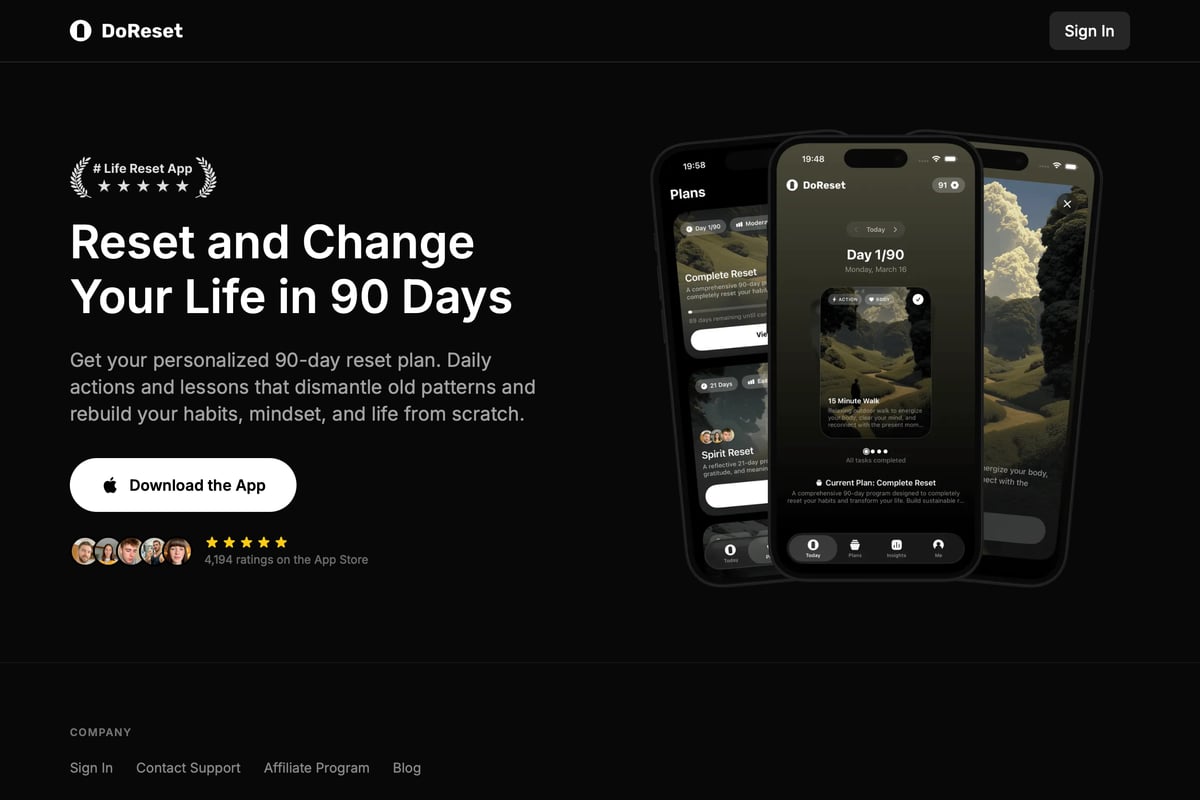
When you're working on personality development, structure becomes your ally. The DoReset mobile app provides exactly this kind of structure through personalized 90-day reset plans that break down transformation into manageable daily actions and lessons. Rather than overwhelming yourself with vague aspirations, you receive specific guidance that dismantles old patterns and builds new ones systematically.
Social Skills and Relationship Building
Humans are inherently social creatures, and your ability to navigate social situations significantly impacts your quality of life. Social skills represent another crucial area among topics for personality development that deserves focused attention.

Developing Genuine Empathy
Empathy goes beyond sympathy or feeling sorry for someone. It's the capacity to understand another person's experience from their perspective, even when you've never faced similar circumstances.
Empathy development practices:
- Listening to diverse stories and perspectives without judgment
- Asking questions about others' experiences with genuine curiosity
- Noticing when you're projecting your experiences onto others
- Practicing perspective-taking in everyday situations
- Volunteering with populations different from your own
Empathy transforms relationships because people feel truly seen and understood around you. This creates deeper connections that enrich your life immeasurably.
Navigating Conflict Constructively
Conflict is inevitable in any relationship, but destructive conflict patterns stem from underdeveloped social skills. Learning to disagree without damaging relationships requires specific techniques.
- Address issues early before resentment builds
- Use "I" statements that own your feelings
- Focus on specific behaviors rather than character attacks
- Listen to understand the other person's underlying needs
- Look for solutions that honor both perspectives
- Know when to agree to disagree respectfully
These skills apply equally to professional relationships, friendships, family dynamics, and romantic partnerships. When you master constructive conflict navigation, you stop avoiding difficult conversations that need to happen.
Time Management and Productivity
How you manage your time reflects your priorities and values. This practical dimension of topics for personality development determines whether your growth intentions translate into actual progress.
The Myth of Work-Life Balance
Balance suggests equal distribution, but life rarely works that way. Different seasons require different allocations of time and energy. Instead of balance, aim for alignment between how you spend time and what matters most to you.
| Time Trap | Aligned Alternative |
|---|---|
| Constant availability | Boundary-protected focus time |
| Reactive scheduling | Proactive priority blocking |
| Busy-ness as identity | Intentional rest and renewal |
| Multitasking everything | Single-tasking with presence |
The way you plan your day either supports or undermines all other personality development work. You can't build new communication skills if you never create time to practice them.
Energy Management Over Time Management
You have the same 24 hours as everyone else, but energy varies dramatically based on sleep, nutrition, stress levels, and how you structure your days.
Energy optimization strategies:
- Identify your peak performance hours and protect them for important work
- Schedule challenging tasks during high-energy periods
- Build in genuine breaks rather than powering through
- Eliminate energy drains like toxic relationships or meaningless commitments
- Align tasks with your natural rhythms and preferences
When you manage energy effectively, you have capacity for the consistent effort that personality development requires.
Adaptability and Continuous Learning
The world changes rapidly, and rigid personalities struggle while adaptable ones thrive. Among all topics for personality development, adaptability might be the most crucial for long-term success and satisfaction.
Cultivating Intellectual Humility
Intellectual humility means recognizing the limits of your knowledge and remaining open to new information, even when it challenges your existing beliefs.
Signs of intellectual humility:
- Saying "I don't know" without embarrassment
- Changing your mind when presented with better evidence
- Seeking out perspectives that differ from your own
- Asking questions rather than defending positions
- Acknowledging when you're wrong without shame
This quality makes continuous learning possible because you're not invested in being right; you're invested in understanding truth more clearly.
Building a Learning Practice
Learning isn't confined to formal education. The most effective learners create systems for acquiring and applying new knowledge throughout their lives.
- Identify knowledge gaps in areas that interest you or impact your goals
- Curate diverse sources including books, podcasts, courses, and mentors
- Apply learning immediately through practice and experimentation
- Teach others to solidify your understanding
- Reflect regularly on how new knowledge changes your perspective
The intersection of personal growth and development with continuous learning creates compound growth over time. Each new skill or insight builds on previous learning, accelerating your development.
Stress Management and Self-Care
You can't build a better personality on a foundation of burnout and depletion. Stress management and self-care aren't luxuries; they're prerequisites for sustainable growth across all topics for personality development.
Redefining Self-Care Beyond Bubble Baths
Real self-care means making choices that honor your long-term well-being, even when they're uncomfortable in the moment. Setting boundaries is self-care. Ending toxic relationships is self-care. Asking for help is self-care.
Comprehensive self-care categories:
- Physical: Sleep, nutrition, movement, medical care
- Emotional: Therapy, journaling, emotional expression, healthy relationships
- Mental: Learning, creative pursuits, problem-solving, intellectual stimulation
- Spiritual: Meaning-making, value alignment, transcendent experiences, purpose
- Social: Community connection, quality relationships, belonging, contribution
Notice that effective self-care addresses multiple dimensions simultaneously. A hiking trip with close friends provides physical activity, social connection, and potentially spiritual renewal all at once.
Developing Healthy Stress Response Patterns
Stress itself isn't the problem; chronic, unmanaged stress damages your health and personality. Building healthy response patterns protects you from stress-related harm.
| Unhealthy Stress Response | Healthy Alternative |
|---|---|
| Substance use/abuse | Movement, meditation, connection |
| Social withdrawal | Selective vulnerability with trusted people |
| Emotional suppression | Feeling processing and expression |
| Perfectionism | Self-compassion and good-enough standards |
| Overwork | Strategic rest and recovery |
When you develop healthier stress responses, you create space for personality growth rather than just surviving crisis to crisis. This connects directly to rebooting your life with sustainable patterns instead of burnout cycles.
Values Clarification and Authentic Living
Living authentically means aligning your actions with your core values. This foundational aspect of topics for personality development determines whether your growth feels genuine or performative.
Identifying Your True Values
Many people live by values they've absorbed from family, culture, or society without examining whether those values actually resonate. Values clarification helps you distinguish between inherited and authentic values.
Values exploration process:
- List values that feel important (honesty, creativity, security, adventure, etc.)
- Identify where each value originated (family, experience, culture, intuition)
- Rank values by how they actually show up in your current life
- Compare current rankings with ideal rankings
- Notice the gaps and what they reveal
This exercise often surfaces uncomfortable truths about misalignment between stated and lived values. That discomfort becomes the starting point for authentic change.
Closing the Integrity Gap
Integrity means your words, actions, and values align consistently. The integrity gap is the distance between who you say you are and how you actually behave.
Common integrity gaps:
- Valuing health while maintaining destructive habits
- Prioritizing relationships while being constantly unavailable
- Claiming honesty while avoiding difficult truths
- Wanting growth while resisting necessary changes
Closing these gaps requires both honest self-assessment and committed action. You can't think your way into integrity; you must act your way there through aligned choices, even when they're difficult.
Transforming your personality isn't about becoming someone else; it's about becoming the fullest version of yourself by developing the skills, mindsets, and habits that unlock your potential. These topics for personality development work together, creating a comprehensive approach to growth that touches every area of your life. If you're ready to stop dabbling in scattered self-improvement and commit to structured, sustainable transformation, DoReset provides the personalized 90-day framework that makes lasting change possible through daily actions designed specifically for your journey.