
Daily Actions That Transform Your Life in 90 Days

Doreset
March 27, 2026
We all know what we should do. Eat better. Exercise more. Practice gratitude. Yet knowing and doing remain worlds apart. The gap between who we are and who we want to become isn't bridged by motivation or inspiration alone. It's built through consistent daily actions that accumulate into transformation. When you're stuck in patterns that no longer serve you, the thought of changing everything feels overwhelming. But here's the truth: transformation doesn't require a complete overhaul on day one. It requires the right daily actions, repeated with intention, that slowly dismantle old patterns and rebuild something stronger.
Understanding the Power of Daily Actions
Daily actions are the smallest units of change, yet they carry the most weight. Think of them as the individual bricks that construct the building of your new life. One brick doesn't make a house, but placed consistently, those bricks create an unshakable foundation.
The science behind this is compelling. Research shows that habits form through consistent repetition, typically taking anywhere from 18 to 254 days depending on the complexity. The key isn't perfection but persistence. When you commit to specific daily actions, you're not just completing tasks. You're rewiring neural pathways, building new identity markers, and creating evidence for yourself that change is possible.
Why Small Actions Create Big Changes
Your brain resists dramatic change. It perceives sudden shifts as threats to survival, triggering stress responses that make new behaviors feel uncomfortable. But small daily actions slip under the radar of your brain's resistance mechanisms.
Consider this comparison:
| Overwhelming Goal | Manageable Daily Action |
|---|---|
| "Get in shape" | 10 minutes of movement |
| "Become more productive" | Complete one priority task before checking email |
| "Change my mindset" | Write three things you handled well today |
| "Build better relationships" | Send one meaningful message to someone |
The daily actions in the right column feel achievable. They don't trigger overwhelm. Yet completed consistently over 90 days, they create the transformations described in the left column.

Designing Your Daily Actions Framework
Not all daily actions carry equal weight. The ones that create lasting transformation share specific characteristics. They're concrete, measurable, and aligned with the identity you're building rather than the habits you're trying to break.
The Three Pillars of Effective Daily Actions
Specificity eliminates decision fatigue. Vague intentions like "be more mindful" or "work on myself" rarely translate into action. Instead, define exactly what you'll do, when, and how. "Meditate for 5 minutes immediately after making morning coffee" removes all guesswork.
Measurability creates accountability. When you can track whether you completed an action, you build momentum through visible progress. Productive people understand that what gets measured gets managed. Your daily actions should have clear completion criteria.
Identity alignment sustains motivation. The most powerful daily actions reinforce who you're becoming. If you're rebuilding your life as someone who prioritizes health, your daily actions should make you feel like a healthy person, not someone suffering through a diet.
Building Your Personal Reset Plan
Creating a sustainable framework for daily actions requires understanding your current patterns and designing replacement behaviors. Start by identifying the three areas of your life causing the most friction. Maybe it's your energy levels, your relationships, or your sense of purpose.
For each area, design 1-2 daily actions that directly address the root pattern:
- Energy: Move your body for 15 minutes, sleep by 10:30 PM, eat protein within an hour of waking
- Relationships: Have one device-free conversation, express appreciation to someone, set one boundary
- Purpose: Spend 20 minutes on your priority project, journal one insight, take one small risk
The DoReset approach recognizes that rebuilding your life requires this kind of structured daily framework. Rather than leaving transformation to chance, you receive specific daily actions tailored to where you are in your journey.

The 90-Day Daily Actions Timeline
Transformation unfolds in phases. Understanding what to expect during each phase helps you maintain commitment when things get difficult, because they will.
Days 1-30: The Resistance Phase
The first month is about establishing baseline consistency. Your old patterns will fight back hard during this phase. You'll forget. You'll rationalize skipping days. You'll question whether these small daily actions really matter.
What to focus on:
- Completion over perfection
- Building the tracking habit itself
- Identifying your specific resistance patterns
- Adjusting actions that feel genuinely unsustainable
- Celebrating small wins
During this phase, your goal isn't transformation but consistency. If you complete 70% of your daily actions, you're succeeding. The evidence you're gathering matters more than perfect execution.
Days 31-60: The Integration Phase
Something shifts around week five. Daily actions start feeling less like obligations and more like natural rhythms. You begin seeing tangible results. Your energy improves. Relationships feel different. The fog lifts slightly.
This is both exciting and dangerous. Excitement can lead to overcommitment, adding too many daily actions too quickly. The habits forming now are fragile. They need protection and reinforcement, not expansion.
| Week | Focus Area | Key Milestone |
|---|---|---|
| 5-6 | Habit stacking | Link new actions to established ones |
| 7-8 | Pattern recognition | Notice what triggers old behaviors |
| 9 | Course correction | Adjust actions based on data |
Successful entrepreneurs know that this middle phase determines long-term success. It's where consistency becomes identity.
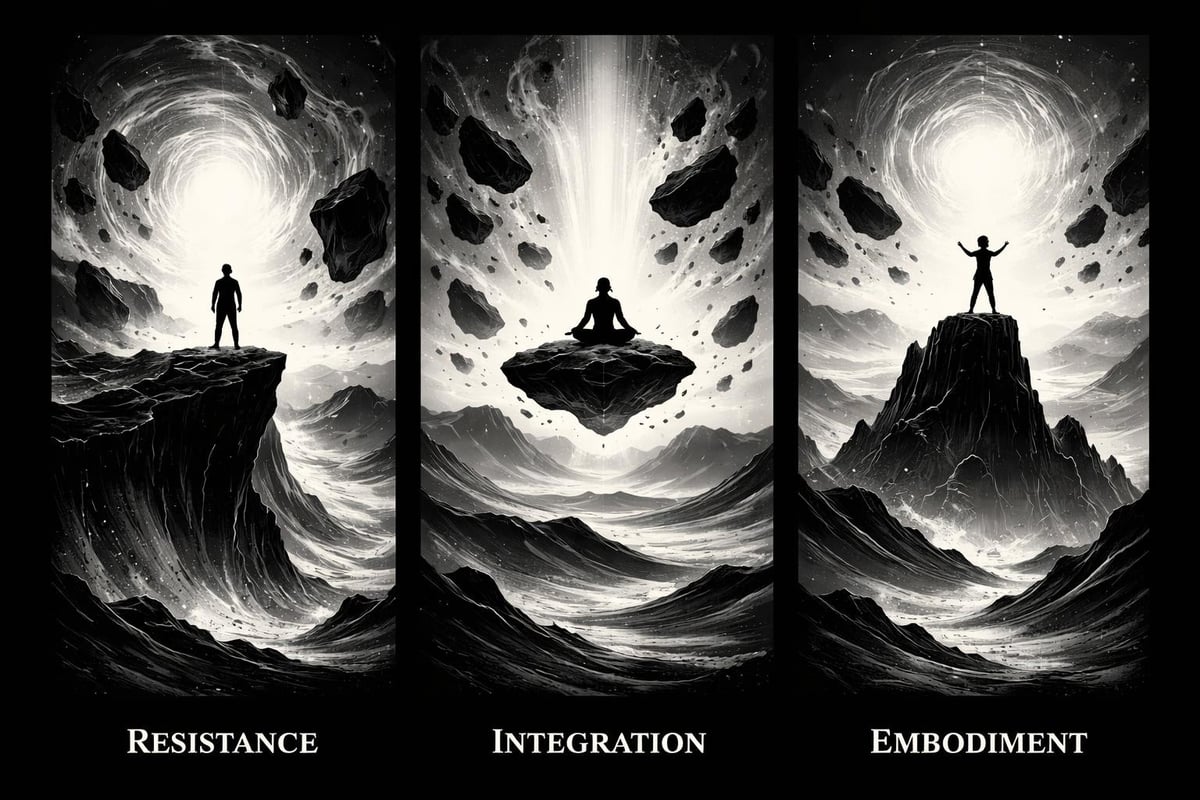
Days 61-90: The Embodiment Phase
By day 60, you're not the same person who started this journey. Your daily actions have created evidence of change. Now these behaviors become non-negotiable parts of who you are.
The final month focuses on:
- Deepening existing practices rather than adding new ones
- Handling disruptions without completely derailing
- Planning beyond the reset to maintain momentum
- Celebrating transformation and acknowledging growth
This is where changing your mindset becomes permanent. The daily actions you've practiced for 60+ days have created new neural pathways, new beliefs about yourself, and new evidence of your capabilities.
Common Obstacles and How to Navigate Them
Even with the best framework, you'll encounter challenges. Understanding them ahead of time gives you the tools to navigate rather than surrender.
The Perfection Trap
Missing one day feels like failure. That feeling leads to missing two days, then a week, then abandoning the entire framework. This all-or-nothing thinking sabotages more transformations than any other obstacle.
The solution: Build recovery protocols into your plan. When you miss a day, you have a specific action to get back on track. Maybe it's completing one keystone habit. Maybe it's recommitting in writing. The protocol matters less than having one.
Decision Fatigue
Even small daily actions require decisions. When you're tired or stressed, those decisions feel impossible. You default to old patterns because they require zero thought.
The solution: Automate everything possible. Same time, same place, same sequence. Highly productive people understand that willpower is finite. Your environment and routines should make daily actions the path of least resistance.
The Plateau Effect
Progress isn't linear. Some weeks you'll feel unstoppable. Others, you'll feel like you're moving backward despite maintaining your daily actions. This is normal. Transformation happens beneath the surface before it becomes visible.
Creating Sustainable Daily Actions Systems
Sustainability requires systems, not just motivation. Here's how to build daily actions frameworks that last beyond the initial 90 days.
The Morning Anchor Routine
Most transformative daily actions cluster in the morning because you have maximum willpower and minimum interruptions. Design a sequence of 3-5 actions that set the tone for your entire day:
- Wake at consistent time
- Hydrate immediately
- Move your body
- Consume something that nourishes your mind
- Review your day's intentions
This isn't about becoming a "morning person." It's about planning your day with intentional actions that reinforce your new identity.
The Evening Reflection Practice
Daily actions without reflection lack direction. Spend 5-10 minutes each evening reviewing what worked, what didn't, and what you're learning about yourself. This isn't journaling for journaling's sake. It's data collection for continuous improvement.
Key reflection questions:
- Which daily actions energized me today?
- Where did I experience resistance?
- What old pattern tried to resurface?
- What evidence did I create that I'm changing?
- What one adjustment would make tomorrow better?
The Weekly Reset
Sunday evenings (or your chosen day) deserve a longer planning session. Review your week's completion rate, adjust actions that aren't serving you, and recommit to your transformation. Research shows that weekly reviews significantly improve adherence to daily habits.
Measuring Progress Beyond Completion Rates
Checking boxes feels good, but true transformation runs deeper. Your daily actions should create measurable changes in three dimensions.
Behavioral Evidence
What are you doing now that you couldn't or wouldn't do 30 days ago? Maybe you're having difficult conversations. Maybe you're saying no to commitments that drain you. Maybe you're taking risks that previously paralyzed you. These behavioral shifts prove your daily actions are working.
Emotional Patterns
How you feel throughout the day provides crucial feedback. Are you experiencing more moments of calm? Does stress recovery happen faster? Do you notice yourself responding rather than reacting? Track emotional patterns alongside completion rates.
Identity Shifts
The ultimate measure is identity change. When someone asks about you, what do you say? When you introduce yourself, what descriptors emerge? Resetting your mindset means the story you tell about yourself changes fundamentally.
| Old Identity | Daily Actions | New Identity |
|---|---|---|
| "I'm not a morning person" | Wake, hydrate, move x 60 days | "I start my days with intention" |
| "I'm too busy for self-care" | Non-negotiable boundaries x 60 days | "I prioritize what matters" |
| "I'm stuck in my ways" | Learn one new thing daily x 60 days | "I'm constantly evolving" |
Making Daily Actions Non-Negotiable
The difference between people who transform and those who don't comes down to one thing: non-negotiability. Your daily actions need to become as automatic as brushing your teeth.
Environment Design
Your physical and digital environments should make daily actions effortless and old patterns difficult. If morning movement is a daily action, lay out your clothes the night before. If screen-free evenings matter, charge your phone in another room. Boosting productivity often depends on environment more than willpower.
Accountability Structures
External accountability accelerates internal commitment. Whether it's a check-in partner, a tracking app, or a community going through similar transformations, having witnesses to your daily actions creates healthy pressure.
When you're engaged in rebooting your life, isolation makes every challenge feel insurmountable. Connection reminds you that struggle is part of the process, not evidence of failure.
The Identity Statement Practice
Each morning, before beginning your daily actions, state aloud who you're becoming. "I am someone who honors commitments to myself." "I am someone who chooses growth over comfort." These aren't affirmations disconnected from reality. They're declarations supported by yesterday's completed daily actions and today's intentions.

Beyond the 90 Days
What happens when your reset plan completes? The daily actions you've established become the foundation for continuous evolution. You don't stop. You build.
Some daily actions become so integrated they require no conscious effort. Others you'll retire as new priorities emerge. The skill you've developed isn't just habit formation. It's the ability to identify what needs changing and design daily actions to create that change.
This is the true gift of lifelong lessons learned through daily practice. You become someone who doesn't wait for circumstances to change. You become someone who changes circumstances through consistent, intentional daily actions.
The next chapter of your life won't be written in moments of inspiration. It will be written in the daily actions you commit to when inspiration fades. That's where real transformation lives.
The gap between who you are and who you want to become closes one day at a time, through small actions repeated with unwavering commitment. If you're ready to stop waiting for change and start creating it systematically, DoReset provides the personalized 90-day framework with specific daily actions designed for your unique transformation journey. Your new patterns, mindset, and life are waiting on the other side of consistent action.