
How to Plan Your Day: A Compassionate Guide

Doreset
March 17, 2026
We've all been there: staring at a mountain of tasks, feeling paralyzed by where to start, and ending the day wondering where all the time went. The truth is, you're not failing at productivity. You're human. And when you plan your day with compassion instead of pressure, everything shifts. This isn't about squeezing more into your hours or becoming a productivity machine. It's about creating space for what truly matters while honoring your energy, your limitations, and your very real need for rest and renewal.
Understanding Why Traditional Planning Fails You
Most planning advice treats you like a robot that should execute tasks with mechanical precision. But you have emotions, energy fluctuations, unexpected challenges, and days when everything feels harder than it should.
Traditional planning methods often ignore these realities. They demand perfection, leaving no room for the messy, beautiful complexity of being human. When you inevitably fall short of an impossible standard, you feel like a failure, even though the system itself was designed to fail you.
The Energy-First Approach
Before you plan your day, you need to understand your energy patterns. Some people wake up ready to conquer the world. Others need slow mornings to ease into productivity.
Consider these energy realities:
- Your peak focus hours (often 2-4 hours after waking)
- Your natural energy dips (commonly mid-afternoon)
- Tasks that drain you versus those that energize you
- How sleep, food, and movement affect your capacity
When you align your tasks with your energy levels, planning becomes an act of self-respect rather than self-punishment.

Creating Your Compassionate Planning Foundation
The foundation of how you plan your day starts the night before, not in the chaos of morning. This simple shift removes decision fatigue when you're least equipped to handle it.
The Evening Reset Ritual
Spend 10-15 minutes before bed reviewing your day with kindness. What worked? What didn't? No judgment, just observation.
- Brain dump everything on your mind onto paper
- Identify your non-negotiables for tomorrow (usually 1-3 items)
- Choose one thing that would make tomorrow feel successful
- Prepare your environment (clothes, workspace, breakfast prep)
- Set a realistic wake-up time that honors your sleep needs
This isn't about rigid control. It's about reducing morning friction so you can start with intention instead of reaction. Developing a reset mindset helps you approach each evening as a fresh opportunity rather than carrying yesterday's stress forward.
| Evening Activity | Time Needed | Benefit |
|---|---|---|
| Brain dump | 3-5 minutes | Clears mental clutter |
| Identify priorities | 2-3 minutes | Creates focus |
| Environment prep | 5-7 minutes | Reduces morning decisions |
| Sleep planning | 1 minute | Ensures rest |
The Morning Anchor: Starting With Presence
How you begin your day sets the emotional tone for everything that follows. Rushing creates anxiety. Presence creates possibility.
Your morning doesn't need Instagram-worthy aesthetics or a two-hour routine. It needs authenticity and gentleness.
Building Your Sustainable Morning
Start with just 15 minutes of protected time before checking your phone or email. This is your anchor.
Simple morning elements:
- Drink water (your body is dehydrated)
- Move gently (stretch, walk, yoga)
- Breathe intentionally (even three deep breaths count)
- Set an intention (one word or phrase for your day)
These aren't productivity hacks. They're reminders that you're a whole person, not just a task-completion machine. When you plan your day from this grounded place, your choices reflect your values instead of your anxiety.
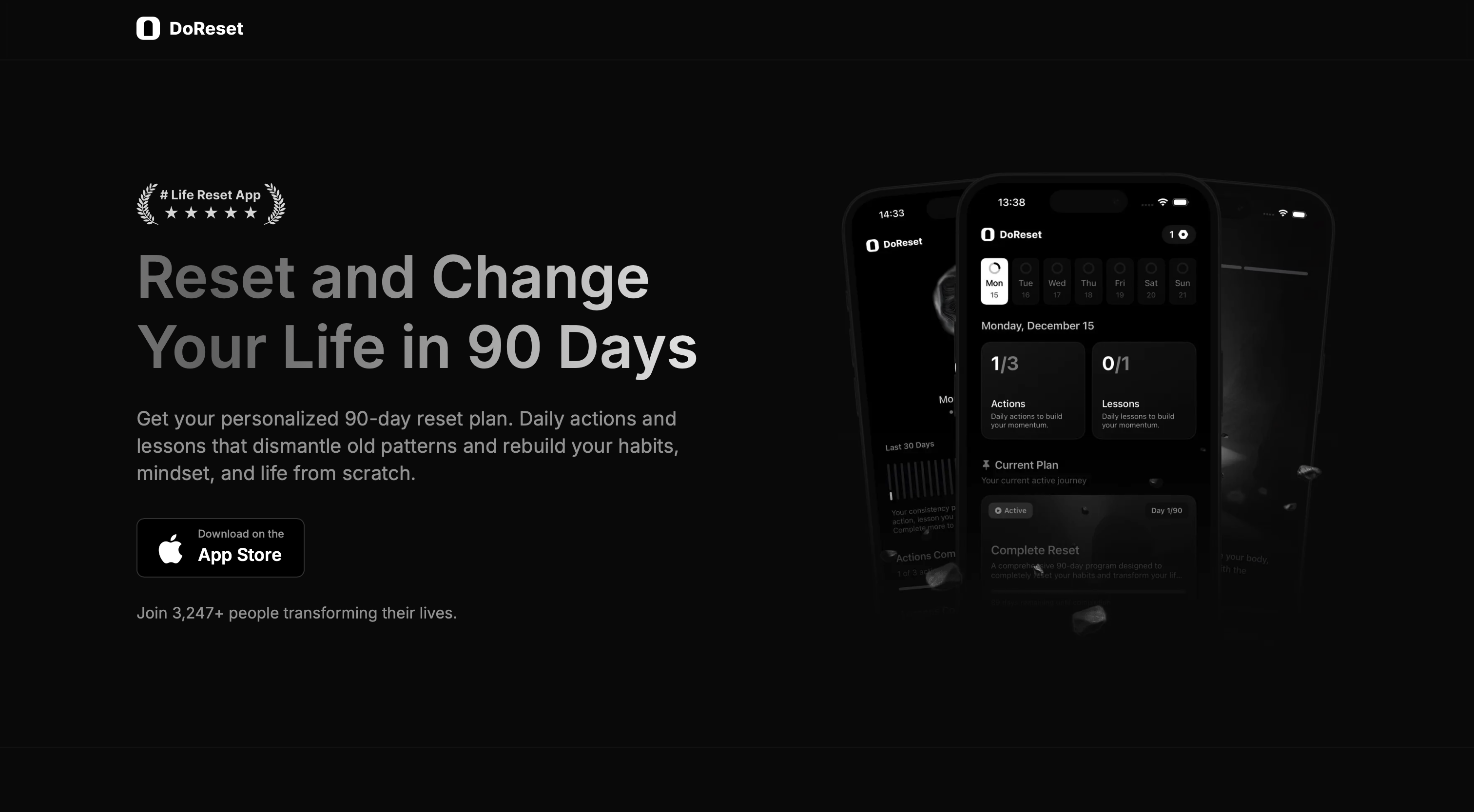
The DoReset mobile app guides you through personalized daily actions that build these foundational habits gradually, meeting you exactly where you are in your journey. Through structured 90-day cycles, you learn to dismantle reactive patterns and rebuild intentional routines that actually stick.
Prioritization Without Overwhelm
The hardest part of planning isn't writing tasks down. It's deciding what deserves your limited energy and time. Everything feels urgent when you're overwhelmed.
The Three-Tier System
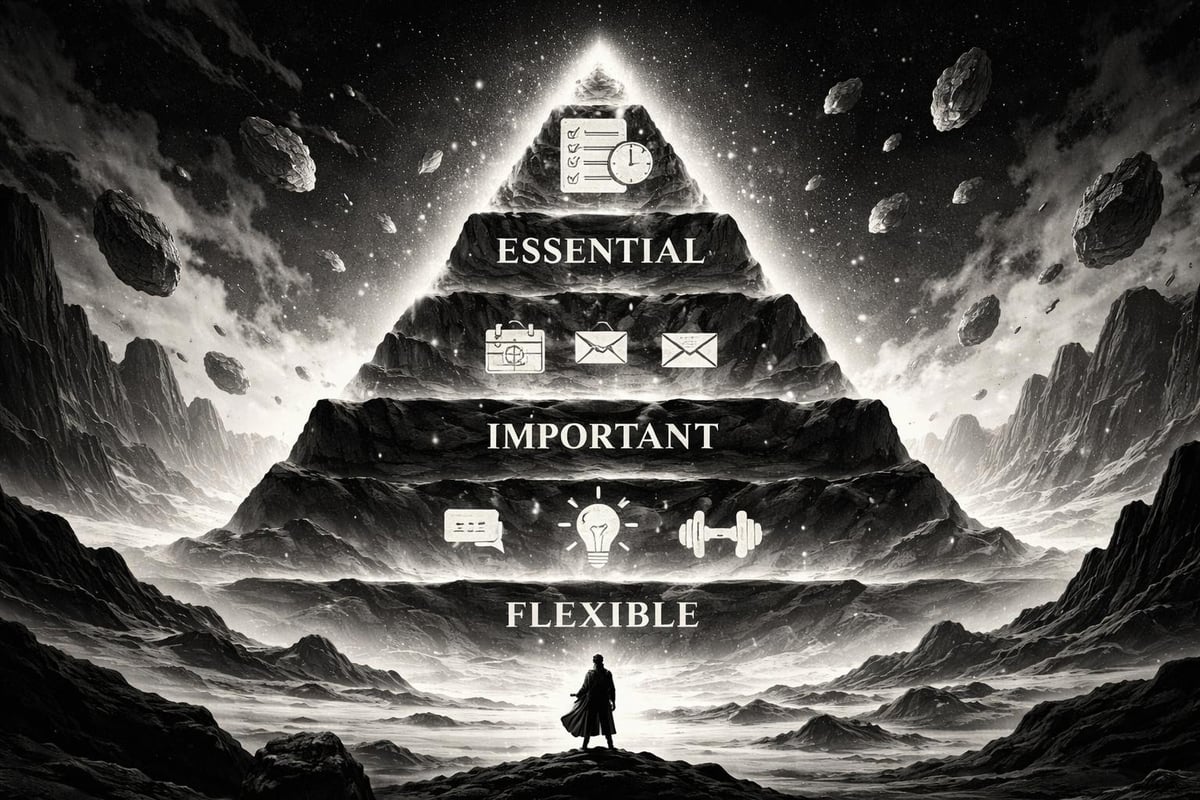
Organize tasks into three categories, and give yourself permission to focus on just the first tier:
Tier 1: Essential (1-3 tasks) These are non-negotiable items that genuinely move your life forward. If you accomplish nothing else, these matter most.
Tier 2: Important (2-4 tasks) These should happen today but won't derail everything if they slide to tomorrow.
Tier 3: Flexible (ongoing list) These are future tasks, ideas, or things that can wait. Just capturing them removes mental pressure.
This system prevents the paralysis that comes from treating every task equally. Not everything deserves your best energy. Some things can wait. And that's not laziness, it's wisdom.
Time Blocking With Flexibility
Time blocking gets a bad reputation because people implement it rigidly. "I'll write from 9-11am" becomes a source of shame when life interrupts your plan.
Compassionate time blocking builds in buffer zones and acknowledges that interruptions are normal, not failures.
Creating Realistic Blocks
Instead of scheduling every minute, create themed blocks with breathing room:
- Deep work block (your peak energy hours, 2-3 hours)
- Administrative block (emails, calls, scheduling, 1-2 hours)
- Creative or project block (medium energy required, 1-2 hours)
- Buffer blocks (30-60 minutes between major blocks)
- Reflection time (15 minutes end of day)
The Pomodoro Technique fits beautifully within these blocks, offering 25-minute focus periods with short breaks that honor your attention span rather than fighting it.
| Block Type | Ideal Timing | Energy Level | Buffer Needed |
|---|---|---|---|
| Deep work | Morning | High | 15 min after |
| Administrative | Mid-morning | Medium | 10 min after |
| Creative | Afternoon | Medium | 15 min after |
| Light tasks | Late afternoon | Low | Flexible |
When a block doesn't go as planned, adjust without self-criticism. The plan serves you; you don't serve the plan.
Managing Digital Distractions Gently
You're not weak for getting distracted. Technology is literally designed to capture your attention. Billion-dollar companies employ psychologists to make their apps irresistible.
Practical Boundaries That Work
Instead of demanding superhuman willpower, create an environment that supports focus:
- Phone in another room during deep work blocks
- Specific times for checking email (perhaps twice daily)
- Notification settings that silence non-urgent apps
- Browser extensions that limit social media access
- Designated "distraction time" so you're not constantly resisting
Limiting social media usage isn't about punishment. It's about protecting your attention for things you've said matter to you.
Notice I didn't say "eliminate all distractions." That's unrealistic and sets you up for failure. Instead, when you plan your day, include 15-30 minutes for guilt-free scrolling or browsing. Permission removes the forbidden-fruit appeal.
The Mid-Day Reset
Around 2-3pm, most people hit an energy slump. Traditional advice says "power through." Compassionate planning says "pause and reset."
This five-minute practice prevents afternoon chaos:
Quick mid-day check-in:
- How am I feeling physically and emotionally?
- What have I accomplished? (Celebrate it!)
- What still matters today?
- What can wait until tomorrow?
- What do I need right now? (Water? Movement? A snack? A walk?)
This isn't wasted time. It's an investment that prevents the 4pm scramble when you realize you've been operating on autopilot for hours. Setting realistic goals includes acknowledging that you can't maintain peak performance for eight straight hours.
Handling the Unexpected With Grace
No matter how well you plan your day, life happens. Urgent calls. Sick children. Migraine headaches. Technology failures. Your ability to adapt matters more than your ability to predict.
The Pivot Practice
When something disrupts your plan:
- Pause and breathe (literally, three deep breaths)
- Assess urgency (truly urgent or just uncomfortable?)
- Identify what can shift (move, delegate, or release)
- Communicate changes (to yourself and others)
- Adjust without drama (this is data, not defeat)
The most important skill isn't planning perfectly. It's recovering quickly when plans change. This resilience comes from developing routines that are flexible frameworks rather than rigid rules.
Building Reflection Into Your Process
You can't improve how you plan your day without honest reflection on what's actually working. But reflection shouldn't be another task that stresses you out.
Weekly Planning Sessions
Set aside 20-30 minutes each week (Sunday evening or Friday afternoon work well) to review and plan:
What to review:
- Which plans worked and why?
- Which plans failed and why?
- What patterns am I noticing?
- What do I need more or less of?
- How did I feel throughout the week?
What to plan:
- Top 3 priorities for next week
- Key appointments and commitments
- One thing you're looking forward to
- One thing you're nervous about (and support you might need)
- What you'll say no to this week
This practice creates lifelong lessons about your patterns, preferences, and growth edges. You're not just planning days; you're designing a life.
Making Peace With Imperfect Days
Some days, despite your best planning, everything feels hard. You're tired. Unmotivated. Scattered. And that's okay.
The goal isn't perfect execution. It's steady progress with self-compassion. When you plan your day, you're making your best guess about future-you's capacity. Sometimes you guess wrong.
On hard days:
- Reduce your list to absolute essentials
- Move your body, even briefly
- Connect with someone who cares
- Remember this is temporary
- Give yourself permission to do less
Time management success isn't measured by how much you accomplish on your best day. It's measured by how kindly you treat yourself on your worst day while still moving forward.
Adapting Your Planning Style
There's no one-size-fits-all approach to daily planning. Visual thinkers might love color-coded calendars. Kinesthetic learners might prefer physical planners. Digital natives might thrive with apps.
Finding Your Method
Experiment with different approaches:
- Digital tools (calendar apps, task managers, note-taking apps)
- Paper planners (bullet journals, structured planners, blank notebooks)
- Hybrid systems (digital calendar, paper task list)
- Voice notes (audio recordings of priorities and reflections)
- Visual boards (kanban systems, sticky notes, mind maps)
The best system is the one you'll actually use. If it feels like a chore, try something else. Your planning method should reduce stress, not create it.
Creating Accountability Without Pressure
When you plan your day in isolation, it's easy to let things slide. But harsh accountability creates anxiety.
Gentle accountability looks like:
- Sharing your top priority with a trusted friend
- Joining planning communities that celebrate small wins
- Reviewing your own progress with curiosity, not judgment
- Tracking completion rates to notice patterns, not to punish yourself
- Celebrating what worked before analyzing what didn't
Leveraging technology to streamline workflows can provide automatic tracking without the emotional weight of manual accountability systems.
Honoring Rest As Part of Planning
The most revolutionary act in planning your day is deliberately scheduling rest. Not as a reward for productivity, but as a non-negotiable need.
Types of rest to plan:
- Physical rest (sleep, naps, stillness)
- Mental rest (meditation, quiet, nature)
- Sensory rest (low stimulation, gentle environments)
- Creative rest (experiencing beauty, play, art)
- Emotional rest (authentic expression, processing feelings)
- Social rest (solitude or connecting with energizing people)
- Spiritual rest (connection to purpose, meaning, or transcendence)
When you plan your day with rest included, you're acknowledging that you're a human being, not a human doing. Productivity flows from restoration, not from constant output.
Learning to plan your day with compassion rather than criticism transforms planning from a source of stress into a tool for flourishing. When you honor your energy, build in flexibility, and treat yourself with kindness, daily planning becomes sustainable instead of exhausting. If you're ready to rebuild your relationship with time and habits from the ground up, DoReset offers a personalized 90-day journey with daily actions designed to help you dismantle old patterns and create lasting change, one compassionate day at a time.