
Building Self Discipline: A Compassionate Guide

DoReset
May 20, 2026
You've probably beaten yourself up about it more times than you can count. That moment when you promised yourself you'd start fresh, stick to your plan, finally become the person you know you're capable of being. And then, somehow, life happened. The alarm didn't wake you. The stress got overwhelming. The old patterns crept back in. If this sounds familiar, take a deep breath and know this: struggling with building self discipline doesn't make you weak or broken. It makes you human, and understanding that is actually your first step forward.
Understanding Why Building Self Discipline Feels So Hard
The truth is, your brain isn't wired to make building self discipline easy. Evolution designed us to conserve energy, seek immediate rewards, and avoid discomfort. When you're trying to change deeply ingrained patterns, you're essentially asking your brain to rewire itself while it's still operating on the old system.
That internal conflict you feel isn't a character flaw.
Research from the American Psychological Association on willpower and self-control shows that self-discipline operates much like a muscle. It can be strengthened with practice, but it also experiences fatigue. When you've spent all day making difficult decisions at work, resisting that evening cookie becomes exponentially harder.

The Emotional Weight of Past Failures
Every time you've "failed" at maintaining discipline, your brain recorded that experience. Not to punish you, but to protect you from future disappointment. This protective mechanism actually makes starting again feel more daunting each time.
Here's what many people don't realize about building self discipline:
- Previous "failures" aren't evidence of your incapability - they're data about what approaches didn't work for you
- Guilt and shame actively undermine discipline - they trigger stress responses that deplete willpower
- Your past doesn't predict your future - neuroplasticity means your brain can change at any age
- Small wins matter more than dramatic overhauls - sustainable change builds gradually
Creating the Foundation for Sustainable Change
Building self discipline isn't about forcing yourself into submission. It's about creating an environment and mindset where discipline feels less like a battle and more like a natural flow. When you're working on rebuilding your life, compassion toward yourself becomes your greatest asset.
Start With Your Physical Foundation
Your body's state directly impacts your capacity for self-discipline. When you're exhausted, hungry, or dehydrated, your prefrontal cortex (the brain region responsible for executive function) literally has less fuel to work with.
| Physical Factor | Impact on Discipline | Simple Action |
|---|---|---|
| Sleep quality | 40% reduction in impulse control when sleep-deprived | Consistent bedtime routine, even if you can't control wake time |
| Blood sugar stability | Decision fatigue increases with hunger | Protein-rich breakfast within 1 hour of waking |
| Hydration | Dehydration impairs focus and increases perceived effort | Water bottle within arm's reach always |
| Movement | Exercise increases dopamine receptor density | 10-minute walk before challenging tasks |
You don't need to perfect all of these simultaneously. Pick one that feels most accessible right now and commit to it for seven days. Notice what shifts.
Design Your Environment for Success
Most of building self discipline happens before you even need to make a choice. When healthy options are visible and unhealthy ones require effort to access, you're working with your brain's natural tendencies rather than against them.
John MacArthur's insights on developing self-discipline emphasize that organization creates the structure discipline needs to thrive. This isn't about becoming rigid or controlling. It's about removing unnecessary decision points that drain your willpower.
The Daily Practice of Building Self Discipline
Sustainable discipline emerges from daily micro-commitments, not occasional heroic efforts. When you're focused on changing habits, think in terms of building systems, not relying on motivation.
The Two-Minute Rule
When a task feels overwhelming, your brain will find creative ways to avoid it. The two-minute rule bypasses this resistance: commit to doing something for just two minutes. Read one page. Write one sentence. Do five push-ups.
The magic isn't in the two minutes itself - it's in how starting dissolves the psychological barrier that felt insurmountable.
Often, you'll continue past two minutes because beginning was the hardest part. But even if you stop at two minutes, you've reinforced the neural pathway that says "I follow through on my commitments to myself." That's building self discipline at the cellular level.

Stack Your Habits Intentionally
Your existing routines are anchors you can use. After I brush my teeth, I meditate for three minutes. When I pour my coffee, I review my top three priorities. Before I open my laptop, I write three things I'm grateful for.
This approach, combined with structured daily actions, creates a scaffold of reliability. Your discipline doesn't depend on remembering or feeling motivated. It's simply what happens after something you already do automatically.
Track Progress, Not Perfection
Building self discipline requires feedback, but the wrong kind of tracking can backfire. Instead of marking failures, celebrate evidence of your commitment:
- Create a visual chain - Mark each day you complete your commitment with a satisfying X or checkmark
- Note your feelings - "Didn't want to, did it anyway" is worth recording
- Capture insights - What made today easier or harder than yesterday?
- Acknowledge adjustments - Changed your approach mid-course? That's wisdom, not weakness
- Review weekly patterns - You're looking for trends, not individual data points
Working With Resistance Instead of Against It
The moments when building self discipline feels impossible are often the moments carrying the most important information. Your resistance isn't the enemy. It's a signal worth investigating with curiosity rather than judgment.
Decode What Your Resistance Is Telling You
When you feel that familiar pull away from what you committed to doing, pause. Not to force yourself into compliance, but to ask genuine questions:
- Am I actually tired, or am I avoiding discomfort?
- Is this goal still aligned with what matters to me?
- Do I need to adjust my approach, or do I need to push through?
- What am I afraid might happen if I succeed?
That last question often reveals the hidden blocks to building self discipline. Sometimes we resist not because we fear failure, but because we fear the changes success would demand.
The Power of Pre-Decisions
Decision fatigue is real, and it accumulates throughout your day. Every choice you make depletes the same pool of willpower you need for discipline. This is where resources like a 90-day planner become invaluable - they eliminate daily decision-making about what to focus on.
Pre-decide as much as possible:
- What time you'll wake up (set the alarm now, not when you're tired)
- What you'll eat for breakfast (decide the night before)
- When you'll tackle your most important task (calendar block it weekly, not daily)
- How you'll respond to common temptations (create if-then plans)
When faced with a moment of temptation, "I don't do that" is psychologically stronger than "I can't do that." The first reflects identity and choice. The second feels like deprivation and restriction.
Rebuilding After Setbacks
Here's what nobody tells you about building self discipline: you will have days when everything falls apart. You'll sleep through alarms, skip workouts, eat the entire bag of chips, scroll for hours instead of working. This is part of the process, not proof that you're failing.
The difference between people who successfully build self-discipline and those who don't isn't that the successful ones never stumble. It's that they've learned to get back up without the weight of shame slowing them down.
The 24-Hour Reset Protocol
When you've had a day where discipline completely escaped you, the next 24 hours determine your trajectory more than the setback itself. This is where resetting your mindset becomes critical.
| Time Frame | Focus | Action |
|---|---|---|
| First hour | Compassion | Speak to yourself as you would to a struggling friend |
| That evening | Learning | Write one sentence about what triggered the lapse |
| Next morning | Recommitment | Do your smallest discipline habit, not your biggest |
| Next week | Pattern analysis | Look for what you need to adjust in your system |
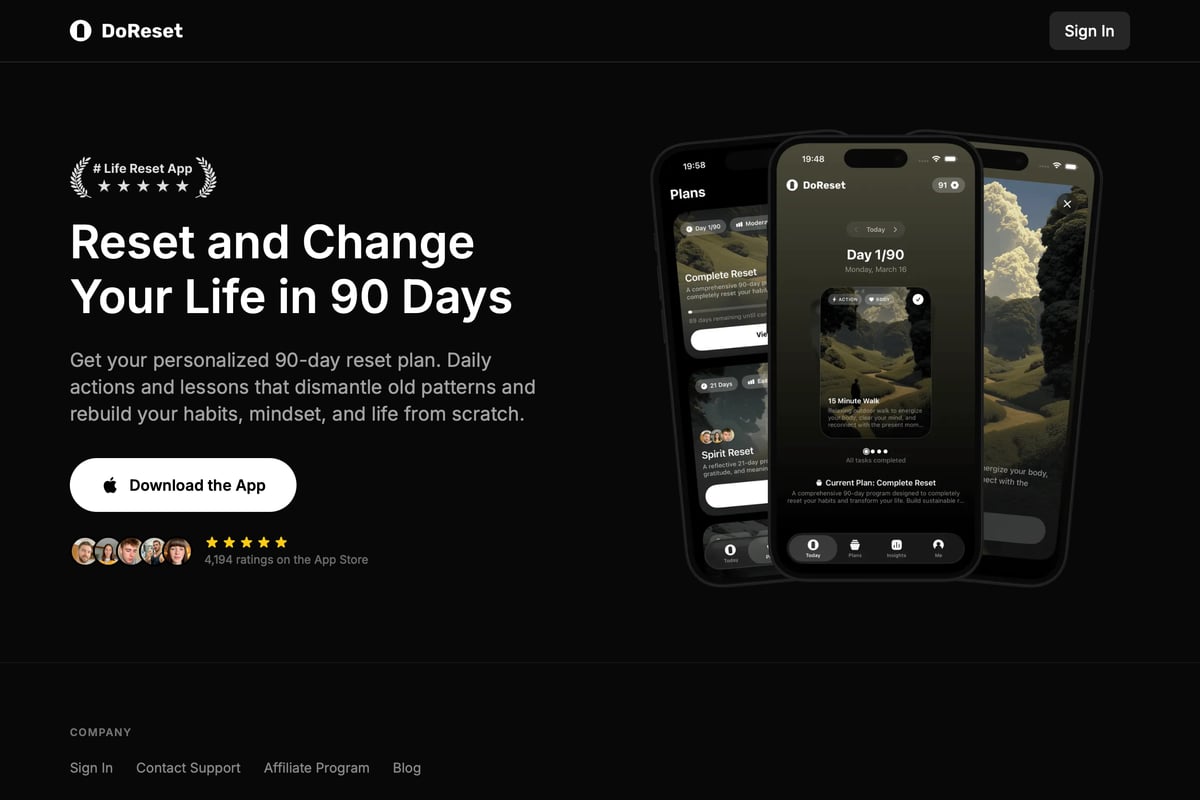
The DoReset mobile app provides exactly this kind of structure - a personalized 90-day reset plan with daily actions that help you dismantle old patterns and rebuild your habits and mindset from scratch, meeting you where you are each day.
Self-Compassion as a Discipline Tool
Counter-intuitively, research shows that self-compassion actually increases motivation and discipline. When you treat yourself with kindness after setbacks, you reduce the shame that often triggers giving up entirely.
This doesn't mean making excuses or lowering standards. It means recognizing that harsh self-criticism activates your threat response system, flooding your body with cortisol and making the executive function you need for discipline even harder to access.

Building Identity-Based Discipline
The most powerful form of building self discipline doesn't rely on willpower at all. It emerges from who you believe yourself to be. When your actions align with your identity, discipline feels less like force and more like integrity.
Shift From Goals to Identity
Instead of "I want to exercise regularly," try "I'm becoming someone who moves my body daily." The first requires constant willpower. The second becomes self-reinforcing as each action provides evidence of your evolving identity.
This approach, central to personal growth and transformation, works because our brains are wired to maintain consistency between our self-concept and our behaviors.
Ask yourself:
- Who do I want to become in the next 90 days?
- What does that person do daily?
- How does that person handle challenges?
- What does that person believe about themselves?
Then start taking the smallest possible actions that person would take. Not to pretend you're already there, but to gather evidence that you're becoming them.
Create Rituals, Not Just Routines
Routines are about efficiency. Rituals are about meaning. When you infuse your discipline practices with intention and significance, they transcend mere habit and become practices you want to maintain.
Your morning practice isn't just "exercise and meditation." It's your daily commitment to honoring your body and mind. Your evening review isn't just "journaling." It's how you process your growth and set intentions for tomorrow. This shift in framing activates different neural pathways and emotional connections.
The 90-Day Transformation Timeline
Building self discipline isn't a light switch - it's a gradual strengthening that happens in phases. Understanding this timeline helps you maintain patience when progress feels slow and recognize growth when it's happening beneath the surface.
Days 1-30: The Friction Phase
What's happening: Everything feels hard. Your brain is actively resisting new patterns. You're relying heavily on willpower. Motivation fluctuates wildly.
What helps: External accountability, environmental design, celebrating tiny wins, extreme self-compassion. This is when daily actions and structured guidance matter most.
Days 31-60: The Integration Phase
What's happening: Some days feel easier. You notice moments when the new behavior happens almost automatically. Other days still require significant effort.
What helps: Pattern recognition, adjusting systems based on what you've learned, connecting with your deeper why, tracking evidence of change.
Days 61-90: The Identity Phase
What's happening: The new behaviors start feeling like "just what you do." Not doing them feels stranger than doing them. Your self-concept has shifted.
What helps: Reflecting on how far you've come, planning how to maintain and expand, preparing for the inevitable plateaus ahead, recognizing that this is just the beginning.
Research from various approaches to habit formation and discipline development, including insights from responsibility-centered discipline programs, shows that meaningful behavioral change requires this extended timeline. Your brain needs repetition to build new neural pathways strong enough to become default behaviors.
Creating Your Personal Discipline Plan
Generic advice about building self discipline rarely works because it doesn't account for your unique brain, history, circumstances, and challenges. Your plan needs to be as individual as you are.
Audit Your Current State
Before you can move forward effectively, you need an honest assessment of where you are:
- What discipline challenges affect you most? (Sleep, diet, work focus, relationship patterns, emotional regulation)
- When do you most struggle with self-control? (Time of day, emotional states, specific situations)
- What has worked for you in the past, even briefly? (Mine those experiences for insights)
- What resources do you actually have right now? (Time, energy, support, money)
- What's one area where you already demonstrate discipline? (Prove to yourself you already have this capacity)
Design Your First 30 Days
Don't try to overhaul everything simultaneously. Pick one keystone habit - a behavior that, when established, makes other changes easier. For many people, this is sleep consistency, morning movement, or planning your day the night before.
Your 30-day foundation includes:
- One primary habit - So small you can't reasonably fail (2 minutes if needed)
- One environmental change - Remove a temptation or make the desired behavior easier
- One tracking method - Visual, simple, satisfying to complete
- One support system - Person, app, or program providing accountability
- One weekly reflection - Same time, same day, reviewing what's working
Additional resources like these books on self-discipline can provide frameworks and inspiration, but remember that reading about discipline isn't the same as practicing it. Implementation matters more than information.
Maintaining Discipline During Life Transitions
Building self discipline during stable periods is one challenge. Maintaining it when life throws curveballs is another entirely. Job changes, relationship shifts, moves, health challenges - these disruptions test everything you've built.
Flexible Consistency Over Rigid Perfection
The goal isn't to maintain identical behaviors regardless of circumstances. That's a recipe for burnout and failure. Instead, develop core commitments with flexible expressions.
Your movement practice might be a 45-minute workout on normal days, a 10-minute walk during stressful periods, and gentle stretching when you're sick. All three honor the commitment to move your body daily while adapting to reality.
This adaptive approach, essential when you're working to change your life, builds resilience into your discipline practice from the start. You're not learning rigid adherence. You're learning to maintain your commitments across varying conditions.
Prepare for Predictable Disruptions
You know certain situations will challenge your discipline: holidays, travel, deadlines, family visits. Instead of hoping willpower will carry you through, create specific plans.
- What's your minimum viable commitment? (The smallest version you can maintain)
- What support do you need? (Packing workout clothes, scheduling calls with accountability partners)
- What will you tell yourself? (Your pre-decided response to temptation or resistance)
- How will you get back on track? (Your recovery protocol, decided in advance)
Building self discipline is one of the most compassionate acts of self-love you can practice. It's how you honor the future version of yourself while extending grace to who you are today. The journey isn't linear, and struggling doesn't mean failing - it means you're human and you're trying. If you're ready for structured support in your transformation, DoReset offers a personalized 90-day reset plan with daily actions and lessons designed to help you dismantle old patterns and rebuild your habits, mindset, and life from scratch, meeting you exactly where you are and guiding you forward with understanding and proven strategies.