
Transform Your Life with a 90 Days Planner

Doreset
March 22, 2026
Change feels overwhelming when you're staring at the gap between who you are and who you want to become. You've probably tried setting New Year's resolutions only to watch them dissolve by February, or made grand promises to yourself that quietly faded into the background of daily life. The truth is, meaningful transformation doesn't happen because we lack desire or willpower. It happens when we break down our aspirations into manageable, sequential steps that build momentum over time. A 90 days planner offers exactly this kind of structured approach to personal growth, providing enough time to create lasting change without the paralysis that comes from looking too far ahead.
Why 90 Days Is the Perfect Timeframe for Transformation
Three months strikes a remarkable balance between urgency and sustainability. It's short enough to maintain focus and motivation, yet long enough to establish genuine habit changes that stick. When you're working with a 90 days planner, you're not trying to overhaul your entire existence overnight.
Research shows that habit formation typically takes anywhere from 18 to 254 days, with the average being around 66 days. The 90-day window gives you sufficient time to move past the initial enthusiasm phase, work through the inevitable resistance, and settle into new patterns that feel natural rather than forced.
The Psychology Behind Quarterly Goals
Your brain responds differently to quarterly goals than it does to annual ones. A year feels abstract, distant, almost fictional. But 90 days? That's concrete. You can visualize the season changing, feel the weeks passing, count down the days. This psychological proximity creates accountability.
When you're planning your life in 90-day increments, you're also working with natural business and academic cycles. Companies operate on quarterly reporting periods, schools function on semester systems, and even nature moves through seasonal transitions every three months.

Structuring Your 90 Days Planner for Maximum Impact
A well-designed 90 days planner isn't just a calendar with empty boxes. It's a strategic tool that guides you through distinct phases of growth and adaptation. Understanding how to structure these phases makes the difference between surface-level changes and deep transformation.
Month One: Deconstruction and Awareness
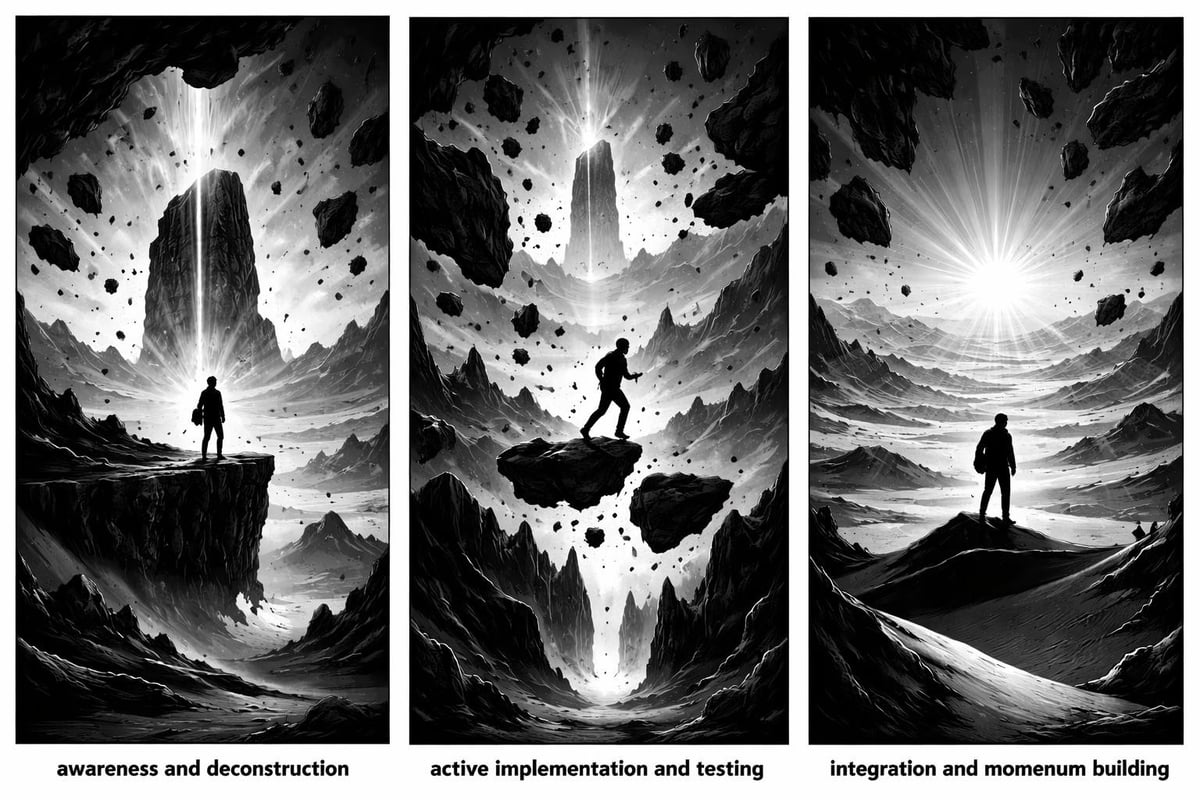
The first 30 days focus on breaking down old patterns and building awareness. This is where you identify what's not working, examine the habits that keep you stuck, and create space for something new. Think of it as clearing the ground before planting seeds.
During this phase, your planner should include:
- Daily reflection prompts to identify limiting patterns
- Tracking tools for current habits (even the ones you want to change)
- Space to record triggers and automatic responses
- Weekly reviews to notice recurring themes
- Baseline measurements for areas you want to improve
This honest inventory can be uncomfortable, but it's essential. You can't rebuild your life without first understanding what needs to be dismantled. Your 90 days planner becomes a mirror, reflecting patterns you might have been avoiding.
Month Two: Implementation and Adjustment
The second month shifts into active implementation. You've identified what needs to change, now you're testing new approaches and building replacement habits. This middle phase often feels the hardest because the novelty has worn off but the new behaviors haven't become automatic yet.
Your planner structure for this phase should support experimentation and flexibility:
- Daily action items broken into micro-steps
- Habit stacking exercises to connect new behaviors with existing routines
- Obstacle tracking to identify what gets in your way
- Mid-quarter assessment checkpoints
- Adjustment protocols when something isn't working
This is where many people abandon their goals, which makes a structured 90 days planner invaluable. When you can see your progress mapped out visually, even small wins become evidence that change is happening.
Month Three: Integration and Momentum
The final 30 days focus on integration and building momentum that will carry beyond the 90-day window. New behaviors start feeling less forced. You're not constantly fighting resistance. The changes begin to feel like part of who you are rather than things you're doing.
Essential Components of an Effective 90 Days Planner
Not all planners are created equal, and when you're investing three months into intentional change, the structure matters. Here's what separates a transformative 90 days planner from a glorified to-do list.
Daily Action Framework
Each day needs clear, specific actions rather than vague intentions. "Exercise more" doesn't work. "Walk for 15 minutes after breakfast" does. Your planner should guide you toward this level of specificity.
The most effective daily frameworks include:
- Morning mindset work: Brief reflection or intention-setting to start each day aligned with your larger goals
- Primary focus: One non-negotiable action that moves you toward your 90-day objective
- Supporting actions: Two to three additional tasks that reinforce the primary focus
- Evening review: Quick assessment of what worked, what didn't, and what you're learning
This structure, when followed consistently in your 90 days planner, creates compounding returns. Each day builds on the previous one, creating momentum that feels increasingly effortless.
Weekly and Monthly Review Cycles
Daily action without periodic reflection leads to busy-ness without progress. Your 90 days planner needs built-in review cycles that help you course-correct before you've wasted weeks going in the wrong direction.
| Review Type | Frequency | Key Questions |
|---|---|---|
| Daily Check-in | Every evening | Did I complete my primary focus? What did I learn today? |
| Weekly Review | Every Sunday | What worked this week? What needs adjustment? Am I still aligned with my 90-day goal? |
| Monthly Assessment | Days 30, 60, 90 | Have I made measurable progress? What patterns am I noticing? What needs to change for the next phase? |
These review cycles transform your planner from a static document into a dynamic tool for changing your mindset and approach in real-time.
How to Choose the Right 90 Days Planner Format
The format of your planner significantly impacts whether you'll actually use it. Some people thrive with detailed structure, while others need flexibility and white space. Understanding your own working style helps you select or create a format that supports rather than restricts you.
Physical vs. Digital Planners
Physical planners offer tactile engagement and fewer distractions. The act of writing by hand activates different neural pathways than typing, which can deepen reflection and memory formation. Products like The 90X Goal Planner provide structured frameworks for working through five major goals over 90 days, while options like The Monk Manual combine productivity tracking with mindfulness practices.
Digital planners, on the other hand, offer searchability, cloud backup, and integration with other productivity tools. They're ideal if you need to access your planner from multiple devices or prefer typing to handwriting. ClickUp's 30-60-90 day plan templates demonstrate how digital planning can break down complex goals into manageable phases.
The best 90 days planner is the one you'll actually open every day, whether that's a leather-bound journal or a smartphone app.
Guided vs. Blank Format
Some planners provide extensive prompts, exercises, and frameworks. These work beautifully if you're new to intentional planning or working through a life reset where you need guidance and structure. Resources like Createful Journals' 90-Day Growth Plan offer templates specifically designed for personal development work.
Blank or minimally structured planners give you freedom to create your own framework. They're ideal if you have a clear methodology or need flexibility to adapt your approach week by week. The Everyday Planner by Sprouht balances these approaches, providing enough structure to keep you organized while leaving room for personalization.
Your choice depends on whether you need rails to keep you on track or freedom to explore your own path. Neither is superior, they serve different needs and working styles.
Building Your First 90-Day Plan
Starting with a blank 90 days planner can feel intimidating. Where do you begin? What goals deserve this level of focused attention? How do you break down big aspirations into daily actions that actually move the needle?
Selecting Your Focus Area
The most common mistake people make is trying to transform everything at once. Your 90 days planner works best when you narrow your focus to one or two interconnected areas rather than attempting a complete life overhaul.
Consider these questions as you select your focus:
- What single change would create the most positive ripple effects in my life?
- Which area am I genuinely ready to address, not just obligated to fix?
- What feels challenging but achievable within 90 days?
- Where have I been stuck in the same pattern for too long?
Your answers reveal where to direct your energy. Maybe you're ready to reset your mindset around money, rebuild your relationship with exercise, or establish a creative practice you've been postponing for years.
Breaking Down Goals into Daily Actions
Once you've identified your focus area, the next step is reverse-engineering your 90-day vision into daily actions. This is where many people get stuck, and it's precisely where a well-structured 90 days planner becomes invaluable. Atlassian's guide to creating a 90-day plan offers templates and frameworks that can help you break down larger objectives into manageable milestones.
Start with your desired outcome at day 90, then work backward:
- Define the end state: What will be different 90 days from now?
- Identify major milestones: What needs to happen at days 30, 60, and 90?
- Break milestones into weekly targets: What weekly progress indicates you're on track?
- Translate weekly targets into daily actions: What single action each day builds toward the weekly target?
This cascading approach transforms overwhelming goals into simple, repeatable daily behaviors. Your 90 days planner becomes the roadmap that connects today's small action with your larger transformation.
Overcoming Common Obstacles in 90-Day Planning
Even with the best 90 days planner, you'll encounter resistance, setbacks, and moments when you question whether this effort matters. Understanding these obstacles in advance helps you navigate them with less drama and more grace.
The Motivation Dip Around Day 30
Almost everyone hits a motivation dip somewhere between days 25 and 35. The initial excitement has faded, results aren't yet dramatic, and the daily actions start feeling tedious rather than transformative. This is completely normal and predictable.
Your 90 days planner should anticipate this phase with built-in support systems:
- Reminder of why you started (recorded in week one)
- Evidence log tracking small wins you might otherwise dismiss
- Accountability check-ins with a friend or community
- Permission to adjust the approach without abandoning the goal
- Celebration protocols for reaching the one-month mark
This phase tests your commitment, but it also builds the resilience that makes lasting change possible. When you push through this dip using the structure your planner provides, you develop trust in your ability to keep promises to yourself.
Perfectionism and All-or-Nothing Thinking
The voice that says "I already missed two days, so I might as well give up" is perfectionism disguised as realism. Your 90 days planner isn't about flawless execution; it's about consistent forward movement despite imperfection.
Build these principles into your planning approach:
Progress over perfection: A week with three good days beats zero good days in a perfect week that never happens.
Comeback protocols: When you fall off track, your planner should include a simple restart process rather than shame or abandonment.
Flexible consistency: Missing a day doesn't erase the previous 40 days of effort. Resume where you left off.
Learning orientation: Every setback contains information about your triggers, capacity, and what needs adjustment.
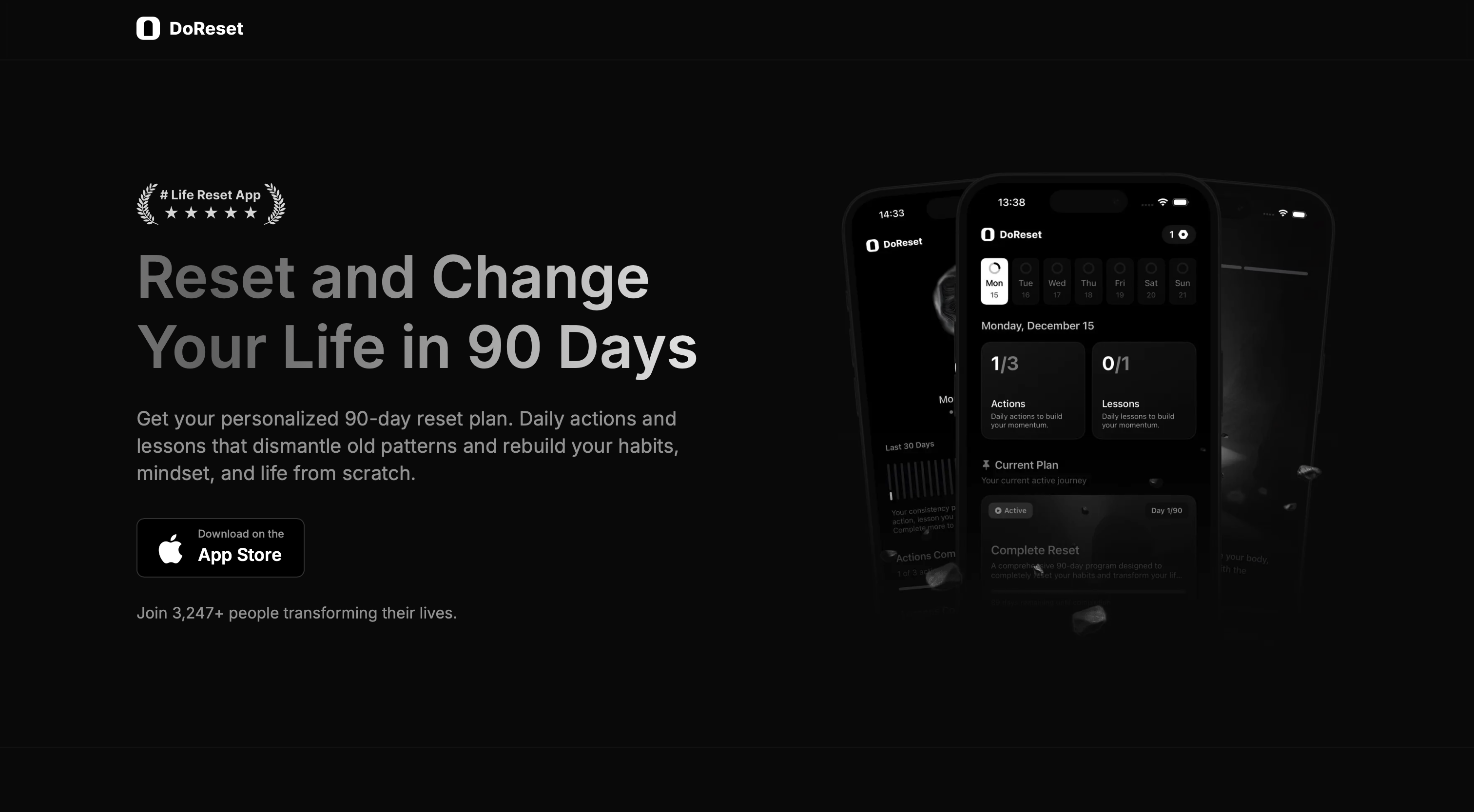
The DoReset mobile app understands this reality, offering a personalized 90-day reset plan that provides daily actions and lessons designed to dismantle old patterns and rebuild your habits, mindset, and life from scratch. Rather than demanding perfection, it guides you through the messy, non-linear process of genuine transformation.

Adapting Your 90 Days Planner When Life Happens
Unexpected events will occur during your 90 days. Someone gets sick, work demands explode, a relationship crisis emerges. The rigidity that makes your planner effective can become a liability if it doesn't account for life's unpredictability.
Built-In Flexibility Without Abandoning Structure
The most sustainable 90 days planner includes flexibility without sacrificing accountability. This means distinguishing between legitimate adjustments and convenient excuses.
Create adjustment protocols in your planner:
- Minimum viable action: What's the smallest version of your daily commitment you can maintain during crisis periods?
- Temporary pivots: When can you legitimately shift focus without calling it quitting?
- Recovery plans: How do you return to full engagement after a disruption?
- Context awareness: What external factors genuinely require adjustment versus mere resistance?
These protocols prevent you from using flexibility as permission to quit while honoring the reality that life doesn't pause for your 90-day plan.
Measuring Progress Beyond Task Completion
Your 90 days planner shouldn't only track what you did but also who you're becoming. Task completion is visible and measurable, but the deeper transformations often happen beneath the surface. When you're working toward rebooting your life, the internal shifts matter as much as the external actions.
Include these qualitative measures in your planning system:
| Metric Type | What It Measures | How to Track |
|---|---|---|
| Behavioral | Actions completed, habits established | Daily checkboxes, streak counters |
| Emotional | Relationship with the goal, internal resistance | Weekly mood tracking, resistance scales |
| Identity | How you see yourself changing | Monthly narrative reflections |
| Resilience | How you handle setbacks | Recovery time after missed days |
This multi-dimensional tracking reveals the full picture of your transformation, not just the visible accomplishments.
Integrating Lessons from Your 90 Days Planner into Long-Term Growth
The real power of a 90 days planner emerges when you complete multiple cycles, each building on the lessons from the previous quarter. Your first 90 days teaches you how you work, what trips you up, and what conditions support your growth. The second 90 days applies those lessons. The third refines them further.
Creating Your Second 90-Day Cycle
As you approach day 90, resist the urge to immediately jump into another completely different focus area. Review what you've learned about yourself through this process. What worked? What didn't? How did you surprise yourself? Where did you encounter more resistance than expected?
Your next 90 days planner should incorporate these insights:
- Structures that supported you remain and get refined
- Approaches that didn't work get replaced with alternatives
- New challenges build on established strengths
- Different life areas get attention in rotation
This iterative approach, where each quarter informs the next, creates compound growth that feels sustainable rather than exhausting. You're not constantly starting over; you're building on solid ground.
The Compound Effect of Quarterly Planning
Four 90-day cycles give you a full year of intentional transformation. Unlike vague annual resolutions that get abandoned by February, quarterly planning with a structured 90 days planner creates continuous momentum. Each cycle reinforces the previous one while introducing new challenges and growth edges.
People who plan in 90-day increments report higher completion rates, better retention of new habits, and a stronger sense of agency in their lives. You're not waiting for January to start fresh. Every quarter offers a new beginning, a chance to change your life in meaningful, lasting ways.
The beauty of this approach is that it meets you where you are every 90 days. Your circumstances change, your priorities shift, your capacity fluctuates, and your 90 days planner adapts with you rather than holding you to commitments that no longer serve you.
A 90 days planner transforms abstract aspirations into concrete daily actions, providing the structure you need to create lasting change without overwhelming yourself with endless timelines. The three-month window gives you enough time to establish genuine new patterns while maintaining the focus and urgency that keeps you engaged. When you're ready to move beyond random attempts at self-improvement and commit to a structured transformation journey, DoReset offers a personalized 90-day reset plan with daily actions and lessons designed to help you dismantle old patterns and rebuild your habits, mindset, and life from the ground up.