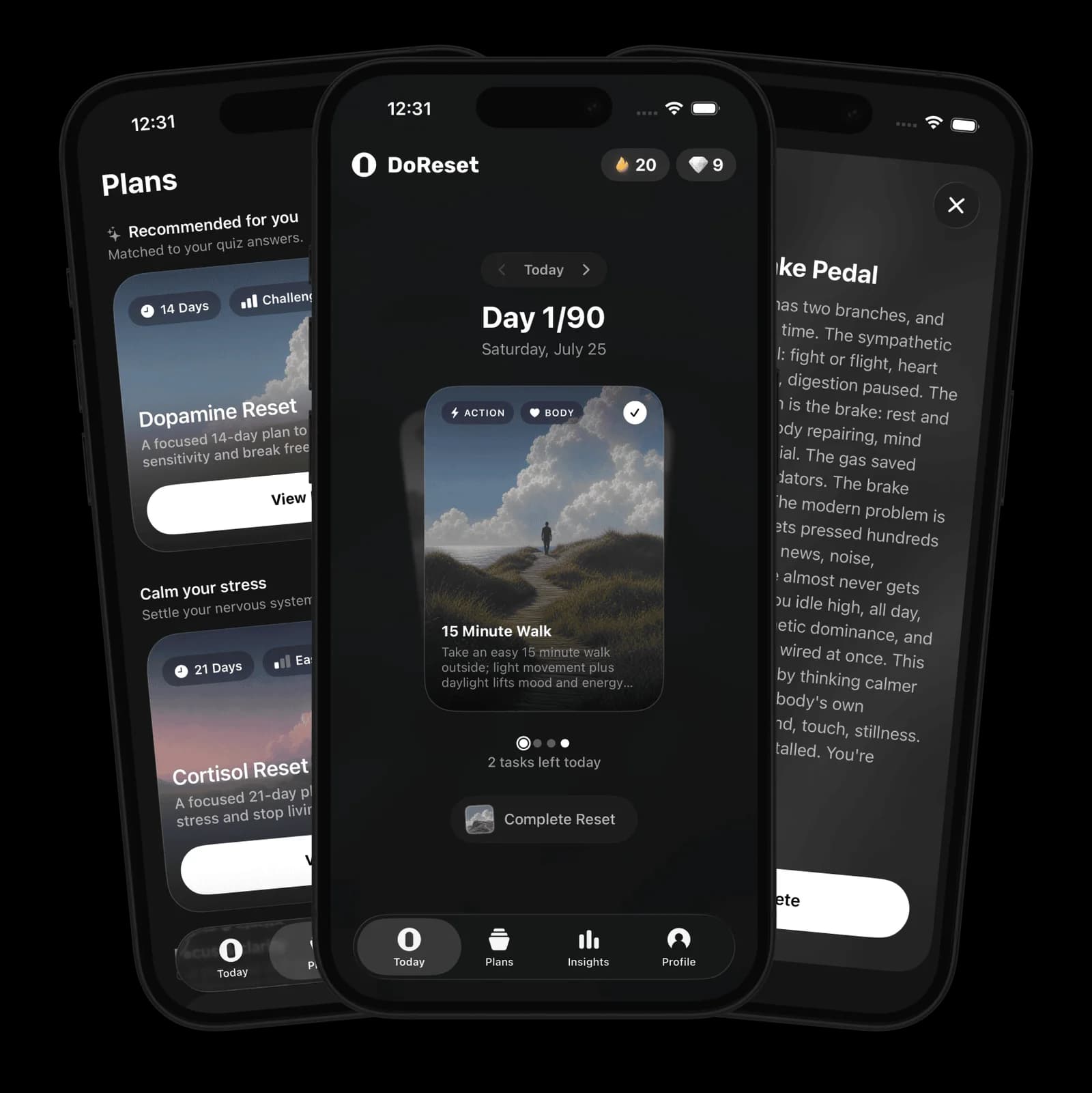
How to Lower Cortisol: 6 Science-Backed Steps That Actually Work
Cortisol has become the internet's favorite villain, blamed for everything from belly fat to puffy faces. The truth is less dramatic and more useful: cortisol is a hormone you need, released on a daily rhythm that wakes you up, mobilizes energy, and handles emergencies. The problem is not cortisol. The problem is cortisol that never comes down.
When stress is chronic, the system that was designed for short bursts stays switched on. That is the state behind wired-but-tired evenings, 3 a.m. wakeups, sugar cravings, tension headaches, and the feeling of running on fumes while unable to rest. This guide covers how to recognize genuinely elevated stress load and the six daily practices with the best evidence for bringing it down, drawn from the 21-Day Cortisol Reset plan.
Quick answer
You lower cortisol by removing what keeps it elevated and strengthening what brings it down: consistent sleep, morning sunlight, delayed caffeine, daily walks, exhale-focused breathing, scheduled worry time, and real recovery in the evening. No single hack drops it; a stack of small daily habits does. Supplements are optional at best, and anything promising a rapid cortisol detox is selling you something.
What cortisol does, and when it becomes a problem
Cortisol is produced by your adrenal glands on a strong daily rhythm: it surges 50 to 75 percent within the first 30 to 45 minutes after waking, a spike called the cortisol awakening response that gets you moving, then declines through the day to its lowest point around midnight. On top of that rhythm, acute stressors trigger temporary spikes that are supposed to resolve when the stressor does.
Chronic psychological stress breaks the pattern. Deadlines, money worries, and a phone full of alarming news do not resolve the way a physical threat does, so the recovery phase never quite arrives. Over weeks, an elevated baseline shows up as a cluster of signals: trouble falling or staying asleep, afternoon energy crashes, stronger cravings for sugar and salt, getting sick more often, irritability over small things, and tension that lives in your jaw and shoulders.
One honest caveat before the fixes. Terms like cortisol face and cortisol belly are mostly marketing; puffiness and abdominal weight have many causes, and persistently, medically high cortisol is a condition a doctor should evaluate, not a wellness project. What the steps below address is the common, non-clinical version: a stress response that fires too often and recovers too little. For that, the levers are behavioral, and they work.
How to lower cortisol naturally, step by step
Each of these steps is a daily action from the 21-Day Cortisol Reset. None takes more than 30 minutes, and they compound: the morning steps protect your natural rhythm, the daytime steps burn off the stress load, and the evening steps let the system actually recover.

Fix your mornings: sunlight first, coffee later
Body · 10 min
Step outside within an hour of waking, no sunglasses, for about ten minutes. Morning light anchors your circadian rhythm, and cortisol rides on it: a well-timed morning peak makes the evening decline steeper. Cloudy counts; outdoors beats your kitchen even in gray weather.
Then delay your first coffee by about 90 minutes. Caffeine on waking stacks a spike on top of your natural awakening response, then hands you a harder mid-morning crash. You do not have to quit coffee: first cup 90 minutes after waking, last cup by 2 p.m.

Use sighing breaths to defuse spikes in real time
Mind · 2 min
The physiological sigh, two inhales through the nose followed by a long exhale through the mouth, is the fastest evidence-backed way to bring acute stress down. A 2023 Stanford study in Cell Reports Medicine found five minutes of daily exhale-emphasized breathing improved mood and lowered physiological arousal more than equivalent mindfulness meditation.
Use it in the moment: before a hard conversation, after the alarming email, in traffic. Two minutes of repeated sighs measurably slows your heart rate. It works the first time, with zero practice.

Walk 30 minutes most days
Body · 30 min
Movement is how your body was designed to complete the stress cycle: the mobilized glucose and elevated heart rate get used, and the system stands down afterward. Brisk walking is the most sustainable dose, hard enough to count, easy enough to repeat daily.
Intensity matters here. Moderate movement lowers stress load, while training to exhaustion on no sleep raises it. In a stressed season, more walks and fewer max-effort workouts is the right trade. Bonus points for a park: nature exposure independently lowers stress in controlled studies.

Schedule a 10-minute worry window
Mind · 10 min
Background worry is a slow drip of stress activation all day long. The worry window is a technique from cognitive behavioral therapy that contains it: one scheduled 10-minute slot where you write every worry down completely, then close the meeting.
When worries surface outside the window, you note them for later instead of engaging. It sounds too simple to work and reliably does; rumination thrives on being entertained anytime, and an appointment kills that.

End screens an hour before bed
Mind · Anytime today
Evening is when cortisol should be at its lowest, and a phone full of news, work messages, and comparison bait keeps tapping the alarm instead. Add bright light delaying melatonin and you get the wired-but-tired state that turns into a 3 a.m. wakeup.
One screen-free hour before bed, with dim lights and a slow wind-down, protects the recovery phase of your daily rhythm. Poor sleep raises next-day cortisol, which makes the next night worse. Our sleep schedule guide goes deeper on the full evening routine.

Add 10 minutes of deep rest
Mind · 10 min
Non-sleep deep rest, lying down and systematically unclenching for ten minutes, gives your nervous system a scheduled mid-day downshift. Guided body scans and yoga nidra style protocols have been shown to reduce reported stress and improve subsequent sleep, and they demand nothing except lying still.
This is the step for people who cannot meditate. There is nothing to get right; you follow the scan, and the parasympathetic system does the rest. It pairs especially well with the afternoon slump you would otherwise treat with a third coffee.
What to expect: the timeline
Days 1-3
Sharper awareness, small wins
The breathing tools work immediately for in-the-moment spikes. The rhythm changes, light and caffeine timing, mostly feel like effort at this stage rather than results.
Week 1
Evenings get quieter
The screen-free hour and wind-down usually improve sleep onset within the first week, and better nights lower next-day stress reactivity. Afternoon crashes begin to soften.
Week 2
Baseline starts moving
You notice you recover from stressors faster and snap less. The worry window has caught most of the background rumination. Cravings tend to quiet down around here.
Week 3 and beyond
Resilience, not just relief
The stack is now a routine rather than a project. Most people keep morning light, caffeine timing, and walks permanently. If symptoms have not budged at all after three consistent weeks, that is a good moment to involve a doctor.
Common mistakes to avoid
Buying supplements first
Ashwagandha and magnesium have modest evidence at best, and neither outperforms sleep, light, and movement. Supplements are the last five percent, purchased first because they are the easiest step. Do the free things for three weeks before spending money.
Fighting stress with intense exercise only
Hard training is itself a stressor. On top of chronic stress and short sleep, daily max-effort workouts can add to the load you are trying to reduce. Walks, yoga, and moderate sessions are the better default in a stressed season.
Cutting caffeine to zero overnight
Cold-turkey withdrawal means days of headaches and worse mood, which usually ends the whole effort. Move the timing first, 90 minutes after waking and nothing after 2 p.m. That captures most of the benefit with none of the withdrawal.
Doomscrolling about cortisol
Researching your stress at midnight is stress. The cortisol face content cycle profits from keeping you alarmed. If your screen time is the main stressor, our doomscrolling guide is the place to start.
Expecting one hack to do it
No single practice lowers a chronically elevated baseline. The stack works because morning, daytime, and evening levers reinforce each other. Three habits done daily beat six done occasionally.
Ignoring the actual stressor
Breathwork will not renegotiate your workload. The plan includes boundary actions, saying no once, renegotiating one commitment, because sometimes the fastest way to lower stress hormones is removing a stressor. If burnout is the real issue, start with our burnout recovery guide.
Frequently asked questions
The long-tail questions, answered directly.
What are the symptoms of high cortisol?
How can I lower cortisol levels fast?
Is cortisol face real?
Does caffeine raise cortisol?
What foods help lower cortisol?
How long does it take to lower cortisol?
Does ashwagandha lower cortisol?
Want this scheduled for you?
The free 2-minute quiz scores 14 reset plans against your answers, including the 21-Day Cortisol Reset, and recommends where to start.