How to Regulate Your Nervous System: 6 Exercises That Work
You cannot think your way out of a racing heart. Anyone who has been told to just relax knows this: the part of you that is on high alert does not take instructions in words. It speaks an older language, breath, temperature, vibration, pressure, rhythm, and if you want to calm it down, you have to speak that language back.
That is what nervous system regulation actually means. Not permanent serenity, not never being stressed, but the ability to move between alertness and calm on purpose. It is a trainable skill with unusually good science behind it, and this guide covers the six exercises with the best evidence, in the same order the 21-Day Nervous System Reset teaches them.
Quick answer
You regulate your nervous system through the body, not through thoughts. The fastest tools are exhale-focused breathing like the physiological sigh, humming, cold water on the face, slow rhythmic movement, and grounding through physical sensation. Used daily for a few weeks, these exercises retrain your stress response so you startle less, recover faster, and can produce calm on demand instead of waiting for it.
What a dysregulated nervous system looks like, and how regulation works
Your autonomic nervous system runs the machinery you never think about, heart rate, digestion, breathing, and it has two main branches. The sympathetic branch mobilizes you for action: faster heart, tighter muscles, sharper senses. The parasympathetic branch, led by the vagus nerve, handles rest, digestion, and recovery. A healthy system flexes between them all day, like a well-tuned suspension absorbing bumps.
Dysregulation is what happens when the system loses that flexibility. After months of chronic stress, poor sleep, and a phone that pings the alarm every few minutes, the sympathetic branch becomes the default. The signs are familiar: tension that lives in your jaw and shoulders, overreacting to small problems, exhaustion paired with an inability to relax, a racing mind at bedtime, digestive trouble, and a subtle feeling that being still is unsafe.
The way back runs through a fortunate piece of anatomy: while most autonomic functions are involuntary, breathing is dual-controlled. You can steer it consciously, and because breath is wired directly into the vagus nerve, it becomes a steering wheel for the whole system. Slow exhales activate the parasympathetic brake. So do vibration in the throat, cold on the face, rhythmic movement, and firm pressure through the feet. These are reflexes, not beliefs, and the exercises below simply pull those levers deliberately.
6 nervous system regulation exercises, step by step
All six are daily actions from the 21-Day Nervous System Reset. The first two are your in-the-moment tools; the rest build a lower baseline over weeks. None needs equipment or more than 10 minutes.

The physiological sigh
Mind · 2 min
Inhale through your nose, take a second short sip of air on top, then exhale long and slow through your mouth. Repeat for one to two minutes. The double inhale pops open collapsed air sacs in the lungs, letting the long exhale offload more carbon dioxide and slow your heart.
This is the fastest way to calm down that the research knows. A 2023 Stanford study in Cell Reports Medicine found five minutes of daily cyclic sighing improved mood and reduced arousal more than meditation of the same duration. Use it anywhere, without anyone noticing.

Extended exhale breathing
Mind · 5 min
Breathe in for a count of four and out for a count of eight, for five minutes. Your heart rate naturally rises slightly on the inhale and falls on the exhale; stretching the exhale tips the whole rhythm toward the parasympathetic side.
This is the daily practice version of the sigh, better for scheduled downshifts than emergencies: before bed, after work, before something hard. If four-eight feels strained, start with four-six. The ratio matters more than the numbers.

The 10-minute body scan
Mind · 10 min
Lie down or sit, and move your attention slowly from head to toe, noticing sensation without trying to fix anything. Tension you cannot feel is tension you cannot release, and most chronically stressed people have gone numb from the neck down.
The scan rebuilds interoception, your ability to read your own internal state, which researchers consider the foundation skill of self-regulation. It is also why this exercise comes early in the plan: the tools work better once you can feel your state shifting.

Five minutes of humming
Body · 5 min
Hum long, low notes on slow exhales for five minutes. The vibration stimulates the vagus nerve where it passes through the throat and chest, and the humming itself forces the extended exhale you already know works.
It feels slightly ridiculous and works anyway; singing, chanting, and humming traditions figured this out long before the mechanism had a name. Do it in the shower or the car if privacy helps.

Shake it out, then ground through your senses
Body · 5 min
Stand and shake, arms, legs, shoulders, whole body, loosely for five minutes. Animals literally tremble after stressful encounters to discharge the mobilized energy; humans suppress the same impulse and carry the charge around as tension. Deliberate shaking completes the stress cycle your body never finished.
Follow it with grounding: attention on strong physical sensation, like bare feet on grass or naming five things you can see, four you can hear, three you can touch. Intense present-moment input interrupts the loops of anticipation and replay that keep the alarm switched on.

Non-sleep deep rest
Mind · 10 min
Lie down for ten minutes and follow a slow body scan toward total stillness, staying awake the whole time. NSDR protocols, closely related to yoga nidra, give your system a scheduled window where nothing is asked of it, and studies link these practices to reduced stress and improved subsequent sleep.
This is the capstone practice of the plan: a daily proof, delivered in the body's own language, that switching off is safe. If afternoon exhaustion is your pattern, it beats both the nap and the third coffee.
What to expect: the timeline
Days 1-3
Immediate tools, awkward practice
The sigh works from the first try; the scans and humming feel strange. Noticing your tension can make it briefly louder. That is awareness arriving, not the practice failing.
Week 1
You can feel your state
You start catching tension early, in the jaw, the breath, the shoulders, instead of at the boiling point. Evening practices begin improving sleep onset.
Week 2
The tools fire under load
Sighs and grounding start working in real situations: the hard email, the traffic, the difficult conversation. Recovery after stress gets visibly faster, minutes instead of hours.
Week 3 and beyond
A lower baseline
You startle less, settle faster, and stillness stops feeling unsafe. Regulation becomes something you do rather than something you wait for. Keeping two or three favorite tools daily maintains it.
Common mistakes to avoid
Trying to think your way calm
Reasoning with an activated nervous system is using the wrong channel. Body first, thoughts second: two minutes of sighs will do what an hour of internal debate cannot.
Practicing only during emergencies
A tool you first reach for at peak stress is a tool you barely know. Daily practice in calm moments is what makes the skills available under load, which is the whole logic of a scheduled plan.
Forcing deep breaths
Aggressive deep inhales can increase arousal; the calming signal lives in the exhale. If breathwork ever makes you dizzy or more anxious, slow down, shorten the inhale, and lengthen the exhale.
Expecting permanent calm
Regulation is flexibility, not flatness. Getting activated is healthy; staying stuck there is the problem. The goal is a system that responds and then recovers.
Skipping the awareness work
Jumping straight to techniques while numb to your own tension means you deploy them too late. The body scan is boring and it is also the step that makes every other tool land on time.
Using regulation to tolerate the intolerable
Breathwork is not a substitute for fixing a punishing workload, a bad sleep schedule, or a harmful situation. Regulate so you can act clearly, then act. If the load itself is the problem, start with our burnout guide.
Frequently asked questions
The long-tail questions, answered directly.
How do I know if my nervous system is dysregulated?
What is the fastest way to calm your nervous system?
How long does it take to regulate your nervous system?
What is the vagus nerve and why does everyone talk about it?
Can nervous system exercises help with anxiety?
Why do I feel worse when I try to relax?
How often should I do these exercises?
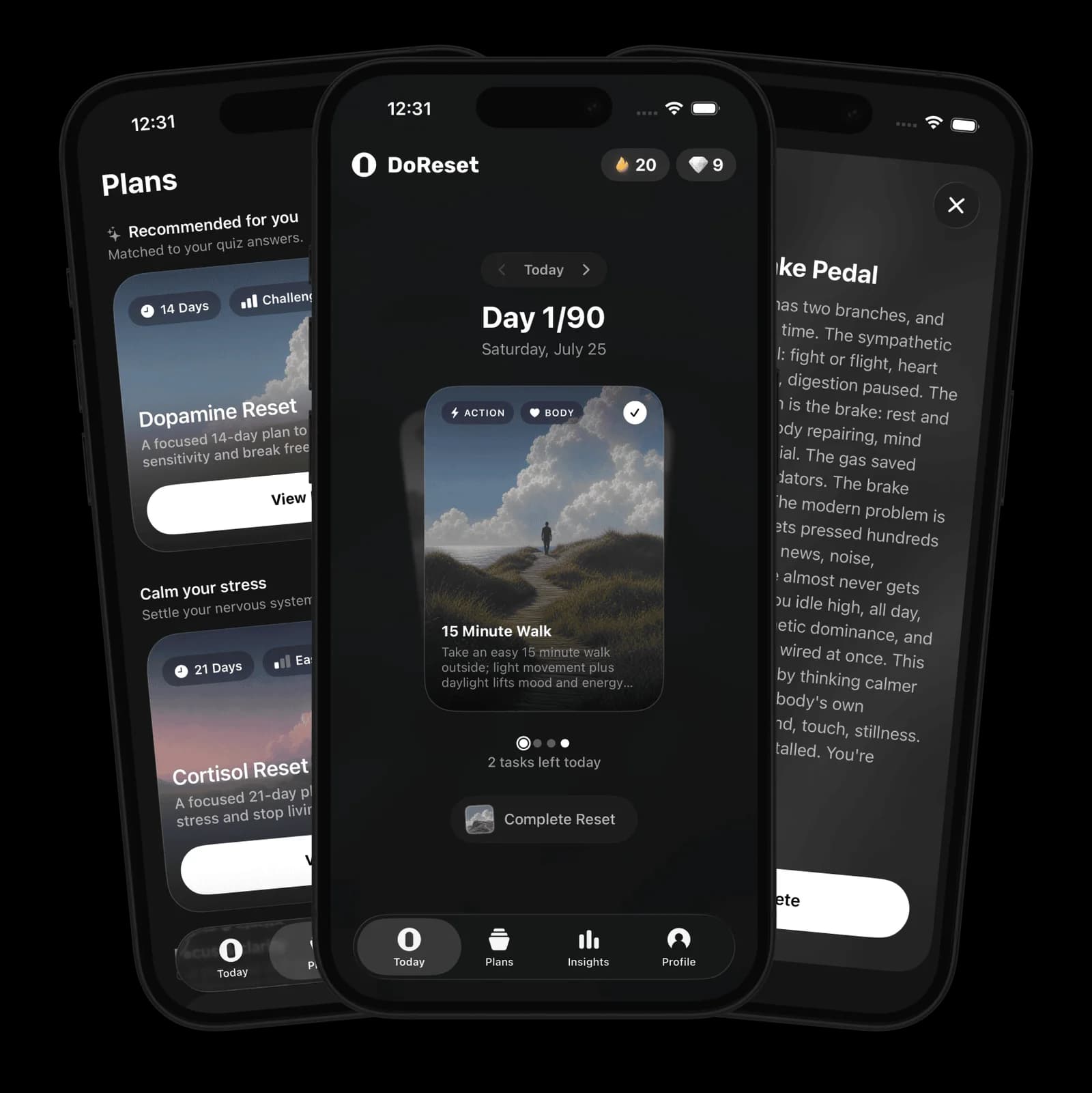
Want this scheduled for you?
The free 2-minute quiz scores 14 reset plans against your answers, including the 21-Day Nervous System Reset, and recommends where to start.