
How to Recover From Burnout (Without Quitting Your Job)
Burnout does not announce itself. It accumulates: a busy quarter becomes a busy year, rest stops working, and one day you notice that you feel nothing about work except dread, and not much about anything else either. The tiredness has a specific quality, a flatness that a weekend or even a vacation does not touch.
The standard advice, take time off, misses what the research actually shows: burnout is not just depletion, it is the result of prolonged mismatch between demands and recovery. A vacation lowers the symptoms for a week or two, and then you return to the machine that made them. Real recovery changes the machine. This guide walks through the process step by step, following the arc of the 30-Day Burnout Reset: stabilize, cut the load, rebuild the systems, and reconnect with the person you were before work ate everything.
Quick answer
Burnout recovery has three parts: reduce the load that caused it, rebuild the basics that restore energy, and repair your relationship with work through boundaries and things you actually enjoy. Rest alone does not fix burnout, because you return to the same conditions that produced it. Most people feel meaningfully better within weeks of consistent changes; full recovery typically takes months, not days.
The signs of burnout, and the stages it moves through
The World Health Organization defines burnout as an occupational syndrome with three dimensions, based on decades of research by psychologist Christina Maslach: exhaustion that rest does not fix, growing cynicism or mental distance from your work, and a sinking sense that you are no longer effective at it. All three matter. Being tired but still engaged is overwork; being tired, detached, and doubting yourself is burnout.
It tends to progress through recognizable stages. First comes the honeymoon-plus-pressure phase: high commitment, rising hours, recovery quietly deprioritized. Then chronic stress: sleep worsens, irritability climbs, weekends stop being enough. Then burnout proper: the exhaustion becomes constant, cynicism sets in, small tasks feel enormous, and mental exhaustion shows up physically as headaches, frequent illness, and a fog you cannot think through. The final stage, habitual burnout, is when this state becomes your personality rather than a season.
Locating your stage matters because it sets expectations. Caught early, weeks of deliberate change can turn it around. Deep burnout that took two years to build will not fully resolve in ten days, and pretending otherwise is how people relapse. One more honest note: burnout symptoms overlap heavily with depression, and if your low mood extends far beyond work or includes hopelessness, talk to a professional rather than self-treating with a habit plan.
How to recover from burnout, step by step
These steps mirror the 30-Day Burnout Reset, and the order is deliberate: first see the problem clearly, then cut the load, then install boundaries, then rebuild the life outside work. Each step is a real action from the plan.

Run a 10-minute stress audit
Mind · 10 min
Write down everything currently draining you, work and otherwise, then mark each item as in your control or out of it. Burnout thrives on vagueness; an undifferentiated cloud of too much feels unfixable, while a list of twelve items with six controllable ones is a project.
Pair it with tracking your energy for a few days: rate it 1 to 10 a few times daily and note what preceded the dips. Most people discover their exhaustion has patterns, and patterns have levers.

Triage everything on your plate
Mind · 10 min
List every task, commitment, and obligation, then sort ruthlessly: drop it, delegate it, defer it, or do it. Burnout is a demands-versus-capacity problem, and this is the fastest way to cut demands without touching your actual job.
Be honest about the drop column. A meaningful chunk of what burned-out people carry is self-assigned: standards nobody set, commitments nobody would miss, favors that quietly became expectations. Recovery starts the moment the list gets shorter than the day.

Give your workday a hard stop and real breaks
Mind · Anytime today
Pick a stop time and honor it: laptop closed, no one-more-thing, done means done. Burnout is fueled less by hard work than by work that never ends; without a boundary, your brain stays in threat-scanning mode all evening and recovery never begins.
Inside the day, take five minutes every 90: stand, step away from the screen, look out a window, breathe. Focus runs in roughly 90-minute cycles, and alternating real focus with real recovery is how you sustain output without borrowing from tomorrow.
Say no once, then renegotiate one commitment
Spirit · Anytime today
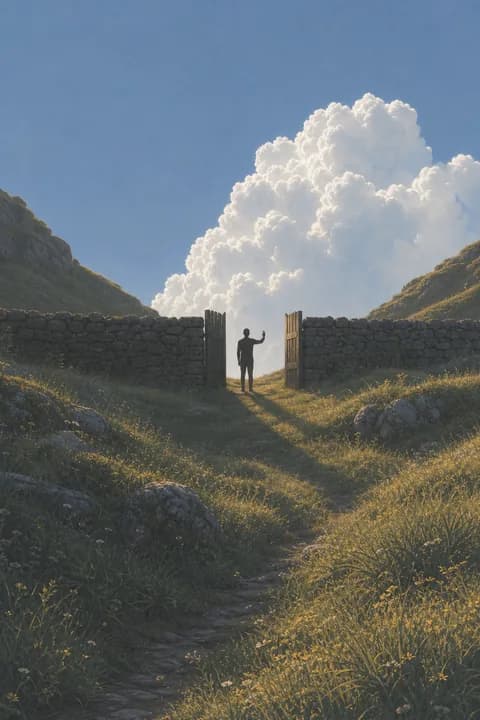
Decline one request this week that would overload you, kindly and without a paragraph of justification. Then pick the one deadline or commitment that is crushing you and renegotiate it: new date, smaller scope, or shared ownership.
These are the highest-fear, highest-return actions in the entire plan. Nearly everyone discovers the pushback they braced for does not come. Boundaries are what make the rest of recovery stick; without them, saved energy flows straight back into the machine.

Spend 30 minutes on something purely enjoyable
Spirit · 30 min
Thirty minutes on an activity with zero productive value: not optimized, not monetized, not self-improvement. Just enjoyable. Burnout hollows out the non-work self, and cynicism grows in that emptiness.
If you cannot remember what you enjoy, that is a symptom, not a verdict. Start with what you liked at twelve. The plan schedules this alongside real social contact, an actual call with someone you care about, because connection is one of the most protective factors against burnout that research has identified.

Take one full rest day
Spirit · Anytime today
One complete day off: no work, no email, no quick checks, from waking to sleep. Not a chores day or an errands day. A rest day.
This lands late in the plan on purpose. Early in burnout recovery a rest day just fills with anxious loose ends; after the triage, boundaries, and evening routines are in place, it becomes what it should be, proof that the world survives a day without your vigilance. Many people find this is the day the flatness finally cracks.
What to expect: the timeline
Week 1
Stabilize
The audit and triage make the invisible load visible, which is briefly uncomfortable and then a relief. Sleep and lunch breaks improve first. The exhaustion is still there; the sense of drowning starts easing.
Week 2
Boundaries go in
The hard stop, protected morning, and first no. Expect internal resistance and guilt; expect also to discover that nothing catastrophic happens. Evenings start feeling like yours again.
Weeks 3-4
Energy returns in patches
Real recovery begins: joy activities stop feeling forced, the rest day lands, motivation flickers back for specific things rather than everything. Cynicism fades slower than exhaustion; that is normal.
Months 2-3
Rebuild and protect
Full burnout recovery is measured in months. The habits from the plan become the protective baseline: how long it takes depends on how deep it went and how much of the workload actually changed. If nothing improves after a month of consistent effort, bring in a professional or reconsider the role itself.
Common mistakes to avoid
Treating a vacation as the cure
Time off lowers symptoms, then returns you to the exact conditions that caused them. Studies on vacation effects show the benefits fade within weeks. Rest is necessary and not sufficient; the workload and boundaries have to change too.
Pushing through to a milestone
After this launch, things will calm down. They will not; there is always another launch. Burnout deepens fastest in people who defer recovery to a future that keeps moving.
Recovering harder
Attacking burnout with a 5 a.m. routine, intense training, and a supplement stack turns recovery into another performance to fail at. Depleted systems need gentler inputs: walks, sleep, boundaries, enjoyment.
Fixing energy while ignoring demands
Better sleep feeds a bottomless workload with more fuel to burn. The triage, the no, and the renegotiation are not optional extras; they are the half of recovery that prevents relapse.
Going silent
Burnout isolates: too tired to socialize, too proud to say it out loud. Isolation then accelerates the cynicism. One honest conversation, with a friend, partner, or manager, reliably changes the trajectory. Asking for help once is literally an action in the plan.
Mistaking depression for burnout
If the flatness covers your whole life, or includes hopelessness that work changes do not touch, treat it as a health matter and see a professional. A habit plan is a complement to care, never a substitute.
Frequently asked questions
The long-tail questions, answered directly.
How long does burnout recovery take?
What are the stages of burnout recovery?
Can you recover from burnout without quitting your job?
What does burnout feel like physically?
Is burnout the same as depression?
Should I tell my manager I am burned out?
Why am I still exhausted after resting?
Want this scheduled for you?
The free 2-minute quiz scores 14 reset plans against your answers, including the 30-Day Burnout Reset, and recommends where to start.