
Personal Growth and Development Plan: Your Guide

Doreset
May 4, 2026
Creating a meaningful change in your life doesn't happen by accident. It requires intention, structure, and a clear roadmap that guides you from where you are to where you want to be. A personal growth and development plan serves as this roadmap, offering you a framework to identify what matters most, set achievable goals, and build the habits that transform your daily reality. Whether you're feeling stuck in old patterns, seeking to improve specific areas of your life, or ready to completely rebuild your approach to personal success, having a structured plan makes all the difference between wishful thinking and actual transformation.
Understanding What a Personal Growth and Development Plan Really Means
A personal growth and development plan is more than a to-do list or a collection of vague aspirations written on New Year's Day. It's a comprehensive, personalized strategy that outlines your current state, defines your desired future, and maps the specific actions needed to bridge that gap.
At its core, this plan acknowledges a fundamental truth: you have the capacity to change, grow, and evolve throughout your life. According to research on personal development, these plans encompass activities that develop capabilities and potential, enhance quality of life, and facilitate the realization of dreams and aspirations.
The Essential Components
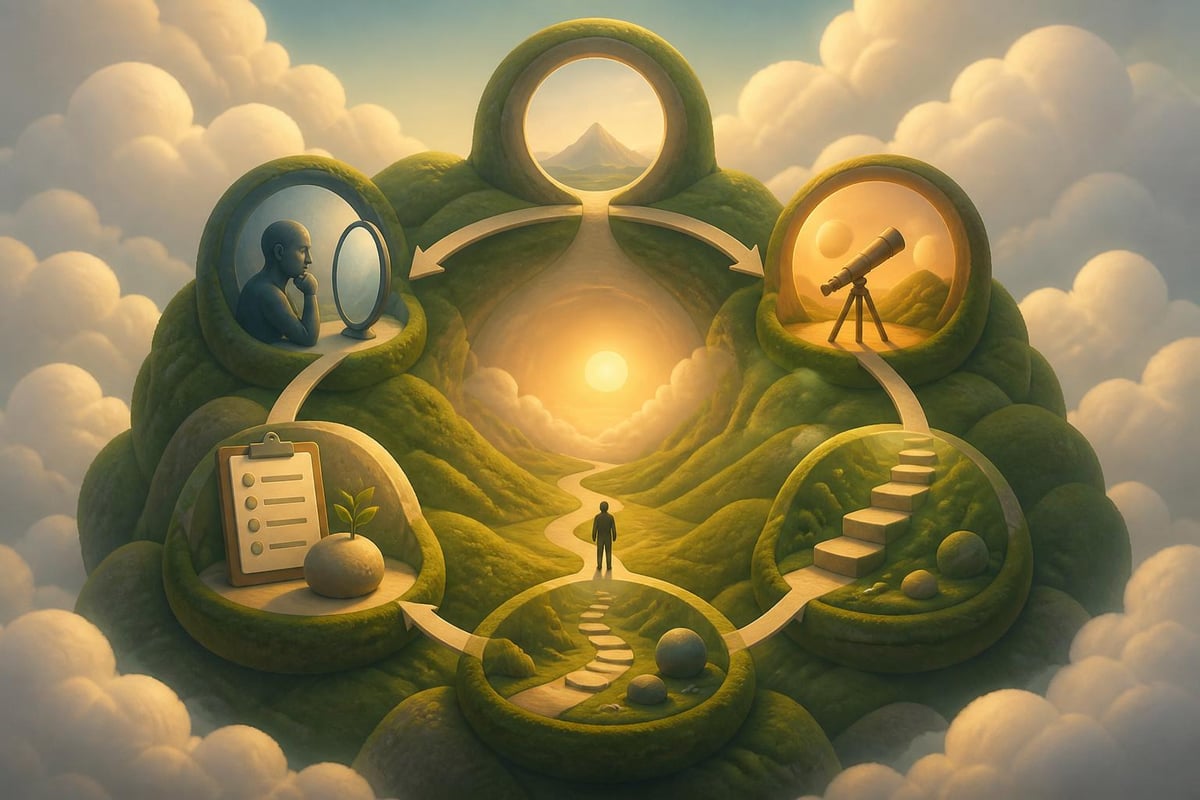
Every effective personal growth and development plan contains several key elements that work together:
- Self-assessment: An honest evaluation of where you currently stand
- Vision statement: A clear picture of who you want to become
- Specific goals: Measurable targets across different life areas
- Action steps: Daily or weekly behaviors that move you forward
- Timeline: Realistic deadlines that create accountability
- Review process: Regular check-ins to track progress and adjust course
Think of your plan as a living document that evolves with you. It's not about perfection, but about progress and intentional direction.
Why You Need a Structured Approach to Personal Growth
Many people approach personal development reactively, responding to problems as they arise rather than proactively shaping their growth. This reactive approach often leads to frustration, inconsistency, and the feeling that you're spinning your wheels without making real progress.
A personal growth and development plan shifts you from reactive to proactive. When you plan your life with intention, you create momentum that carries you through difficult moments. You build resilience because you're not just hoping for change but actively engineering it.
The Psychology Behind Structured Planning
Your brain responds powerfully to clarity and specificity. When you write down goals and create actionable steps, you activate the reticular activating system in your brain, which helps you notice opportunities and resources that align with your objectives. This isn't magic; it's neuroscience working in your favor.
Furthermore, having a written plan reduces decision fatigue. Instead of waking up each day wondering what you should work on, your personal growth and development plan tells you exactly where to focus your energy. This clarity is especially valuable during challenging periods when motivation naturally fluctuates.
Conducting an Honest Self-Assessment
Before you can plan where you're going, you need to understand where you are. This requires honest, compassionate self-reflection across multiple dimensions of your life.
Start by evaluating these core areas:
- Physical health: Energy levels, fitness, sleep quality, nutrition habits
- Mental and emotional wellbeing: Stress management, emotional regulation, mental clarity
- Relationships: Quality of connections with family, friends, romantic partners
- Career and finances: Job satisfaction, income, financial security
- Personal interests: Hobbies, creativity, learning, passions
- Spiritual or philosophical: Sense of purpose, values alignment, meaning
For each area, ask yourself two questions: What's working well? What needs attention? This balanced approach prevents you from falling into the trap of only focusing on what's wrong, which can be discouraging and counterproductive.
| Life Area | Current Strength | Growth Opportunity | Priority Level |
|---|---|---|---|
| Physical Health | Regular walking | Inconsistent sleep | High |
| Mental Wellbeing | Journaling practice | Stress management | High |
| Relationships | Close friendships | Family communication | Medium |
| Career | Stable income | Skill development | Medium |
| Personal Growth | Reading habit | Application of learning | High |
As highlighted in guides on crafting development plans, self-reflection serves as the foundation for meaningful goal setting and strategic action.
Defining Your Vision and Setting Meaningful Goals
Once you understand your current reality, you can begin crafting your vision for the future. This vision should excite you, challenge you, and feel authentically aligned with who you want to become.
Creating a Compelling Vision
Your vision isn't about material possessions or external validation. It's about the person you're becoming and the life you're building. When changing your mindset to embrace growth, consider questions like:
- How do I want to feel in my daily life?
- What kind of relationships do I want to cultivate?
- What impact do I want to have on others?
- What skills and qualities do I want to develop?
Write your vision in present tense, as if you're already living it. This creates a powerful psychological pull toward that future version of yourself.
Translating Vision into Goals
Goals are the milestones on your journey from current reality to desired future. Effective goals in your personal growth and development plan follow the SMART framework:
Specific: "Improve health" becomes "Exercise for 30 minutes, five days per week" Measurable: Include numbers, frequencies, or clear indicators of success Achievable: Stretch yourself without setting up for failure Relevant: Align with your broader vision and values Time-bound: Set clear deadlines that create healthy urgency
Consider creating goals at different time horizons. A 90-day goal might be developing a consistent morning routine, while a one-year goal could be completing a professional certification. This layered approach, similar to using a 90-day planner, creates both immediate focus and long-term direction.

Building Your Action Plan with Daily Practices
Goals without action steps remain fantasies. The most critical part of your personal growth and development plan is translating aspirations into concrete behaviors you can implement today.
The Power of Daily Actions
Transformation happens in the accumulation of small, consistent actions repeated over time. As you rebuild your life, focus on identifying the daily or weekly behaviors that directly support your goals.
For example, if your goal is to improve emotional intelligence, your daily actions might include:
- Morning reflection: Five minutes identifying one emotion you're feeling and why
- Midday pause: Brief check-in to notice stress levels and adjust accordingly
- Evening review: Journaling about one interaction and what you learned about yourself
These actions seem small in isolation, but practiced consistently over 90 days, they fundamentally reshape your self-awareness and emotional capacity.
Creating Habit Stacks and Routines
One powerful strategy involves anchoring new behaviors to existing habits. This technique, called habit stacking, leverages routines you already perform consistently.
If you already make coffee every morning, you might stack a new gratitude practice immediately after. The existing habit becomes a trigger for the new behavior, making it easier to remember and implement.
The habits to change your life often start with one small action that cascades into broader transformation. Your personal growth and development plan should identify these leverage points where minimal effort creates maximum impact.
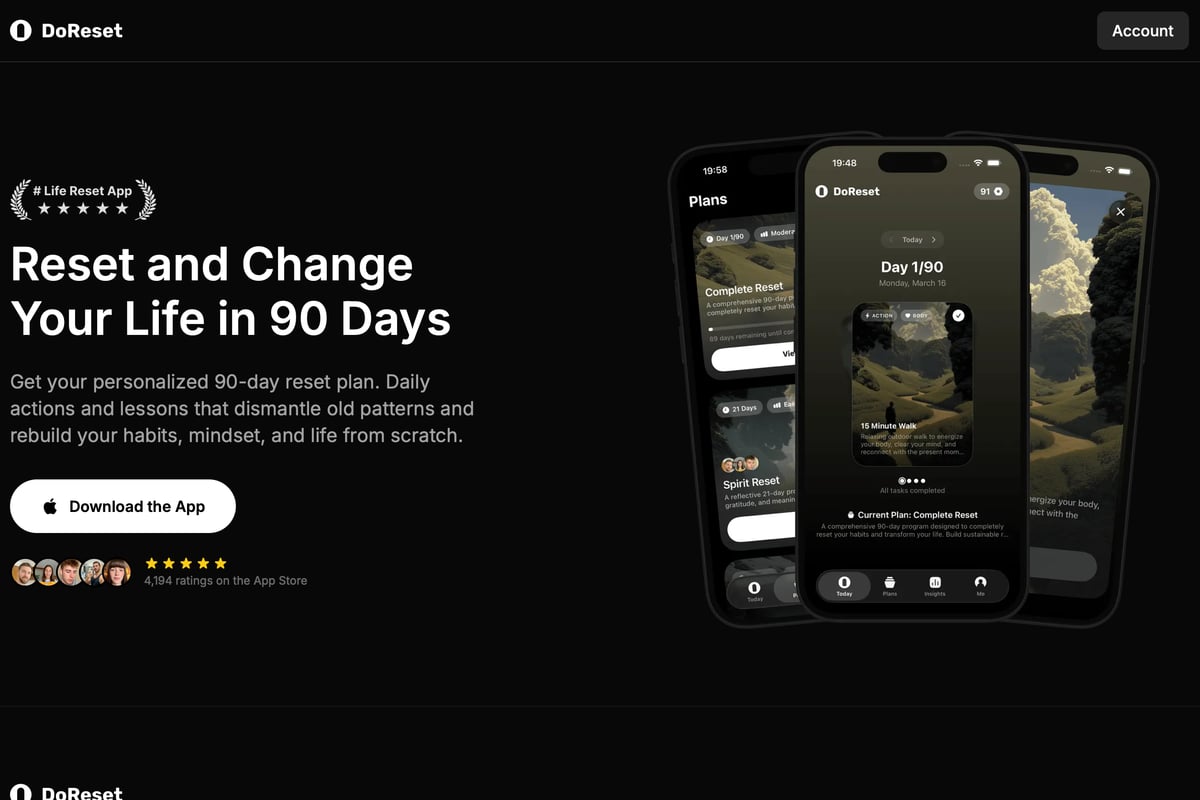
DoReset's personalized approach recognizes that sustainable change comes from daily consistency, not occasional intensity. The DoReset mobile app provides exactly this structure, offering personalized daily actions and lessons designed to dismantle old patterns and rebuild your habits, mindset, and life from scratch over 90 days.
Tracking Progress and Maintaining Accountability
Creating a plan is essential, but following through separates those who dream from those who transform. Your personal growth and development plan needs built-in mechanisms for tracking progress and maintaining accountability.
Measurement Methods
Different goals require different measurement approaches:
- Quantitative metrics: Days exercised, pages read, hours of focused work
- Qualitative assessments: Energy levels, relationship quality, confidence ratings
- Milestone markers: Completed projects, skills acquired, habits established
Choose metrics that genuinely reflect progress toward your vision, not just activities that are easy to count. Sometimes the most meaningful growth is harder to measure but more important to track.
Weekly and Monthly Reviews
Schedule regular check-ins with yourself. A weekly review might take 15-20 minutes and cover:
- What went well this week?
- What challenges did I face?
- What did I learn about myself?
- What will I focus on next week?
Monthly reviews offer a broader perspective, allowing you to assess patterns, celebrate wins, and make strategic adjustments. According to best practices for personal development plans, regular review and adjustment are critical to maintaining relevance and momentum.
| Review Frequency | Duration | Focus Areas |
|---|---|---|
| Daily | 5 minutes | Action completion, emotional check-in |
| Weekly | 15-20 minutes | Progress assessment, next week planning |
| Monthly | 30-45 minutes | Goal review, pattern identification, adjustments |
| Quarterly | 1-2 hours | Comprehensive evaluation, vision alignment |
Overcoming Common Obstacles in Personal Development
Even with the best personal growth and development plan, you'll encounter obstacles. Understanding these challenges in advance helps you navigate them with grace rather than giving up entirely.
The Motivation Myth
Motivation is unreliable. It comes and goes based on mood, circumstances, and countless external factors. Successful personal development doesn't rely on constant motivation; it relies on systems, routines, and commitment.
When motivation wanes, your plan becomes your anchor. This is why building discipline matters more than waiting for inspiration. Your action steps should be so clear and specific that you can execute them even on days when you don't feel like it.
Dealing with Setbacks
Setbacks aren't failures; they're data points. When you miss a week of workouts or fall back into an old pattern, your personal growth and development plan helps you respond constructively rather than spiraling into self-criticism.
Ask yourself:
- What triggered this setback?
- What can I learn from this experience?
- What small action can I take today to get back on track?
This growth mindset approach, emphasized in resources on personal development planning, transforms obstacles into opportunities for deeper self-understanding and course correction.

Integrating Multiple Life Areas into One Cohesive Plan
Your life isn't divided into separate compartments. Your health affects your work performance. Your relationships influence your emotional wellbeing. Your personal growth and development plan should recognize these interconnections.
Creating Synergy Between Goals
Look for ways that progress in one area supports growth in another. For example:
- A morning exercise routine improves both physical health and mental clarity
- Developing better communication skills enhances relationships and career opportunities
- Learning to manage stress benefits health, relationships, and professional performance
This integrative approach makes your plan more efficient and creates positive feedback loops where progress in one domain accelerates growth in others.
Balancing Ambition with Sustainability
While it's tempting to pursue dramatic transformation across all life areas simultaneously, this approach often leads to overwhelm and burnout. Your personal growth and development plan should be ambitious enough to inspire you but sustainable enough to maintain over time.
Consider focusing deeply on 2-3 priority areas for a 90-day period, while maintaining (but not intensely developing) other areas. This focused approach, similar to a life reset strategy, allows you to make meaningful progress without spreading yourself too thin.
Adapting Your Plan as You Evolve
The person you are today isn't the person you'll be in six months. As you grow, your goals, priorities, and even your vision may shift. This evolution is healthy and expected.
Recognizing When to Pivot
Your personal growth and development plan should be flexible enough to accommodate meaningful changes while maintaining enough structure to prevent you from abandoning goals at the first sign of difficulty.
Consider pivoting when:
- You've achieved a goal and need to set a new one
- Your values or priorities have genuinely shifted
- You've gained new information that changes your understanding
- A goal no longer serves your growth or aligns with your vision
Avoid changing course simply because something is challenging. As discussed in resources about changing for life, sustainable transformation requires persisting through discomfort.
The 90-Day Reset Cycle
Many people find that 90-day cycles provide the ideal timeframe for meaningful change. Three months is long enough to establish new habits and see real results, but short enough to maintain focus and urgency.
At the end of each 90-day period, conduct a comprehensive review:
- Assess what worked and what didn't
- Celebrate your progress and growth
- Identify emerging priorities or interests
- Design your next 90-day cycle with renewed clarity
This cyclical approach, supported by 90-day habit formation strategies, creates ongoing momentum while allowing regular recalibration. Your personal growth and development plan becomes a renewable commitment to your evolution rather than a static document.
Creating Support Systems and Accountability
Personal growth is deeply individual, but it doesn't have to be solitary. Building support systems and accountability mechanisms significantly increases your likelihood of following through on your personal growth and development plan.
Types of Accountability
Different accountability structures work for different people and goals:
- Accountability partner: Someone who checks in regularly on specific commitments
- Mastermind group: A small group pursuing growth who meet regularly to share progress
- Public commitment: Sharing goals with friends, family, or social media
- Professional support: Working with a coach, therapist, or mentor
- Structured programs: Following a guided plan like those offered by development platforms
Research highlighted by guides on creating development plans that work shows that external accountability dramatically increases follow-through rates.
Designing Your Environment for Success
Your physical and digital environments either support or sabotage your growth. Audit your surroundings and make strategic adjustments:
- Remove temptations that trigger old patterns
- Place reminders of goals in visible locations
- Organize your space to make desired behaviors easier
- Curate your digital consumption to support your vision
Environmental design is a form of self-compassion. You're not relying solely on willpower; you're engineering conditions that make success more likely.
Celebrating Progress and Practicing Self-Compassion
As you work through your personal growth and development plan, remember that transformation is nonlinear. You'll have breakthrough moments and frustrating plateaus, days of perfect execution and days when everything falls apart.
The Importance of Celebration
Celebrating progress, even small wins, reinforces the behaviors you're trying to establish. Your brain learns that these actions lead to positive feelings, making them more likely to continue.
Celebrations don't need to be elaborate. They might include:
- Acknowledging progress in your journal
- Sharing a win with your accountability partner
- Treating yourself to something meaningful
- Simply pausing to appreciate how far you've come
As emphasized in guidance on mapping personal growth, recognizing progress maintains motivation during challenging periods.
Practicing Self-Compassion
You will stumble. You will forget. You will revert to old patterns occasionally. This is part of being human, not evidence of failure.
When you fall short of your intentions, respond with the same kindness you'd offer a close friend facing similar struggles. Ask yourself: "What do I need right now?" rather than "What's wrong with me?"
This self-compassionate approach, combined with the structure of your personal growth and development plan, creates sustainable change. You're not trying to punish yourself into transformation; you're lovingly guiding yourself toward the life you want to live.
Your personal growth and development plan represents more than goals on paper. It's a commitment to yourself, a declaration that your growth matters, and a structured pathway from who you are today to who you're becoming. With clarity, consistency, and compassion, this plan becomes the foundation for lasting transformation.
Creating and following through on a personal growth and development plan transforms abstract aspirations into tangible reality. By combining honest self-assessment, clear goal setting, daily action steps, and regular review, you build the foundation for sustainable change across all areas of your life. If you're ready to stop planning and start transforming, DoReset offers a personalized 90-day reset plan with daily actions and lessons designed to dismantle old patterns and rebuild your habits, mindset, and life from scratch. Your transformation journey begins with a single committed step.