
Plan Your Life: A Compassionate Guide to Transformation

Doreset
March 26, 2026
Life can feel overwhelming when you're moving through each day without a clear sense of direction. Maybe you've noticed yourself repeating the same patterns, wondering why progress feels so elusive, or feeling like you're drifting rather than steering toward something meaningful. The truth is, you're not alone in this experience, and there's nothing wrong with feeling uncertain about where you're headed. The desire to plan your life more intentionally is actually a beautiful sign of growth, showing that you're ready to take ownership of your journey and create the future you deserve.
Understanding Why We Struggle to Plan
Before diving into how to plan your life effectively, it's important to acknowledge why this feels so challenging for many of us. We live in a world that constantly demands our attention, pulling us in multiple directions simultaneously. Between work responsibilities, relationships, social media, and daily survival, finding the mental space to think about the bigger picture can feel impossible.
Many people also carry emotional barriers that make life planning feel uncomfortable. Perhaps you've set goals before and didn't achieve them, leaving you with feelings of failure or shame. Maybe you grew up in an environment where planning ahead wasn't modeled or encouraged. Or perhaps the very act of imagining a different future feels scary because it requires acknowledging that your current reality isn't where you want to be.
The Emotional Weight of Change
When you decide to plan your life, you're essentially committing to change. Change involves uncertainty, and uncertainty triggers our nervous system's protective responses. Your brain is designed to keep you safe, and safety often means staying with what's familiar, even when familiar isn't serving you well.
This is why changing your mindset is such a crucial component of the planning process. You're not just organizing tasks or setting goals; you're rewiring the way you think about yourself and your capabilities.

Core Elements of Effective Life Planning
Planning your life doesn't mean controlling every detail or eliminating spontaneity. Instead, it's about creating a framework that guides your daily decisions while remaining flexible enough to accommodate life's natural unpredictability.
Values as Your Foundation
Before you can plan where you're going, you need to understand what matters to you. Research on goal setting effectiveness consistently shows that goals aligned with personal values lead to greater satisfaction and achievement.
Ask yourself these questions:
- What brings me genuine joy, not just temporary pleasure?
- When do I feel most like myself?
- What would I regret not doing or experiencing?
- How do I want to impact the people around me?
- What does success mean to me, independent of others' expectations?
Your answers to these questions create the foundation for everything else. When your daily actions align with your core values, life feels more meaningful, even during challenging times.
Vision Versus Goals
Many people confuse vision with goals, but they serve different purposes in life planning. Your vision is the broader picture of the life you want to create-it's qualitative, emotional, and aspirational. Goals are the specific, measurable milestones that move you toward that vision.
| Vision | Goals |
|---|---|
| Describes how you want to feel and who you want to be | Defines concrete outcomes you can measure |
| Remains relatively stable over time | Can change as you progress and learn |
| Inspires and motivates | Directs and focuses your actions |
| Example: "I want to live with vitality and purpose" | Example: "Exercise 4 times weekly for 3 months" |
Understanding this distinction helps you plan your life at multiple levels simultaneously. You need the emotional pull of a compelling vision and the practical clarity of specific goals.
Creating Your Personal Planning System
There's no one-size-fits-all approach to life planning. What works beautifully for one person might feel restrictive or overwhelming to another. The key is finding a system that matches your personality, lifestyle, and current circumstances.
Time Horizons That Actually Work
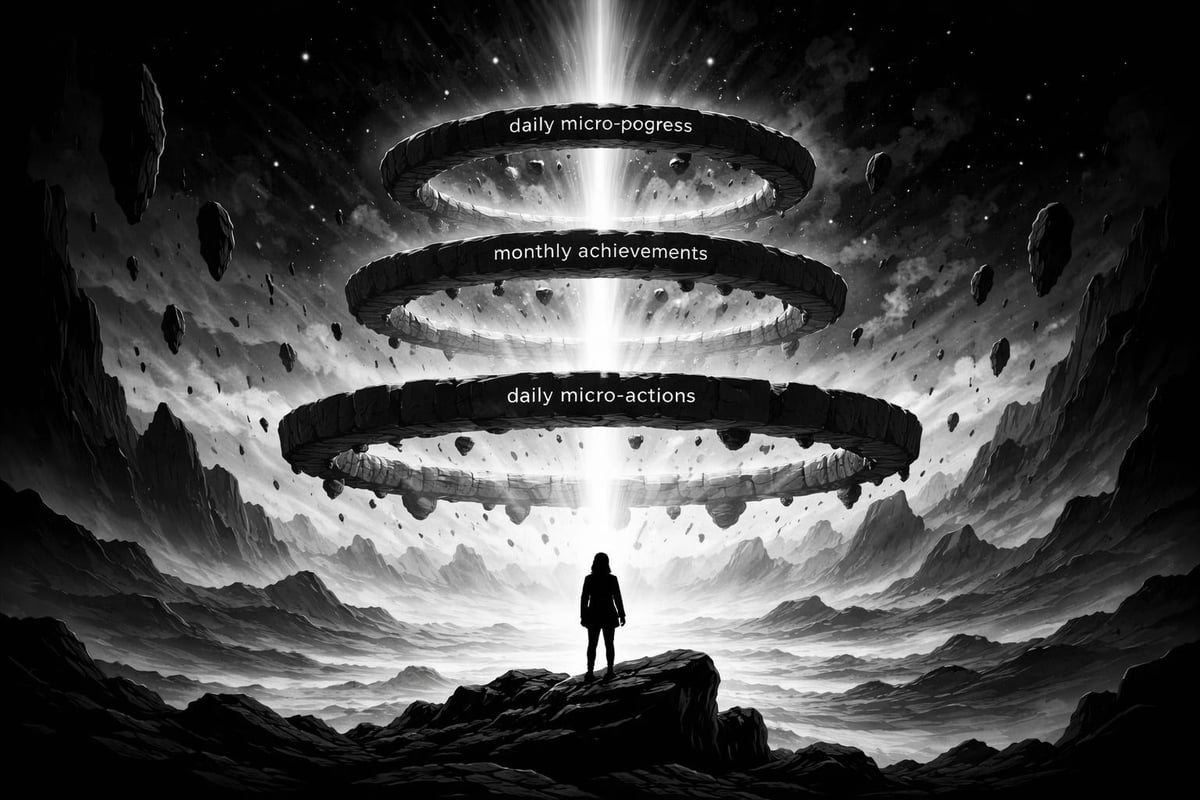
When you set out to plan your life, thinking about the next 10 or 20 years can feel paralyzing. Instead, try working with multiple time horizons that nest inside each other:
- 90-day sprints for focused transformation and habit building
- Monthly themes that break down quarterly priorities
- Weekly intentions that align with monthly focuses
- Daily actions that move you toward weekly goals
This approach, similar to what's explored in guidance about how to plan your day, creates manageable chunks while maintaining connection to your larger vision. The 90-day timeframe is particularly powerful because it's long enough to see real change but short enough to maintain focus and motivation.
Breaking Down Big Changes
Transformation happens through accumulated small actions, not dramatic overnight shifts. When you want to rebuild life in a meaningful way, the process requires patience and self-compassion.
Consider this practical breakdown:
If your vision is: Building a career that excites you
- 90-day goal: Complete three informational interviews and one relevant certification
- Monthly focus: Month 1 - Research; Month 2 - Network; Month 3 - Learn
- Weekly actions: Reach out to one new contact, spend 3 hours on coursework
- Daily practices: 20 minutes of skill development, review progress journal
This cascading structure prevents overwhelm while ensuring every day connects to your larger purpose.
The Psychology of Following Through
Setting a plan is one thing; following through is entirely another. This gap between intention and action is where most life planning efforts fall apart, and it's usually not because of laziness or lack of discipline.
Understanding Your Resistance
When you struggle to follow your plan, pause before judging yourself harshly. Resistance often carries important information. Sometimes it signals that:
- The goal isn't actually aligned with your values
- You're trying to change too much at once
- You haven't addressed underlying fears or beliefs
- Your plan doesn't account for your real-life constraints
- You're following someone else's definition of success
Goal setting research reveals that the psychological aspects of planning, including how we frame goals and the meaning we assign to them, significantly impact our ability to follow through.
Building Supportive Structures
Rather than relying solely on willpower, create environmental and social structures that make following through easier:
- Accountability partnerships where you share progress with someone who understands your journey
- Environmental design that removes obstacles and adds helpful cues
- Tracking systems that provide feedback without judgment
- Celebration rituals that acknowledge progress, no matter how small
- Reset protocols for getting back on track after interruptions
The most effective approach combines structure with flexibility. You need enough consistency to build momentum, but enough adaptability to respond to life's inevitable surprises without abandoning your plan entirely.
Adjusting Your Plan as You Grow
One of the most compassionate truths about life planning is that your plan should evolve as you do. The person you are today has different needs, insights, and capabilities than the person you were six months ago or will be six months from now.
Regular Review Practices
Studies examining goal setting interventions emphasize the importance of regular review and adjustment. Schedule consistent times to assess your progress and refine your approach:
Weekly reviews (15-20 minutes):
- What worked well this week?
- What challenges did I face?
- What do I need to adjust for next week?
- Am I still moving toward what matters?
Monthly assessments (45-60 minutes):
- Review your monthly theme and intentions
- Celebrate completed goals and progress made
- Identify patterns in what's working or not working
- Adjust next month's priorities based on what you've learned
Quarterly reflections (2-3 hours):
- Evaluate your 90-day sprint outcomes
- Assess whether your vision still resonates
- Plan your next 90-day focus
- Consider what skills or support you need
This regular rhythm of reflection helps you plan your life as an ongoing practice rather than a one-time event. It also prevents you from rigidly pursuing outdated goals just because you set them.
Practical Tools and Approaches
While the emotional and psychological aspects of planning are crucial, practical tools help translate insight into action. The right tools support your planning process without adding unnecessary complexity.
Analog Versus Digital Systems
| Analog Tools | Digital Tools |
|---|---|
| Journals, planners, notebooks | Apps, software, digital calendars |
| Slower processing allows deeper thinking | Quick updates and easy editing |
| No distractions or notifications | Accessible across devices |
| Satisfying physical ritual | Powerful search and organization |
| Privacy and permanence | Backup and cloud sync |
Neither approach is superior. Some people thrive with the tactile experience of writing by hand, while others need the flexibility of digital systems. Many find a hybrid approach most effective, using journals for reflection and digital tools for task management.
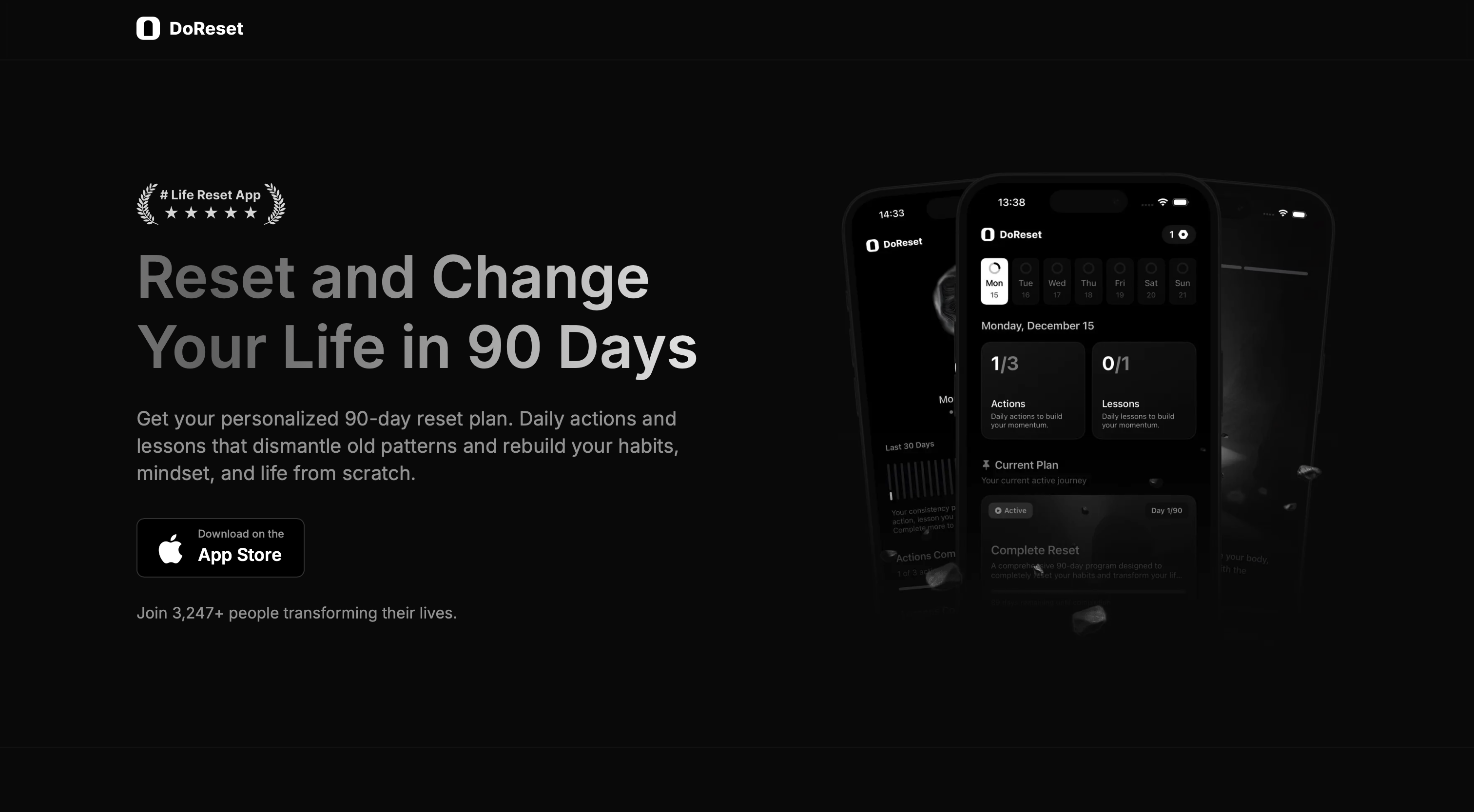
If you're looking for a comprehensive system that provides structure while maintaining flexibility, the DoReset mobile app offers personalized daily actions and lessons designed specifically for people working through significant life transitions. Rather than generic productivity advice, it provides targeted guidance for dismantling old patterns and building new ones.
Integration With Daily Life
Your planning system needs to integrate seamlessly with your actual life. Consider these practical integration strategies:
- Link planning time to existing routines (morning coffee, Sunday evenings)
- Keep tools visible and accessible where you'll actually use them
- Batch similar planning tasks together to minimize context switching
- Use templates for recurring planning activities
- Start with minimum viable planning and add complexity only as needed
The goal is to make the planning process support your life rather than becoming another burdensome obligation.

Special Considerations for Major Transitions
Certain life circumstances require adapted planning approaches. If you're navigating a significant transition, whether it's career change, relationship shifts, health challenges, or recovery from burnout, your planning needs to account for the emotional complexity of your situation.
Planning During Uncertainty
When your life feels particularly unstable, traditional planning can feel impossible or even counterproductive. During these times, shift your focus from outcome goals to process goals:
Instead of: "Get a new job by June"
Try: "Spend 30 minutes daily exploring what I want in my next role"
Instead of: "Lose 20 pounds this quarter"
Try: "Build a sustainable relationship with movement and nutrition"
This approach, which aligns with research on goal setting in rehabilitation contexts, acknowledges that you may not control outcomes during transition periods, but you can commit to consistent actions that move you forward.
Planning for Multiple Life Areas
Life planning involves balancing multiple domains simultaneously. The research on comprehensive life planning approaches suggests organizing your attention across key areas:
- Physical vitality: Health, energy, movement, rest
- Emotional well-being: Relationships, self-compassion, joy
- Mental growth: Learning, creativity, problem-solving
- Purpose and contribution: Work, service, legacy
- Financial security: Resources, planning, sustainability
- Environmental harmony: Physical spaces, nature connection
Rather than trying to optimize all areas simultaneously, identify which 2-3 areas need your focused attention right now. The others can remain in maintenance mode while you direct energy where it's most needed.
The Role of Self-Compassion in Planning
Perhaps the most important ingredient in successful life planning isn't strategy or tools-it's how you treat yourself throughout the process. When you plan your life with self-compassion rather than self-criticism, everything changes.
Normalizing Imperfect Progress
You will not follow your plan perfectly. You will have days, maybe even weeks, where you don't take the actions you intended. You will discover that some goals don't actually matter to you once you get closer to them. You will need to reset your life direction more than once.
All of this is completely normal and doesn't mean you've failed. It means you're human, learning, and growing. The planning process itself is where the transformation happens, not in achieving a perfect outcome.
Reframing Setbacks as Information
When something doesn't go according to plan, approach it with curiosity rather than judgment:
- What was I trying to accomplish with this goal?
- What got in the way?
- What does this reveal about what I need?
- How can I adjust my approach based on this information?
- What support would help me move forward?
This inquiry-based approach, supported by research on goal setting in mental health contexts, transforms perceived failures into valuable data that refines your planning process.
Creating Sustainable Planning Habits
The ultimate goal isn't to create the perfect plan-it's to develop a sustainable practice of planning that serves you throughout your life. This means building habits around the planning process itself.
Start With What You Can Sustain
If you're new to intentional life planning, resist the urge to implement an elaborate system immediately. Research on behavior change through goal setting shows that starting small and building gradually leads to more lasting change than attempting dramatic transformation overnight.
Begin with:
- A simple weekly review (15 minutes every Sunday)
- Three priorities for the week ahead
- One small daily action aligned with your values
- A monthly check-in to assess what's working
As this baseline becomes comfortable, gradually add complexity. Maybe you introduce quarterly vision reviews or daily reflection practices. The key is building on a foundation that already feels sustainable.
Adapting to Life Stages
How you plan your life will naturally evolve across different life stages. The planning approach that works in your twenties may need significant adjustment in your forties or sixties. Research on goal setting across age groups confirms that effective planning strategies vary based on life circumstances, responsibilities, and developmental stages.
Give yourself permission to let your planning practice mature alongside you. What mattered five years ago may not matter now, and that's not regression-it's evolution.
Moving From Planning to Living
Ultimately, the purpose of planning your life isn't to control every detail or eliminate all uncertainty. It's to create enough structure and direction that you can live with greater intention, purpose, and alignment with what matters most to you.
The planning process should enhance your life, not consume it. If you find yourself spending more time planning than doing, or if your plans create anxiety rather than clarity, something needs adjustment. The plan exists to serve you and your wellbeing, not the other way around.
As you develop your own approach to life planning, remember that there will be seasons of tight focus and seasons of openness. There will be times when you need detailed plans and times when you need to trust your intuition more than your spreadsheet. Both are valuable, and learning to navigate between them is part of the journey.
Learning to plan your life with intention and compassion is a skill that develops over time, not a destination you reach and stay at forever. The most important thing is to begin where you are, with what you have, and trust that each small step contributes to the transformation you're seeking. If you're ready for structured support in this process, DoReset offers a personalized 90-day reset plan with daily actions and lessons designed to help you dismantle old patterns and rebuild your habits, mindset, and life from scratch-because you deserve guidance that meets you exactly where you are and helps you create the life you're meant to live.