
How to Reset Your Life and Start Fresh in 2026

Doreset
March 8, 2026
Life has a way of accumulating patterns, habits, and routines that no longer serve us. Sometimes we wake up feeling stuck, going through motions that don't align with who we want to be or where we want to go. If you're reading this, you might be feeling that familiar pull-the sense that something needs to change, but you're not sure where to begin. The good news is that you're already taking the first step by acknowledging that desire for transformation. When you decide to reset your life, you're not running away from yourself; you're running toward the person you're meant to become.
Understanding What It Means to Reset Your Life
To reset your life doesn't mean erasing everything you've built or throwing away your entire existence. It means taking intentional control of the patterns that shape your days and deliberately choosing which ones deserve space in your future.
Think of it like restarting your phone when it's running slowly. You're not destroying the device-you're clearing the cache, closing unnecessary programs, and giving the system a chance to run more efficiently. The same principle applies to our lives. We accumulate mental clutter, emotional baggage, and habitual behaviors that drain our energy without adding value.
The Difference Between Change and Reset
Change can be gradual, passive, or even accidental. A reset is different. It's a conscious decision to pause, evaluate, and rebuild from a place of intention.
- Change happens to you; reset is something you create
- Change can be superficial; reset addresses root systems
- Change might fade; reset establishes new foundations
When you commit to a genuine reset, you're not just tweaking surface behaviors. You're examining the underlying beliefs, thought patterns, and environmental factors that keep pulling you back to old ways of being.

Recognizing When You Need to Reset Your Life
The call to reset your life often comes quietly at first. You might notice it in small moments of dissatisfaction or in the growing gap between who you are and who you want to be.
Common Signs It's Time for a Reset
| Sign | What It Means | Why It Matters |
|---|---|---|
| Persistent dissatisfaction | Daily activities feel meaningless | Your values and actions are misaligned |
| Emotional numbness | Going through motions without feeling | You've disconnected from your authentic self |
| Constant exhaustion | Sleep doesn't restore energy | Your lifestyle is draining, not sustaining you |
| Relationship strain | Connections feel forced or empty | You've outgrown certain dynamics |
| Lost sense of purpose | Can't remember what excites you | Your goals need redefinition |
Some people experience a dramatic moment-a job loss, relationship ending, or health scare-that forces them to reconsider everything. Others simply wake up one morning with the quiet realization that their current path isn't taking them anywhere they want to go.
Both experiences are valid. Both deserve attention and action.
The Emotional Weight of Wanting Change
It's important to acknowledge that wanting to reset your life can bring up complicated feelings. You might feel guilty for wanting something different, especially if others depend on you or if your current life looks "good enough" from the outside.
Please know this: wanting more fulfillment doesn't make you ungrateful. Desiring alignment between your values and your daily life doesn't make you selfish. These feelings are your internal compass pointing you toward growth.
Creating the Foundation for Your Reset
Before you can effectively reset your life, you need to create space-both mentally and practically-for transformation to occur.
Conducting a Life Audit
Start by honestly assessing where you are right now. This isn't about judgment; it's about clarity.
- Map your current reality: Document how you actually spend your time, not how you think you spend it
- Identify energy drains: Which activities, people, or commitments consistently leave you depleted?
- Recognize energy sources: What lights you up, even in small ways?
- Examine your beliefs: What stories are you telling yourself about what's possible?
- Assess your environment: Does your physical space support the person you're becoming?
This audit creates a baseline. You can't navigate to a new destination without knowing your starting point.
Defining Your Core Values
Many people try to reset their life by copying someone else's blueprint. This rarely works because their values aren't your values. Understanding what truly matters to you is essential for building a life that feels authentic.
Your core values act as decision-making filters. When you're clear on what matters most-whether that's creativity, connection, growth, freedom, or service-you can evaluate opportunities and commitments against these standards.
- Write down 10-15 values that resonate with you
- Narrow them to your top 5 non-negotiables
- For each value, define what it looks like in practice
- Identify where your current life conflicts with these values
This exercise often reveals why certain aspects of your life feel misaligned. You're not broken-you're just operating outside your value system.

Dismantling Old Patterns That No Longer Serve You
To reset your life effectively, you must first understand the patterns you're leaving behind. These aren't just habits-they're often deeply rooted behavioral loops connected to identity, safety, and familiarity.
Understanding Pattern Formation
Our brains love patterns because they're efficient. When you repeat a behavior enough times, it becomes automatic, requiring minimal mental energy. This efficiency works beautifully when the patterns serve you. It becomes problematic when they don't.
Consider the pattern of checking your phone first thing in the morning. It started as a conscious choice but became automatic. Now it happens before you even think about it, potentially setting a reactive tone for your entire day.
Breaking patterns requires more than willpower. It requires understanding the trigger-behavior-reward cycle that keeps them in place.
The 90-Day Reset Framework
Research suggests it takes anywhere from 18 to 254 days to form a new habit, with an average of 66 days. A 90-day framework provides enough time to dismantle old patterns and establish new ones while maintaining momentum.
When you commit to a structured approach like establishing personal planning rituals, you create accountability and measurability. Daily actions compound into weekly progress, which builds into monthly transformation.
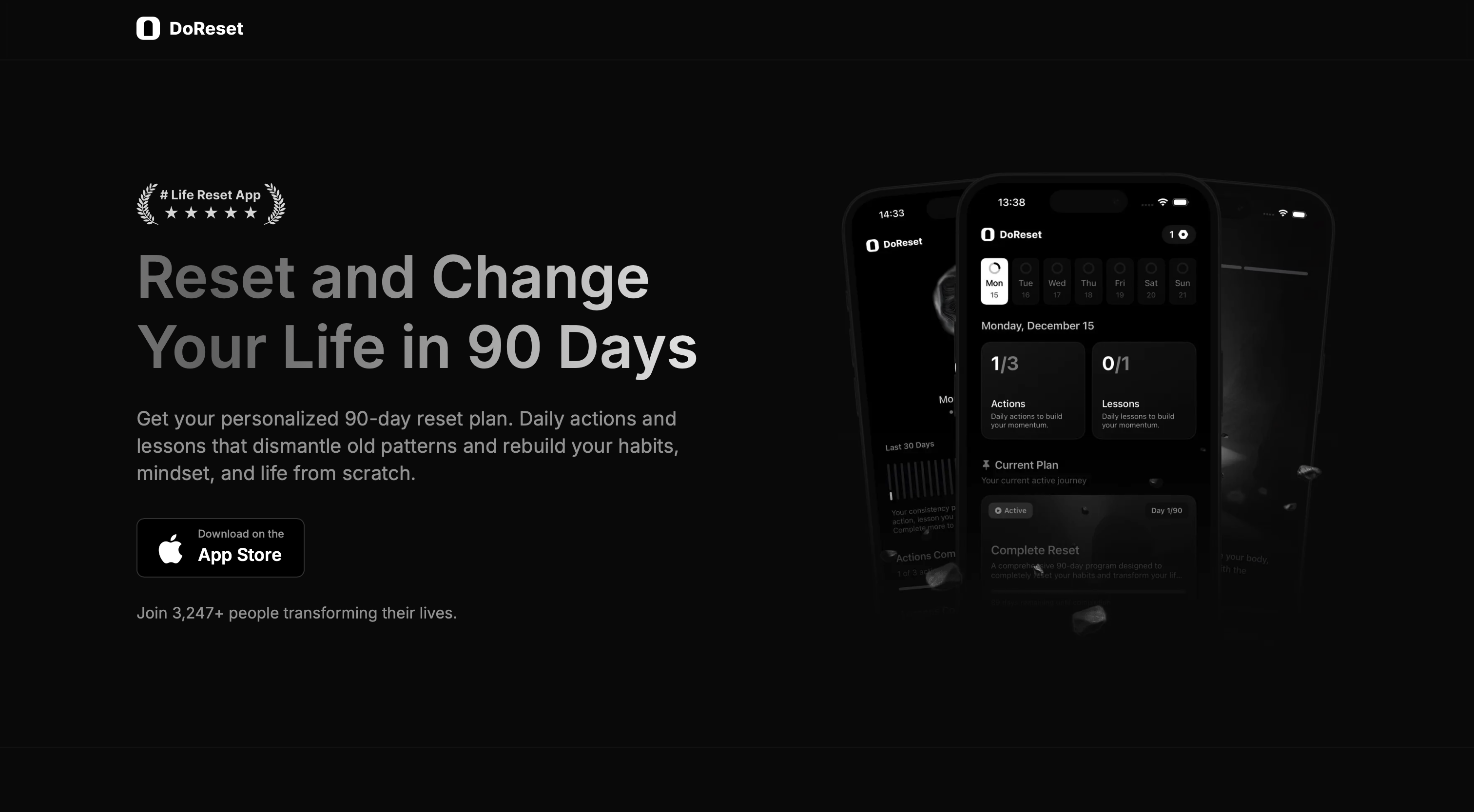
The DoReset mobile app provides this exact structure-a personalized 90-day reset plan that breaks down overwhelming transformation into manageable daily actions. Each day builds on the previous one, with lessons designed to shift both mindset and behavior simultaneously.
Building New Habits and Mindsets
Once you've identified what needs to change, the real work begins: constructing new patterns that align with your values and vision.
The Power of Identity-Based Change
Most people try to reset their life by focusing on outcomes: "I want to lose 20 pounds" or "I want to save $10,000." These goals are fine, but they miss the deeper transformation.
Identity-based change asks a different question: Who do I need to become to naturally create these outcomes? Instead of "I want to exercise more," you shift to "I am someone who prioritizes movement and health."
This subtle shift changes everything:
- Outcome focus: "I need to go to the gym today" (obligation)
- Identity focus: "I'm someone who takes care of their body" (alignment)
When your actions flow from identity rather than force, they become sustainable.
Implementing Keystone Habits
Not all habits are created equal. Some have a ripple effect, triggering positive changes in other areas of your life. These are keystone habits.
| Keystone Habit | Ripple Effects |
|---|---|
| Morning routine | Better time management, increased energy, mental clarity |
| Regular movement | Improved mood, better sleep, increased confidence |
| Mindfulness practice | Emotional regulation, reduced reactivity, deeper presence |
| Evening reflection | Greater self-awareness, course correction, intentional growth |
Choose 2-3 keystone habits to anchor your reset. Master these before adding more complexity.
Rebuilding Your Environment for Success
Your environment shapes you more than you realize. If you want to reset your life, you must redesign the spaces and systems that influence your daily choices.
Physical Space Optimization
Your physical environment either supports your new identity or undermines it. Look around your home, workspace, and car. What do these spaces communicate about priorities?
- Remove friction from desired behaviors: Place workout clothes where you'll see them; keep healthy snacks visible
- Add friction to unwanted behaviors: Put your phone in another room at night; delete distracting apps
- Create visual reminders: Post your values somewhere you'll see them daily
- Design spaces for specific activities: Establish a reading corner, meditation spot, or creative workspace
Small environmental tweaks create significant behavioral shifts over time.
Social Environment Restructuring
The five people you spend the most time with significantly influence your thoughts, behaviors, and outcomes. This doesn't mean abandoning everyone who isn't "optimized," but it does mean being intentional about who gets your time and energy.
When you feel stuck and need to reset, examine your relationships honestly:
- Who supports your growth versus who keeps you small?
- Which relationships energize you versus drain you?
- Are you spending time with people who share your values?
- Do your closest relationships reflect who you're becoming?
Adjust accordingly. Spend more time with people who inspire you. Create boundaries with those who pull you backward. Seek out communities aligned with your new direction.
Maintaining Momentum Through Challenges
The path to reset your life isn't linear. You'll face setbacks, doubts, and moments when old patterns feel more comfortable than new ones.
Expecting and Planning for Resistance
Your brain will resist change because change represents uncertainty, and uncertainty feels dangerous. This resistance isn't a sign you're on the wrong path-it's a normal part of transformation.
Common forms of resistance include:
- Sudden urgency to do anything except what you planned
- Harsh self-criticism when you miss a day
- Romanticizing your old life, forgetting why you wanted to change
- Feeling overwhelmed by how far you still have to go
When resistance appears, acknowledge it without letting it dictate your actions. "I notice I'm feeling resistant to this new morning routine. I'll do it anyway because it aligns with who I'm becoming."
Tracking Progress Without Perfectionism
Progress tracking keeps you accountable and motivated, but perfectionism kills momentum. Your reset journey should include measurement without judgment.
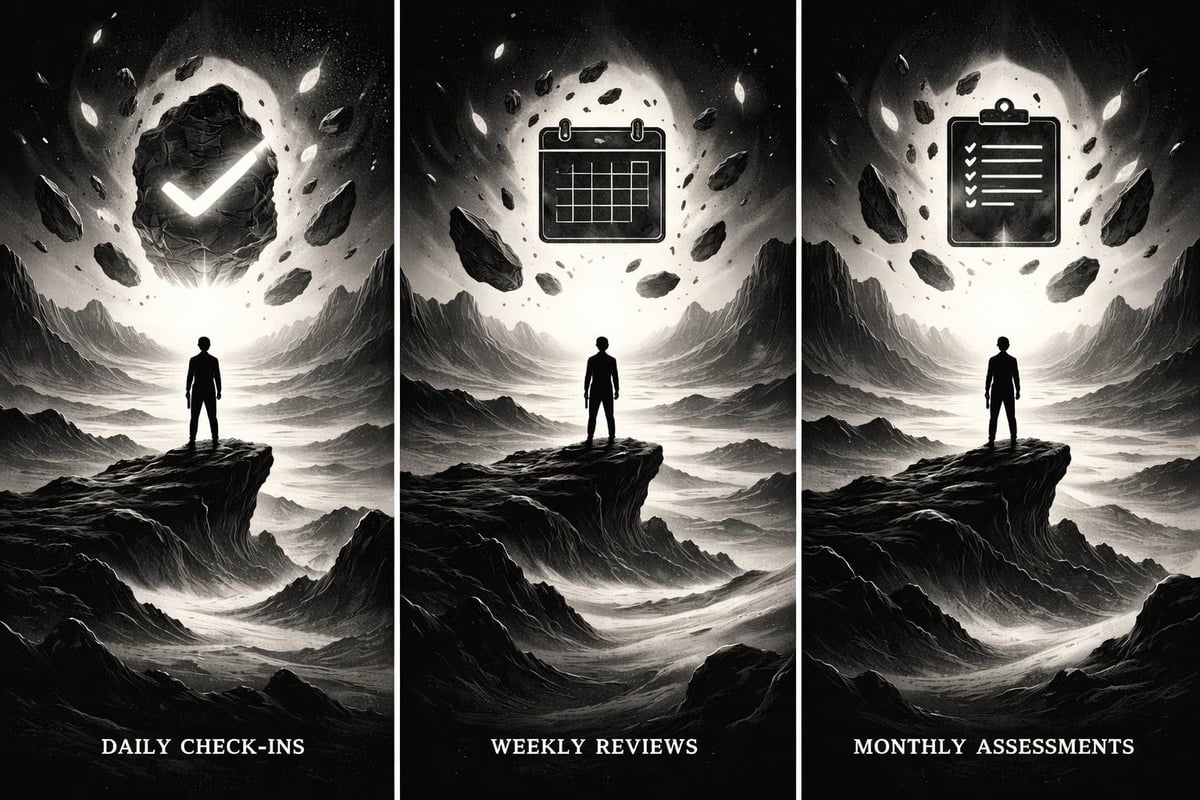
- Daily check-ins: Did you complete your key actions? How did you feel?
- Weekly reviews: What worked? What needs adjustment?
- Monthly assessments: How have you changed? What patterns are emerging?
- Quarterly evaluation: Are you moving toward your vision? What needs to shift?
The DoReset blog offers additional resources for maintaining momentum and navigating common reset challenges.
Integrating Lessons Into Long-Term Transformation
A true reset isn't just about those initial 90 days. It's about establishing systems that support continuous growth and evolution.
Building Self-Awareness Practices
The more you understand yourself-your triggers, patterns, values, and needs-the more intentionally you can design your life. Self-awareness is the foundation of lasting change.
Effective self-awareness practices include:
- Daily journaling to process thoughts and emotions
- Regular meditation or mindfulness to observe mental patterns
- Honest conversations with trusted friends or mentors
- Personality or strengths assessments to understand your wiring
- Therapy or coaching to explore deeper patterns
These practices aren't one-time activities. They're ongoing commitments that deepen your relationship with yourself.
Creating Flexibility Within Structure
Paradoxically, the best way to maintain freedom is through structure. When you have systems for the essential aspects of your life, you create space for spontaneity and creativity in other areas.
Your reset should establish foundational routines that run on autopilot-morning rituals, evening wind-downs, weekly planning sessions, monthly reviews. Within this structure, leave room for adaptation and experimentation.
Life will change. You'll change. The systems you build should be strong enough to provide stability but flexible enough to evolve with you.
Celebrating Small Wins and Embracing the Journey
When you decide to reset your life, it's easy to fixate on the destination-who you'll be in 90 days, six months, or a year. But transformation happens in the small, daily moments of choosing differently.
The Importance of Recognition
Your brain needs evidence that your efforts matter. When you acknowledge progress-even tiny steps-you reinforce the neural pathways associated with your new behaviors.
Celebrate when you:
- Choose the healthy option when the unhealthy one is easier
- Set a boundary even though it's uncomfortable
- Show up for yourself when no one else is watching
- Pause before reacting in an old pattern
- Ask for help instead of struggling alone
These moments matter more than the dramatic breakthroughs. They're proof that you're becoming someone new.
Redefining Success
Success in resetting your life isn't about perfection. It's about direction. Are you moving toward alignment between your values and your daily life? Are you becoming more of who you want to be?
Some days you'll take three steps forward. Other days you'll take two steps back. The net progress over time is what matters. Trust the process. Trust yourself. Trust that small, consistent actions create extraordinary transformations.
Resetting your life is one of the most compassionate things you can do for yourself. It's an acknowledgment that you deserve to live in alignment with your deepest values and that transformation is always possible, no matter where you're starting from. If you're ready to stop going through the motions and start building a life that truly reflects who you are and who you want to become, DoReset offers a personalized 90-day plan with daily actions and lessons designed to guide you through every step of this journey. You don't have to figure it out alone-let's rebuild together.