
Personal Growth Plan: A Compassionate Guide to Transformation

DoReset
May 15, 2026
You're here because something inside you is calling for change. Maybe you've felt stuck in the same patterns for too long, or perhaps you're yearning for a version of yourself that feels just out of reach. Whatever brought you here, know that taking time to create a personal growth plan is an act of courage and self-compassion. This isn't about fixing what's broken because you're not broken. It's about honoring your potential and giving yourself the structure and support you need to flourish.
Understanding What a Personal Growth Plan Really Means
A personal growth plan is more than a to-do list or a collection of New Year's resolutions destined to fade by February. It's a thoughtful roadmap that acknowledges where you are right now, validates your experiences, and charts a compassionate path forward. Think of it as a living document that evolves with you, capturing not just what you want to achieve but who you want to become.
Many people struggle with personal development because they lack structure. They have vague desires like "be healthier" or "be happier" without the concrete framework to make those wishes reality. A personal growth plan transforms abstract aspirations into tangible steps.
The Emotional Foundation of Growth Planning
Before diving into strategies and tactics, we need to address something crucial: your emotional readiness. Creating a personal growth plan requires honesty about your current situation, and that honesty can sometimes hurt. You might need to acknowledge habits that no longer serve you or recognize patterns you've avoided facing.
This process isn't meant to be another source of shame or self-criticism. Instead, approach it with the same kindness you'd offer a dear friend who's struggling. Your plan should feel supportive, not punitive.

Core Components of an Effective Personal Growth Plan
Building a meaningful personal growth plan requires several essential elements working together harmoniously. Let's explore each component with the understanding that you'll adapt these to fit your unique circumstances.
Self-Assessment and Current State Analysis
Start by taking an honest inventory of your life across multiple dimensions:
- Physical health: energy levels, sleep quality, exercise habits, nutrition
- Mental and emotional wellbeing: stress management, emotional regulation, mental clarity
- Relationships: quality of connections with family, friends, romantic partners
- Career and purpose: fulfillment in work, alignment with values, growth opportunities
- Personal skills: areas of competence and areas you'd like to develop
- Spiritual or philosophical grounding: sense of meaning, connection to something larger
This assessment isn't about judgment. It's about creating a baseline understanding of where you stand today. When you look back in three months or a year, you'll want to see how far you've traveled.
Vision Crafting and Goal Setting
Once you understand your starting point, it's time to envision your destination. What does growth look like for you specifically? This is deeply personal and there's no universal definition of success.
Your vision should resonate emotionally. When you imagine your future self, what do you feel? Excitement? Peace? Confidence? Let those feelings guide you toward authentic goals rather than what you think you "should" want.
| Goal Type | Time Frame | Example | Why It Matters |
|---|---|---|---|
| Foundation Goals | 30-90 days | Establish morning routine | Creates structure for other changes |
| Development Goals | 3-6 months | Complete online course | Builds new capabilities |
| Transformation Goals | 6-12 months | Career transition | Fundamentally shifts life direction |
| Legacy Goals | 1-5 years | Write a book, start business | Leaves lasting impact |
Designing Your Action Framework
A vision without action remains a daydream. The bridge between where you are and where you want to be is built through consistent, intentional actions. This is where many personal growth plans fail because the gap between big dreams and daily reality feels overwhelming.
Breaking Down Goals into Manageable Steps
The secret to sustainable progress is making each step so small that resistance melts away. Instead of "get fit," your plan might include "put on workout clothes every morning." Instead of "write a book," try "write for 10 minutes daily."
When you're designing your daily actions, consider your current capacity honestly. If you're already stretched thin, adding five new habits will likely backfire. Start with one or two meaningful changes and build from there.
- Identify your keystone habit: Choose one change that naturally supports other positive behaviors
- Define the minimum viable action: What's the smallest step you could take daily?
- Link to existing routines: Attach new behaviors to established patterns
- Build in flexibility: Life happens; create contingency plans for difficult days
- Track without judgment: Monitor progress to stay aware, not to criticize yourself
The 90-Day Reset Approach
There's something powerful about the 90-day timeframe. It's long enough to create real change but short enough to maintain focus and motivation. Three months gives you permission to experiment, fail, adjust, and try again without the pressure of year-long commitments.
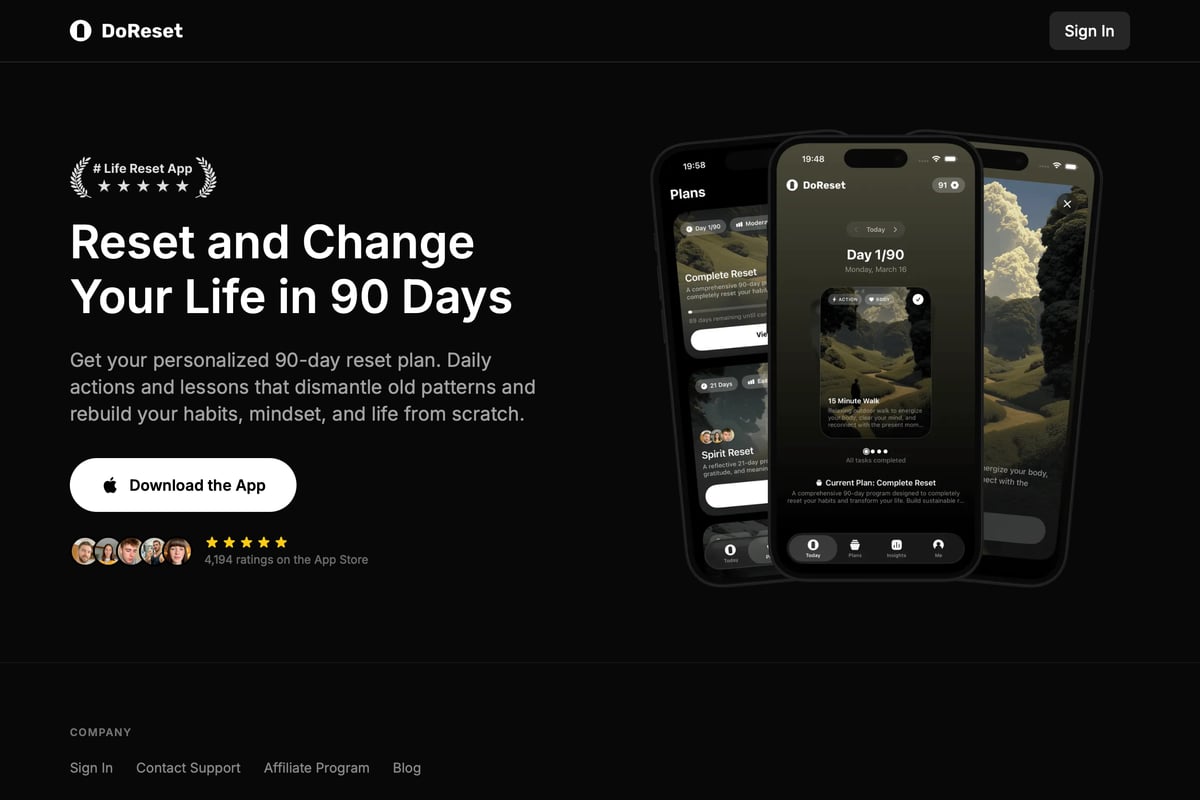
A structured approach like the one offered through DoReset can provide the framework many people need. Having a personalized 90-day reset plan with daily guidance helps remove the decision fatigue that often derails self-directed growth efforts. When each day comes with clear actions and lessons, you can focus your energy on doing rather than planning.

Navigating Obstacles and Resistance
Let's be real: creating a personal growth plan is the easy part. Following through when life gets messy, when motivation wanes, when old patterns pull you back? That's where the real work lives.
Understanding Your Resistance
Resistance isn't a character flaw. It's often a protective mechanism, your psyche's way of maintaining the familiar even when the familiar isn't serving you. When you notice resistance, get curious about it rather than fighting it.
Common sources of resistance include:
- Fear of failure or success
- Lack of clarity about next steps
- Insufficient support systems
- Physical or mental exhaustion
- Misaligned goals that don't reflect true values
- Perfectionism creating impossible standards
Building Resilience Into Your Plan
A robust personal growth plan anticipates setbacks and includes strategies for getting back on track. This isn't pessimism; it's realistic preparation that prevents temporary stumbles from becoming permanent derailments.
Consider including these resilience boosters:
- Weekly reviews: Brief check-ins to assess what's working and what needs adjustment
- Accountability partnerships: Sharing your journey with someone who supports your growth
- Celebration rituals: Acknowledging progress, no matter how small
- Reset protocols: Predetermined steps for returning to your plan after disruptions
- Self-compassion practices: Techniques for treating yourself kindly when things don't go as planned
Tracking Progress and Celebrating Growth
Numbers don't tell the whole story of personal transformation, but they can provide valuable feedback. The key is choosing metrics that genuinely reflect the changes that matter to you, not just what's easy to measure.
Quantitative and Qualitative Measures
Your personal growth plan should include both types of tracking. Quantitative measures like days you meditated, books read, or workouts completed give you concrete data. Qualitative reflections capture the nuanced shifts in how you think, feel, and relate to yourself and others.
| Measurement Type | Examples | Frequency | Purpose |
|---|---|---|---|
| Daily Tracking | Habit completion, mood, energy | Daily | Maintains awareness and momentum |
| Weekly Reflection | Challenges faced, lessons learned | Weekly | Identifies patterns and adjusts approach |
| Monthly Assessment | Goal progress, overall wellbeing | Monthly | Evaluates bigger picture trends |
| Quarterly Review | Major milestones, plan revision | Every 90 days | Ensures continued alignment with values |
Recognizing Non-Linear Progress
Growth rarely follows a straight upward trajectory. Some weeks you'll feel unstoppable. Others, you'll wonder if you've made any progress at all. Both are normal and expected parts of the journey.
When you're feeling discouraged, look back at your earlier entries. Often, you'll notice shifts you couldn't see while living them day by day. The person who started this journey isn't the same person reading this paragraph right now, even if the changes feel subtle.
Adapting Your Plan as You Evolve
The most effective personal growth plan is one that grows with you. What felt challenging in month one might become effortless by month three, opening space for new goals. Similarly, what seemed important initially might lose relevance as your values clarify.
Regular Plan Reviews and Revisions
Schedule time monthly to honestly assess whether your plan still serves you. This isn't about abandoning commitments at the first sign of difficulty. It's about ensuring your energy flows toward goals that genuinely matter rather than those you've outgrown.
Questions to guide your review:
- Which actions feel energizing versus draining?
- What unexpected insights have emerged?
- Which goals no longer resonate with my current values?
- What new areas of growth am I being called toward?
- How has my capacity changed since starting this plan?
The beautiful thing about creating a comprehensive personal growth and development plan is that it provides structure while remaining flexible enough to accommodate life's unpredictability.

Integrating Support Systems and Resources
You don't have to walk this path alone. In fact, trying to do everything in isolation often leads to burnout and abandoned plans. Building a support ecosystem around your personal growth plan exponentially increases your chances of lasting success.
Types of Support to Consider
Different aspects of your journey might require different types of support. Some people thrive with accountability partners who check in regularly. Others benefit more from communities of fellow travelers or professional guidance from coaches or therapists.
- Structured programs: Online self-development courses or apps that provide daily guidance
- Community connections: Groups focused on similar growth areas
- Professional guidance: Coaches, therapists, or mentors who offer expertise
- Accountability partnerships: Friends or colleagues committed to mutual support
- Educational resources: Books, podcasts, and articles that deepen understanding
Creating Your Personal Growth Environment
Your physical and digital environments significantly impact your ability to follow through on your plan. If your goal involves reading more but your phone constantly beckons with notifications, you're fighting an uphill battle.
Shape your environment to support rather than sabotage your intentions. This might mean rearranging your living space, curating your social media feeds, or establishing boundaries with people who drain your energy.
Moving from Planning to Living Your Growth
Eventually, the goal isn't to have a perfect personal growth plan. It's to internalize the habits, mindsets, and practices until they become who you are rather than what you do. This integration is where transformation moves from effortful change to natural expression.
Signs Your Plan Is Working
You'll know your personal growth plan is effective when:
- New behaviors start feeling automatic rather than forced
- You notice yourself making different choices without conscious effort
- Challenges that once felt overwhelming become manageable
- You experience genuine curiosity about your continued evolution
- Setbacks bounce you back faster than before
- Your definition of success deepens beyond external achievements
This doesn't mean the work is done. Growth is a lifelong journey, not a destination. But it does mean you've built a foundation sturdy enough to support whatever comes next.
Sustaining Momentum Beyond the Initial Plan
As you complete your initial personal growth plan timeline, whether that's 90 days or longer, resist the temptation to either rest on your laurels or immediately chase the next big transformation. Take time to consolidate your gains, to let new patterns fully integrate before adding more changes.
The rhythm of growth often looks like periods of active change followed by consolidation, then renewed expansion. Honor both phases. The quiet times of integration are just as important as the exciting times of breakthrough.
Creating and following through on a personal growth plan is one of the most loving things you can do for yourself. It says, "I matter. My dreams matter. My wellbeing matters enough to invest time and energy." As you move forward on this journey, remember that progress isn't always visible in the moment, but your commitment to showing up day after day creates compound effects that will surprise and delight you. If you're looking for structured support to guide your transformation, DoReset offers a personalized 90-day reset plan with daily actions and lessons designed to help you dismantle old patterns and rebuild your life from scratch, one compassionate step at a time.