
Self Improvement Challenges That Transform Your Life

DoReset
May 19, 2026
We all reach moments when we know something needs to change. Maybe it's the feeling of being stuck in the same routines, repeating the same mistakes, or watching our dreams remain just out of reach. Self improvement challenges offer more than temporary motivation-they provide structured pathways to genuine transformation. When approached with intention and compassion, these challenges become powerful tools for dismantling what no longer serves us and rebuilding our lives with purpose. The journey isn't always easy, but understanding how to navigate these challenges makes all the difference between fleeting attempts and lasting change.
Understanding the Real Purpose Behind Self Improvement Challenges
Self improvement challenges serve as containers for change. They create boundaries, timelines, and specific actions that transform vague desires into concrete progress. Unlike casual goals that drift in and out of our awareness, these challenges demand daily engagement and accountability.
The beauty of structured challenges lies in their ability to interrupt our autopilot patterns. We spend most of our lives operating from unconscious habits, many formed years ago when our circumstances were completely different. Self-improvement challenges boost both mental and physical health by forcing us to examine these patterns and consciously choose new behaviors.
Why Traditional Goal-Setting Often Falls Short
Traditional goal-setting frequently fails because it focuses on outcomes rather than systems. We set ambitious targets without addressing the underlying habits, beliefs, and patterns that created our current reality. This approach overlooks a fundamental truth: sustainable change happens at the identity level, not just the behavior level.
When you engage with meaningful self improvement challenges, you're not just changing what you do. You're changing who you are. This shift requires patience, self-compassion, and a structured approach that honors the complexity of human transformation.

Common Obstacles That Derail Self Improvement Challenges
Understanding what typically goes wrong helps us navigate challenges more effectively. Key obstacles to self-improvement include fear of failure, lack of motivation, and mental health challenges-each requiring different strategies to overcome.
Fear manifests in subtle ways:
- Perfectionism that prevents starting
- All-or-nothing thinking that causes abandonment after one missed day
- Comparison that makes our progress feel inadequate
- Self-doubt that whispers we're not capable of change
Motivation fluctuates naturally:
- Initial enthusiasm fades after 2-3 weeks
- Results don't appear as quickly as expected
- Life stressors compete for our attention and energy
- The novelty wears off and discipline must take over
The reality is that self-improvement is genuinely difficult because it requires us to do uncomfortable things consistently, often without immediate rewards. Acknowledging this difficulty isn't pessimistic-it's compassionate realism that prepares us for the journey ahead.
Designing Self Improvement Challenges That Actually Work
The most effective self improvement challenges share specific characteristics that increase their success rate. Rather than overwhelming ourselves with drastic overhauls, sustainable transformation happens through thoughtful design and realistic expectations.
The Power of Timeboxed Commitments
Research and experience both confirm that 30 to 90-day challenges hit a sweet spot for meaningful change. Shorter challenges don't allow sufficient time for habit formation, while longer ones feel overwhelming and abstract. A 90-day reset provides enough time for patterns to take root while maintaining psychological urgency.
| Challenge Duration | Pros | Cons | Best For |
|---|---|---|---|
| 7-14 days | Quick wins, easy commitment | Shallow change, no habit formation | Testing new behaviors |
| 30 days | Builds momentum, manageable | Just starting to form habits | Single-focus challenges |
| 90 days | Deep transformation, lasting habits | Requires sustained commitment | Complete lifestyle shifts |
| 6+ months | Comprehensive change | Can feel endless, lose motivation | Ongoing lifestyle integration |
Creating Daily Actions That Build Momentum
The difference between self improvement challenges that succeed and those that fail often comes down to daily actions. Vague intentions like "be more mindful" or "improve health" lack the specificity needed for consistent execution. Instead, successful challenges break transformation into clear, actionable steps.
Effective daily actions share these qualities:
- Specificity: "Meditate for 10 minutes upon waking" beats "practice mindfulness"
- Measurability: You can definitively say whether you completed it or not
- Appropriate difficulty: Challenging enough to require effort but achievable on difficult days
- Alignment: Connected to your larger transformation goals
When you're planning your day around self improvement challenges, prioritize these actions before other commitments. This isn't selfish-it's essential. You can't pour from an empty cup, and these daily practices refill your reserves.

Categories of Transformative Self Improvement Challenges
Different aspects of our lives require different approaches. The most comprehensive transformation addresses multiple dimensions simultaneously, though starting with one focused area builds confidence and skills for tackling others.
Physical Wellness Challenges
Physical challenges often provide the most tangible feedback, making them excellent starting points. These ways to challenge yourself for self-improvement include movement, nutrition, sleep, and recovery practices.
- Movement-based: 10,000 daily steps, strength training 4x weekly, morning yoga
- Nutrition-focused: Whole foods only, mindful eating practices, hydration tracking
- Sleep optimization: Consistent bedtime, screen-free evenings, sleep hygiene protocols
- Recovery practices: Daily stretching, weekly massage or foam rolling, rest day adherence
Physical changes often create positive cascades in other life areas. Better sleep improves decision-making. Regular movement reduces anxiety. Proper nutrition stabilizes mood. These aren't separate from mental and emotional growth-they're foundational to it.
Mental and Emotional Growth Challenges
Addressing patterns of thought and emotional regulation requires different tools than physical challenges. These self improvement challenges focus on awareness, processing, and reframing.
Mindfulness and awareness practices:
- Daily meditation or breathwork sessions
- Journaling prompts for self-reflection
- Thought pattern tracking and analysis
- Gratitude or appreciation exercises
Emotional regulation skills:
- Naming emotions throughout the day
- Practicing pause before reaction
- Seeking therapy or counseling support
- Learning and applying coping strategies
The goal isn't to eliminate difficult emotions or achieve constant positivity. It's to develop a healthier relationship with your internal experience, changing your mindset from resistance to acceptance and growth.
Behavioral and Habit Transformation Challenges
Our behaviors create our reality. Changing habits changes life in profound ways, but habit change requires understanding how habits actually work: cue, routine, reward, and repetition.
| Old Pattern | New Behavior | Supporting Structure |
|---|---|---|
| Phone scrolling upon waking | Morning meditation or journaling | Phone in another room overnight |
| Stress eating | Walk or breathwork when stressed | Healthy snacks visible, junk food hidden |
| Late-night TV | Reading or evening routine | Set TV timer, book on nightstand |
| Reactive email checking | Scheduled communication windows | Notifications off, specific check times |
Successful behavior change isn't about willpower-it's about designing environments and systems that make desired behaviors easier and undesired ones harder. This approach removes the exhausting battle of constant decision-making and creates supportive structures for transformation.
Implementing Your Self Improvement Challenge Journey
Knowledge without implementation remains theoretical. The gap between understanding what to do and actually doing it is where most transformation attempts stall. Bridging this gap requires practical strategies and compassionate accountability.
Starting Strong: The First Week Framework
The initial week determines whether a challenge becomes a sustainable practice or another abandoned attempt. During these crucial first days, focus on consistency over perfection, progress over results.
Week one priorities:
- Establish the routine: Same time, same place, same sequence
- Track without judgment: Record completion, notice feelings, observe obstacles
- Celebrate small wins: Acknowledge each day completed, no matter how imperfectly
- Adjust as needed: Fine-tune difficulty, timing, or approach based on real experience
Many people make self improvement challenges unnecessarily difficult by trying to change everything simultaneously. This overwhelm guarantees failure. Instead, consider how daily actions compound over time-small, consistent steps create more transformation than sporadic heroic efforts.
Navigating the Middle: When Motivation Fades
Around week three or four, the initial excitement evaporates. This is where most challenges die quietly. The newness has worn off, results aren't yet dramatic, and the daily commitment feels burdensome rather than exciting.
This phase isn't a sign of failure-it's a predictable part of the transformation process. Building discipline means showing up especially when you don't feel like it. These are the days that actually create lasting change.
Strategies for the middle stretch:
- Connect to your deeper "why" beyond surface goals
- Find an accountability partner or community
- Review progress to see how far you've actually come
- Introduce small variations to maintain engagement
- Practice self-compassion when you miss a day
Remember that transformation isn't linear. Some days will feel powerful and others will feel like slogging through mud. Both are necessary parts of the journey.

Structured Programs for Comprehensive Transformation
While individual challenges address specific areas, comprehensive transformation often requires a more holistic approach. This is where structured programs that address multiple dimensions simultaneously become valuable.
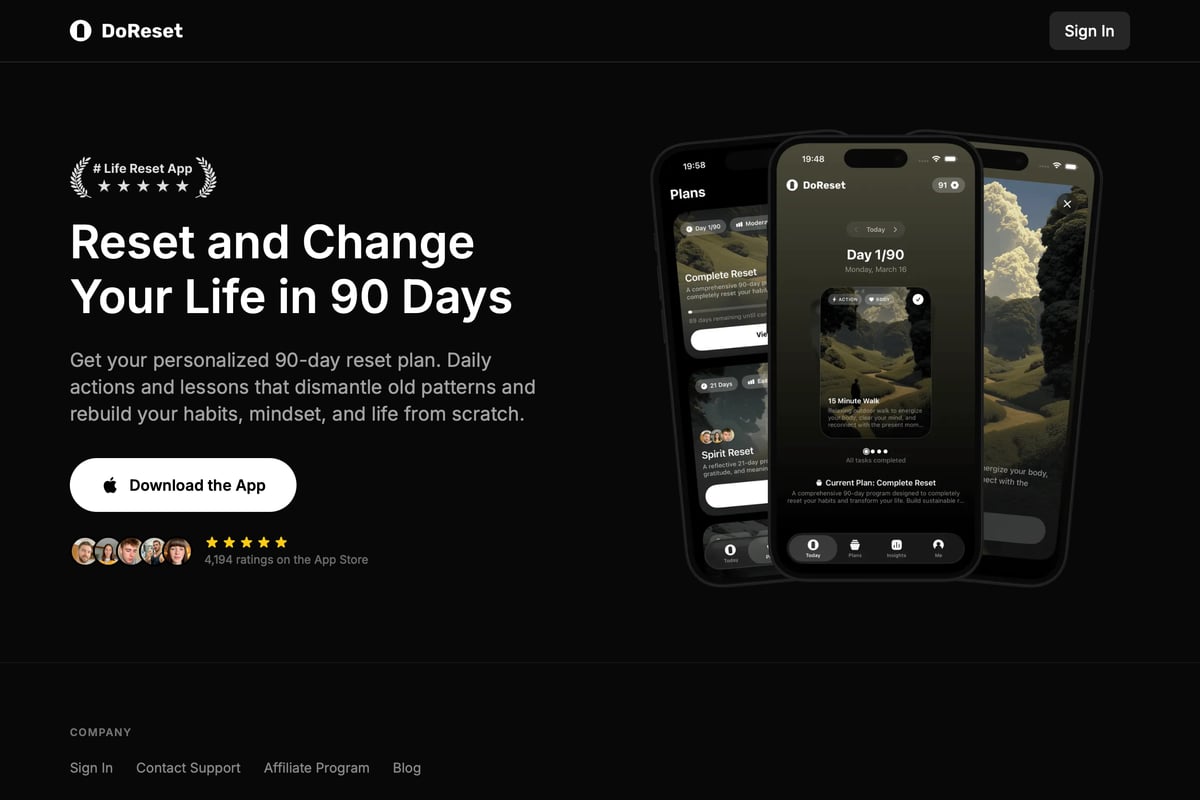
A personalized 90-day reset plan can provide the framework many people need to successfully navigate self improvement challenges. When you have daily guidance, lessons that build on each other, and a clear progression through transformation stages, you're far more likely to succeed than going it alone.
The DoReset mobile app offers exactly this kind of structured support-a complete roadmap for dismantling old patterns and rebuilding your habits, mindset, and life from scratch, with daily actions tailored to your specific situation and goals.
Measuring Progress Beyond the Obvious Metrics
Traditional metrics like pounds lost or money saved tell only part of the transformation story. The deeper changes-in how you think, feel, and relate to yourself and others-often matter more than surface-level results.
Qualitative Indicators of Transformation
Internal shifts to notice:
- Increased self-awareness and emotional intelligence
- Greater resilience when facing setbacks
- More consistent energy throughout the day
- Improved relationship quality and communication
- Reduced anxiety about the future
- Enhanced present-moment awareness
Behavioral evidence of change:
- Automatic new habits replacing old patterns
- Different choices in challenging situations
- Increased capacity to delay gratification
- More aligned daily actions with stated values
- Better boundary-setting and maintenance
These ideas for personal growth extend far beyond what a scale or bank account can measure. They represent fundamental shifts in who you are and how you move through the world.
Sustaining Transformation After the Challenge Ends
The real test of self improvement challenges isn't completing them-it's maintaining the changes afterward. Without integration strategies, even successful challenges can result in regression to old patterns within weeks.
Creating Long-Term Systems
Successful transformation becomes part of your identity rather than something you do temporarily. This requires transitioning from challenge mode to lifestyle integration. Resetting your life means establishing new baselines, not just completing temporary sprints.
Post-challenge integration strategies:
- Identify core practices: Which 2-3 habits created the most impact?
- Build maintenance systems: How will you sustain these without daily tracking?
- Plan for challenges: What obstacles might emerge and how will you address them?
- Schedule regular reviews: Monthly check-ins to assess alignment and adjust
| Integration Phase | Focus | Common Pitfalls | Success Strategy |
|---|---|---|---|
| Weeks 1-2 post-challenge | Maintain momentum | Assuming change is permanent | Continue tracking key behaviors |
| Weeks 3-6 | Establish new baseline | Relaxing too much | Identify non-negotiables |
| Months 2-3 | Lifestyle integration | Forgetting origins | Monthly progress reviews |
| Beyond 3 months | Continuous growth | Stagnation | New challenges building on foundation |
Planning Your Next Challenge
Transformation isn't a destination-it's an ongoing journey. Once you've successfully completed one challenge and integrated its lessons, you're ready to address another area or deepen existing practices. This doesn't mean constantly chasing perfection or never being satisfied. It means continuing to grow intentionally rather than coasting on autopilot.
Consider how rebuilding your life happens in phases, each building on the previous foundation. Your first challenge might address physical health, your second emotional regulation, your third relationship patterns, and so on. Each layer of transformation supports the others, creating compound effects that dramatically reshape your life over time.
Addressing Common Challenges in Personal Development
Even with the best intentions and solid strategies, common challenges in personal development arise for everyone. How you respond to these obstacles determines whether they derail your progress or become opportunities for deeper growth.
Overcoming Self-Doubt and Imposter Syndrome
Many people engaged in self improvement challenges experience persistent self-doubt. Questions like "Who am I to change?" or "What if I fail again?" create internal resistance that sabotages progress before it begins.
This doubt often stems from past failures or comparisons with others who seem further along their journey. Remember that everyone's path is unique, and your only meaningful comparison is with who you were yesterday. The goal isn't perfection-it's progress and learning.
Practical self-doubt management:
- Document evidence of progress, however small
- Reframe setbacks as data rather than failures
- Practice self-compassion language
- Limit exposure to comparison triggers (social media, certain people)
- Celebrate effort and consistency, not just outcomes
Managing Unrealistic Expectations
Unrealistic expectations kill more self improvement challenges than any other factor. We expect linear progress, immediate results, and perfect execution-none of which reflect how human transformation actually works.
Change is messy, non-linear, and requires far more time than we initially think. Setting realistic timelines and expectations isn't lowering standards-it's honoring the actual process of sustainable transformation. When you approach challenges with this understanding, you're far less likely to quit when reality doesn't match fantasy.
The Role of Community and Accountability
While transformation is ultimately personal, attempting it in complete isolation makes success far less likely. Humans are social creatures, and we thrive with appropriate support, accountability, and community during self improvement challenges.
Benefits of community engagement:
- Shared experiences reduce feelings of isolation
- Others' successes inspire continued effort
- Accountability structures increase follow-through
- Different perspectives offer new strategies
- Celebration of wins feels more meaningful
Finding the right community matters more than just any community. Look for groups that balance support with accountability, celebrate progress without enabling excuse-making, and share similar values around growth and transformation.
Whether through online communities, local meetup groups, or structured programs that include community elements, connecting with others on similar journeys amplifies your chances of success while making the process more enjoyable.
Self improvement challenges offer powerful frameworks for dismantling old patterns and creating lasting transformation when approached with realistic expectations, solid strategies, and self-compassion. The journey from where you are to where you want to be happens one daily action at a time, building momentum that eventually becomes unstoppable. If you're ready to commit to comprehensive transformation with personalized guidance every step of the way, DoReset provides a structured 90-day plan that turns your intention into reality through daily actions designed specifically for your journey.