
Change Habits Change Life: Transform Your Journey

Doreset
March 31, 2026
You've probably felt it before: that deep awareness that something needs to shift. Maybe you're tired of the same cycles repeating, the same frustrations surfacing, or the same dreams remaining just out of reach. The truth is, your daily habits are quietly writing the story of your life, one small action at a time. When you understand that you can change habits change life in meaningful ways, you unlock a powerful pathway to transformation that doesn't require perfection, just consistent intention.
Understanding the Power of Habit Transformation
Your habits aren't just routines. They're the invisible architecture supporting every aspect of your existence, from your morning coffee ritual to how you respond to stress at work. These automated behaviors account for roughly 40% of your daily actions, operating beneath conscious awareness while profoundly shaping your outcomes.
When we talk about how to change habits change life, we're really discussing the process of becoming conscious architects of our own experience. Every habit carries a ripple effect that extends far beyond the action itself:
- Morning routines set your emotional tone for the entire day
- Communication patterns define the quality of your relationships
- Thought habits determine your self-perception and confidence
- Evening rituals affect your sleep quality and recovery
The beauty lies in understanding that you don't need to overhaul everything at once. Research on habit formation and personal development shows that focused changes in key areas create cascading improvements across your entire life.

The Neuroscience Behind Lasting Change
Your brain is remarkably adaptable, constantly rewiring itself based on repeated experiences. This neuroplasticity means that every time you choose a new behavior over an old pattern, you're literally reshaping your neural pathways. The challenge? Your brain also loves efficiency, which is why it automates behaviors into habits in the first place.
Understanding this doesn't make change easier, but it does make the struggle make sense. When you feel resistance to a new habit, that's your brain trying to conserve energy by defaulting to familiar patterns. The key is working with your brain's natural tendencies rather than fighting against them.
Breaking Down Old Patterns With Compassion
Before you can build new habits, you need to understand the ones currently running your life. This isn't about harsh self-criticism or shame. It's about honest observation and self-compassion. Your existing habits, even the ones causing problems, developed for a reason. They served a purpose at some point, even if they no longer align with who you're becoming.
Identifying Your Current Habit Landscape
Take an honest inventory of your daily patterns:
- Track your actual behaviors for three days without judgment
- Notice trigger points that activate automatic responses
- Identify which habits drain energy versus which ones replenish it
- Recognize emotional patterns tied to specific behaviors
- Map the consequences of each habit across different life areas
Many people discover surprising truths during this process. That evening scrolling habit might be serving as an avoidance mechanism. The tendency to say yes to every request might stem from a deeper fear of disappointing others. When you rebuild your life intentionally, awareness becomes your foundation.
| Habit Type | Example | Hidden Function | Alternative Response |
|---|---|---|---|
| Avoidance | Late-night phone scrolling | Anxiety management | Evening meditation routine |
| Self-medication | Stress eating | Emotional regulation | Brief walk or journaling |
| People-pleasing | Over-committing | Seeking validation | Setting clear boundaries |
| Distraction | Constant multitasking | Fear of stillness | Single-task focus blocks |
The 90-Day Reset Framework
Change habits change life transformation isn't about willpower alone. It requires structure, support, and a realistic timeframe. The 90-day window offers something magical: it's long enough to establish genuine change but short enough to maintain focus and motivation.
This timeframe aligns with how your brain consolidates new patterns into automatic behaviors. During the first 30 days, you're building awareness and fighting resistance. The second 30 days bring integration as new behaviors start feeling more natural. The final 30 days solidify these changes into your identity.
Designing Your Personal Reset Plan
A successful transformation requires more than good intentions. You need a structured approach that addresses multiple dimensions of your life simultaneously:
Mindset Foundation: Your beliefs about yourself and change create the context for everything else. If you don't believe transformation is possible, you'll unconsciously sabotage your own efforts. Changing your mindset becomes the prerequisite for sustainable habit change.
Daily Action Systems: Breaking down your vision into daily, achievable steps prevents overwhelm and builds momentum. Instead of vague goals like "get healthy," you create specific actions: "walk for 15 minutes after lunch" or "prepare vegetables every Sunday evening."
Accountability Structures: External support dramatically increases your success rate. This might look like a dedicated app tracking your progress, a accountability partner checking in weekly, or a structured program guiding your journey.

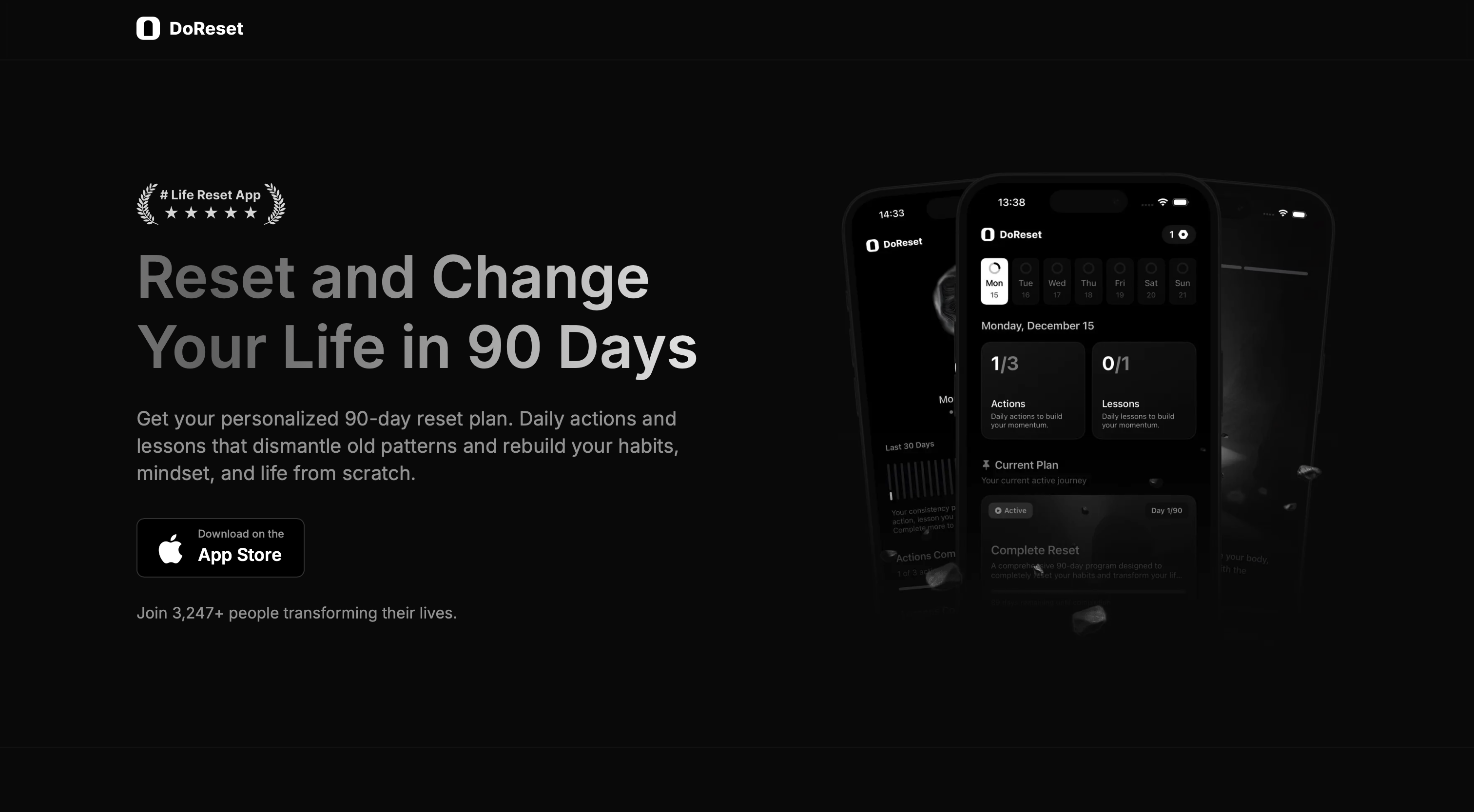
The DoReset mobile app offers precisely this kind of structured support, delivering personalized daily actions and lessons that help you systematically dismantle old patterns while building new ones. Rather than leaving you to figure everything out alone, it provides the roadmap and daily guidance that makes sustained transformation achievable.
Practical Strategies for Sustainable Change
Understanding the theory behind habit change matters less than applying practical strategies that actually work in real life. You're not trying to become perfect; you're trying to become consistent. That distinction changes everything about your approach.
The Stack and Swap Method
Rather than adding completely new habits to your day, leverage existing routines as anchors. After you pour your morning coffee (existing habit), spend two minutes reviewing your intentions (new habit). After you brush your teeth at night (existing habit), write down three things that went well (new habit).
This stacking approach uses your brain's existing neural pathways as scaffolding for new behaviors. Similarly, the swap method replaces problematic habits with healthier alternatives that serve the same underlying need. Explore morning habits that can boost your daily life to find powerful starting points.
Environment Design for Success
Your physical and digital environments either support or sabotage your goals. Making the right choice easier than the wrong choice eliminates the need for constant willpower:
- Place your workout clothes next to your bed for morning exercise
- Delete social media apps from your phone during a digital detox period
- Keep healthy snacks at eye level and processed foods out of sight
- Create a dedicated workspace that signals focus and productivity
When you plan your day with intentional environment design, you're setting yourself up for success before willpower even enters the equation.
Navigating Resistance and Setbacks
Let's address the uncomfortable truth: you will stumble. You'll miss days, make old choices, and question whether change habits change life transformation is even possible for you. These moments don't represent failure. They're an integral part of the growth process.
Understanding the Cycle of Change
Change rarely follows a straight line. You'll experience:
- Enthusiasm and motivation when starting something new
- Resistance and discomfort as old patterns fight for survival
- Plateaus where progress seems invisible
- Breakthroughs where everything suddenly clicks
- Integration where new habits become your natural default
The people who succeed aren't those who never struggle. They're the ones who expect challenges and have strategies for moving through them. When you understand practical strategies for changing habits in realistic ways, you stop viewing setbacks as evidence of personal inadequacy.

Self-Compassion as a Change Tool
Harsh self-criticism after a setback doesn't motivate change. It triggers shame, which typically leads to either giving up entirely or engaging in more of the problematic behavior. Self-compassion, conversely, allows you to acknowledge mistakes while maintaining the emotional stability needed to course-correct.
When you slip into an old pattern, try this response: "I'm noticing I made a choice that doesn't align with my goals. That's uncomfortable, and it's also information. What can I learn from this? What do I need right now to get back on track?"
Building Identity-Level Transformation
Surface-level habit changes often fail because they don't address your underlying identity. You might force yourself to exercise for a few weeks, but if you still see yourself as "not an active person," that identity will eventually pull you back to old patterns.
The most powerful change happens when you shift your identity first. Instead of "I'm trying to exercise more," you embrace "I'm becoming someone who prioritizes movement and vitality." This subtle shift changes everything about how you approach challenges and setbacks.
Identity-Based Habit Formation
Every action you take is a vote for the type of person you're becoming. When you choose the salad over the burger, you're not just making a healthy choice in that moment. You're casting a vote for your identity as someone who nourishes their body. When enough votes accumulate, your identity shifts, and the behaviors that once required effort become natural expressions of who you are.
Consider these identity-aligned habit approaches:
| Old Approach | Identity-Based Approach | Impact |
|---|---|---|
| "I need to wake up early" | "I'm a morning person who uses quiet hours productively" | Internal motivation replaces external pressure |
| "I should read more" | "I'm a lifelong learner who prioritizes growth" | Reading becomes identity expression, not obligation |
| "I have to work out" | "I'm someone who honors my body through movement" | Exercise shifts from punishment to self-care |
| "I can't eat that" | "I choose foods that energize and nourish me" | Dietary choices become preferences, not restrictions |
Measuring Progress Beyond the Scale
When you're working to change habits change life patterns, traditional metrics often miss the most meaningful transformations. The number on the scale, the dollars in your bank account, or the items checked off your to-do list tell only part of the story.
Qualitative Indicators of Growth
Pay attention to these deeper markers of transformation:
- How you respond to stress compared to three months ago
- The quality of your internal dialogue and self-talk patterns
- Your energy levels throughout the day
- Relationship dynamics and communication patterns
- Capacity to sit with discomfort without immediate distraction
These qualitative changes often precede measurable external results. You might feel more grounded and centered weeks before others notice changes in your behavior. Trust the internal shifts even when external validation hasn't arrived yet.
When you reset your life intentionally, you're engaging in a process that touches every dimension of your existence. The insights from resources like research on how habits impact success confirm that daily behaviors create compound effects that shape entire life trajectories.
Creating Support Systems for Long-Term Success
Isolation makes transformation exponentially harder. While personal responsibility matters, you don't have to navigate change alone. The right support systems amplify your efforts and provide safety nets during difficult moments.
Types of Support That Accelerate Growth
- Accountability partners who check in regularly and celebrate wins
- Structured programs offering daily guidance and proven frameworks
- Communities of people pursuing similar transformations
- Professional support from coaches, therapists, or mentors
- Educational resources that deepen understanding and strategy
The key is matching the support type to your specific needs and learning style. Some people thrive with high-touch, personal accountability. Others prefer the structure of a comprehensive program with clear daily actions. Understanding how habits are wired into your brain helps you choose support mechanisms that work with your psychology rather than against it.
The Ripple Effect of Personal Transformation
Here's something beautiful about the change habits change life journey: your transformation never affects only you. As you shift your patterns and behaviors, you inevitably influence the people around you. Your children notice when you handle frustration differently. Your partner experiences the benefits of your increased presence. Your colleagues respond to your changed energy and communication style.
This ripple effect creates exponential impact. When you model possibility through your own growth, you give others permission to pursue their own transformations. You become living proof that change is achievable, that old patterns don't have to define futures, and that it's never too late to rebuild your life from a foundation of intentional choice.
Sustaining Transformation Over Time
The 90-day reset creates momentum, but lasting change requires ongoing commitment. After your initial transformation period, the work shifts from intensive restructuring to mindful maintenance. You'll continue encountering new challenges, stressors, and temptations to revert to old patterns.
Building practices that support continuous growth becomes essential:
- Regular reflection periods to assess what's working and what needs adjustment
- Seasonal reset rituals to recalibrate when life gets chaotic
- New challenge integration to prevent stagnation and complacency
- Community connections that reinforce your commitment to growth
- Flexibility mindset that allows habits to evolve as you do
The goal isn't achieving some perfect end state where you never struggle. It's developing the capacity to recognize when you're drifting and the tools to realign with your intentions. Watch this animated exploration of a life-changing habit to understand how single shifts create transformative impacts over time.
The Compound Effect of Small Actions
Perhaps the most hopeful aspect of habit transformation is that you don't need dramatic overnight changes. Small, consistent actions compound over time into remarkable results. The person who reads ten pages daily accumulates thousands of pages yearly. The individual who takes a 15-minute walk each morning moves hundreds of miles annually.
This compound effect works both ways, which is why addressing problematic habits matters so urgently. That daily choice that seems insignificant in isolation becomes your defining pattern when repeated thousands of times. The daily scroll that steals 30 minutes equals 182 hours yearly. The nightly drink that promises relaxation compounds into dependence.
When you grasp this mathematical reality, the stakes become clear. Every single choice matters because every choice is practice for the next one. You're always training yourself toward something, whether consciously or unconsciously. The question becomes: what are you practicing?
Transformation isn't about becoming someone entirely different; it's about clearing away the habits and patterns obscuring who you truly are. When you change habits change life transformation becomes possible through small, consistent actions aligned with your deepest values. DoReset provides the structured support system to guide you through this 90-day journey, offering personalized daily actions that help you systematically dismantle what's no longer serving you and rebuild patterns that align with the life you're creating. Your transformation starts with a single intentional choice, and that choice can begin today.