
Personal Growth Coach: Your Partner in Transformation

DoReset
May 7, 2026
You've felt it before: that nagging sense that you're capable of more, that your current patterns aren't serving you, that something needs to change. Maybe you've tried self-help books, motivational videos, or setting New Year's resolutions, only to find yourself back where you started. This is where a personal growth coach becomes not just helpful, but transformative. Unlike the one-size-fits-all advice flooding your social media feeds, a personal growth coach offers personalized guidance that meets you exactly where you are and helps you build the life you're truly meant to live.
Understanding What a Personal Growth Coach Really Does
A personal growth coach serves as your dedicated partner in transformation, working with you to identify limiting beliefs, develop actionable strategies, and maintain accountability throughout your journey. They're not therapists who focus on healing past trauma, though they certainly acknowledge how your history shapes you. Instead, they're forward-focused professionals who help you design and implement concrete changes in your daily life.
The role extends far beyond cheerleading or motivation. A skilled coach helps you:
Identify specific patterns that keep you stuck
Create structured plans for meaningful change
Develop sustainable habits that align with your values
Navigate setbacks without losing momentum
Build self-awareness around your triggers and strengths

What sets coaching apart from other personal development approaches is the personalized attention and structured framework. While online self-development courses offer valuable information, a personal growth coach adapts their approach to your unique circumstances, challenges, and goals.
The Science Behind Effective Coaching
Research in behavioral psychology supports what experienced coaches have known for years: sustainable change requires more than willpower. It demands a systematic approach that addresses mindset, environment, and daily actions simultaneously. According to recent innovations in AI coaching, effective goal-setting and well-being support follow structured methodologies that combine accountability with compassionate guidance.
Your brain is wired to seek comfort and familiarity, which is why breaking old patterns feels so challenging. A personal growth coach helps you understand these neurological tendencies and work with them, not against them. They create safe spaces for experimentation where failure becomes feedback rather than defeat.
Signs You're Ready for a Personal Growth Coach
Not everyone needs a coach at every stage of life, but certain moments signal that professional guidance could accelerate your transformation. You might be ready if you're experiencing recurring frustration with the same issues, feeling stuck despite your best efforts, or sensing that you're living below your potential.
Common Scenarios Where Coaching Makes the Difference
| Situation | What's Happening | How Coaching Helps |
|---|---|---|
| Career plateau | You've stopped growing professionally despite competence | Identifies blind spots and creates advancement strategies |
| Relationship patterns | Similar conflicts arise across different relationships | Reveals underlying behaviors and communication gaps |
| Health struggles | Knowledge isn't translating into consistent action | Builds sustainable routines and addresses resistance |
| Life transitions | Major changes feel overwhelming and directionless | Provides structure and clarity during uncertainty |
Perhaps you've already attempted to change your life multiple times, only to revert to old patterns within weeks. This isn't a character flaw. It's a sign that you need a more structured approach with external accountability and expert guidance.
The desire for change is important, but it's not enough on its own. You also need readiness: the willingness to be honest about your current reality, the openness to examine uncomfortable truths about your choices, and the commitment to take consistent action even when motivation fades. A personal growth coach can help you assess whether you're truly ready and what preparation might be needed.
What to Expect During Your Coaching Journey
Beginning work with a personal growth coach typically starts with an assessment phase where you explore your current situation, identify what you want to change, and clarify your vision for the future. This isn't a superficial conversation about vague goals. It's a deep dive into your values, fears, patterns, and aspirations.
The Initial Discovery Process
Your coach will ask questions that might surprise you. Instead of simply asking what you want to achieve, they'll explore why those goals matter to you, what achieving them would mean for your identity, and what obstacles you've encountered in pursuing them before. This foundation ensures that the work you do together aligns with your authentic self rather than external expectations.
Many coaches use structured frameworks during this phase:
Present State Assessment: Where are you now across different life domains?
Desired State Clarification: What does success actually look like for you?
Gap Analysis: What specific changes need to happen to bridge these states?
Resource Inventory: What strengths and supports do you already have?
Obstacle Identification: What has prevented progress in the past?

The Ongoing Transformation Phase
After establishing your foundation, the real work begins. This is where changing your mindset shifts from concept to daily practice. Your personal growth coach will typically meet with you weekly or bi-weekly, though some intensive programs include more frequent contact.
Between sessions, you'll implement specific actions designed to create measurable progress. These aren't generic self-improvement tasks. They're customized interventions that address your unique situation. If you struggle with consistency, your actions might focus on building discipline through small, achievable wins. If mindset blocks hold you back, you'll work on reframing exercises and belief exploration.
The beauty of structured coaching is that nothing happens in isolation. Each action builds on previous ones, creating compound growth over time. What feels impossibly hard in week one becomes your new normal by week eight.
Choosing the Right Personal Growth Coach for You
The coaching industry has exploded in recent years, which means you have abundant options but also need discernment. Not every coach will be the right fit for your personality, goals, or learning style. The relationship matters as much as credentials.
Essential Qualities to Seek
Relevant training and certification: Look for coaches with recognized credentials from institutions like ICF (International Coach Federation)
Specific expertise: Some coaches specialize in career growth, others in relationships or health; find one whose focus aligns with your needs
Proven methodology: They should articulate a clear approach, not just "we'll talk and see what happens"
Chemistry and trust: You need to feel safe being vulnerable with this person
Results orientation: While compassionate, they should also hold you accountable to action
Leading experts in the field, like Brendon Burchard, emphasize that high performance and personal growth stem from clarity, energy, courage, productivity, and influence. Your coach should help you develop these elements systematically.
Red Flags to Watch For
Not every coach operates with integrity or competence. Be cautious if someone:
Promises unrealistic results or overnight transformation
Focuses more on selling you additional services than delivering current ones
Lacks clear boundaries or tries to replace professional therapy
Uses shame or harsh criticism as motivational tools
Doesn't track progress or adjust approaches based on results
Trust your instincts. If something feels off during a discovery call, honor that feeling. The right personal growth coach will make you feel challenged but supported, stretched but not broken.
The Investment: Time, Money, and Emotional Energy
Working with a personal growth coach requires commitment across multiple dimensions. The financial investment varies widely depending on the coach's experience, specialization, and program structure. Expect to invest anywhere from a few hundred to several thousand dollars for a multi-month engagement.
But money is only one part of the equation. You'll also invest significant time, not just in coaching sessions but in implementing the work between meetings. If you're not willing to dedicate several hours weekly to your growth, even the best coach can't create results for you.
Perhaps the most demanding investment is emotional energy. Real transformation requires examining uncomfortable truths, sitting with difficult feelings, and pushing beyond your comfort zone repeatedly. Transition and transformation demand that you get comfortable with temporary discomfort.
| Investment Type | What It Requires | Expected Return |
|---|---|---|
| Financial | $500-$5000+ for 3-6 months | Accelerated progress, expert guidance |
| Time | 5-10 hours weekly for sessions and implementation | Structured development, consistent momentum |
| Emotional | Willingness to be vulnerable and challenged | Deep self-awareness, authentic growth |
| Social | Possible shifts in relationships as you change | Healthier boundaries, aligned connections |
Making the Most of Your Investment
To maximize the value of coaching, approach it with complete honesty and openness. Your coach can only help you based on the information you share. If you hide struggles, minimize challenges, or pretend you've completed assignments when you haven't, you sabotage your own progress.
Prepare for sessions by reflecting on your week, noting wins and challenges, and identifying questions or areas where you feel stuck. Between sessions, plan your day to include time for your growth work, treating these commitments as seriously as business meetings.
Integrating Coaching Principles Into Daily Life
The real magic of working with a personal growth coach happens not in the sessions themselves but in how you apply insights to everyday moments. Your coach helps you develop what we might call "applied wisdom," the ability to translate understanding into action when it matters most.
Creating Your Daily Growth Practice
Sustainable transformation requires daily actions that reinforce new patterns. Your personal growth coach will help you identify which practices serve your specific goals. These might include:
Morning reflection or journaling to set intentions
Midday check-ins to assess alignment with values
Evening reviews to celebrate progress and identify lessons
Weekly planning sessions to maintain strategic focus
Monthly assessments to measure growth and adjust approaches
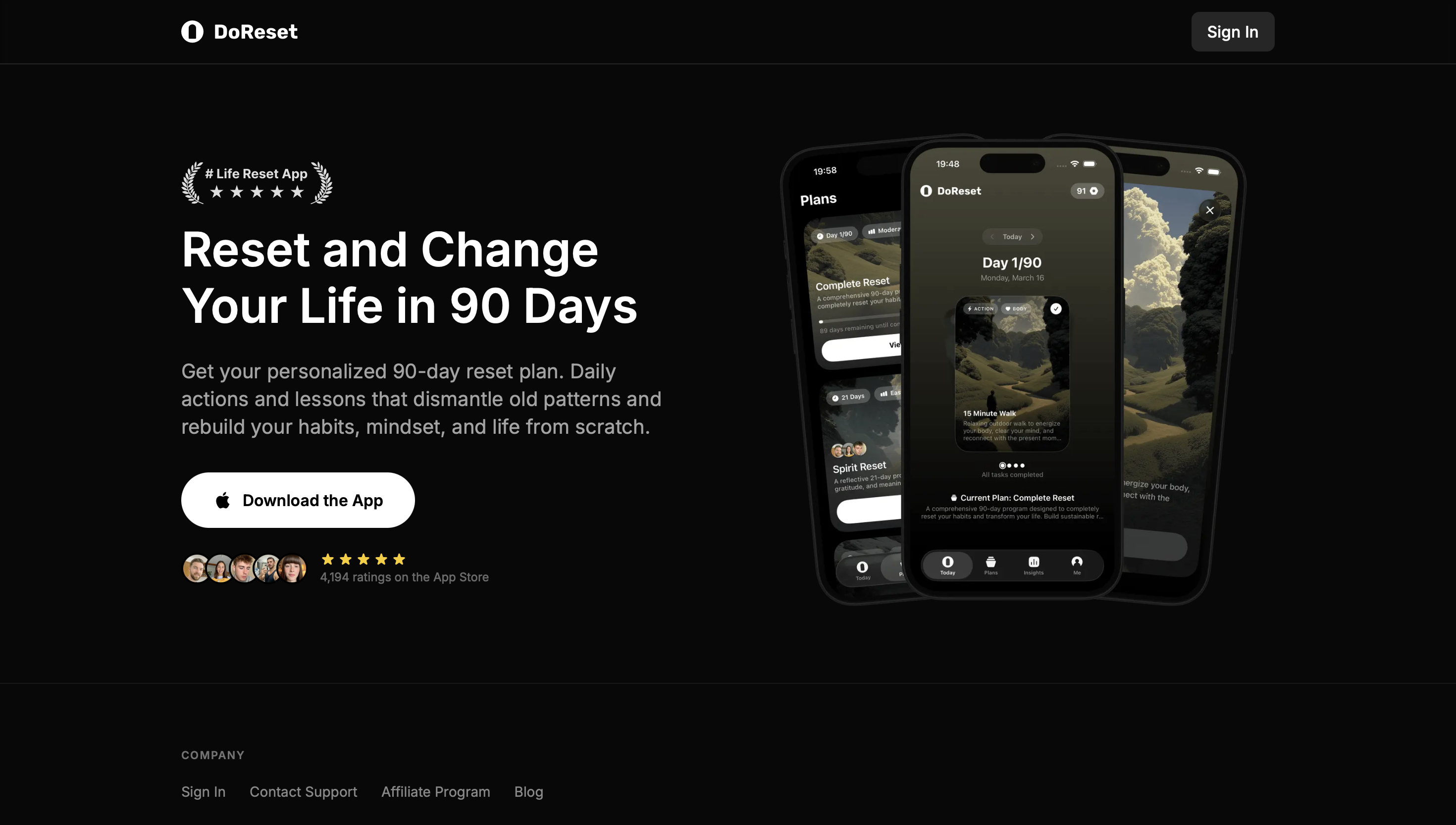
The DoReset approach of rebuilding your life through structured daily actions aligns perfectly with coaching principles, providing the framework many people need to maintain consistency between sessions.
Handling Resistance and Setbacks
Even with the best coach and strongest intentions, you'll encounter resistance. Some days, you won't want to do the work. Some weeks, you'll slip back into old patterns. This isn't failure; it's part of the process.
A skilled personal growth coach helps you develop resilience by reframing setbacks as data points rather than defeats. When you don't follow through on a commitment, the question becomes "What got in the way?" rather than "Why am I such a failure?" This shift from judgment to curiosity creates space for genuine learning.
Resistance often signals something important:
Fear that change might threaten important relationships
Unclear understanding of why a particular action matters
Unrealistic expectations creating performance anxiety
Inadequate support systems for the changes you're attempting
Deeper conflicts between stated goals and underlying values
Your coach helps you decode these signals and adjust your approach accordingly. Sometimes you need to modify the strategy; other times, you need to explore the resistance itself more deeply.
The Transformation Timeline: What Happens When
While every journey is unique, certain patterns emerge across most coaching relationships. Understanding these phases helps you maintain realistic expectations and recognize progress even when change feels slow.
Weeks 1-3: Awareness and Hope
The beginning phase typically brings increased awareness and renewed hope. You're seeing your patterns clearly, often for the first time. You're excited about possibilities. Energy is high, and initial changes feel almost easy. This honeymoon period is valuable but temporary.

Weeks 4-6: The Resistance Phase
As novelty wears off and old patterns reassert themselves, many people hit resistance. The actions that felt energizing now feel like obligations. Doubt creeps in: "Is this really working? Maybe I can't change." This is the most critical phase, where a personal growth coach's support becomes invaluable. They help you push through rather than quit when things get uncomfortable.
Weeks 7-12: Integration and New Normal
If you persist through resistance, something shifts. New behaviors start feeling more natural. You catch yourself responding differently to familiar triggers. The person you're becoming feels less like a performance and more like your authentic self. This is where changing habits can truly change your life.
Beyond 12 Weeks: Autonomous Growth
After several months of consistent work, many people develop the skills to continue growing independently. They've internalized their coach's questions, learned to recognize their patterns, and built sustainable systems. Some continue working with their coach on new goals; others move forward with check-ins rather than intensive sessions.
The 90-day framework has proven particularly effective because it's long enough to create real change but short enough to maintain focus and motivation. Many coaches structure programs around this timeline for exactly these reasons.
Beyond Individual Sessions: The Ripple Effects
Working with a personal growth coach impacts more than just you. As you change, your relationships shift, your work improves, and your overall life satisfaction increases. These ripple effects often surprise people with their magnitude.
When you develop better boundaries, your relationships become more authentic. When you clarify your values, your decisions become easier. When you build genuine confidence, your career opportunities expand. The insights from perspectives shared by wellness experts confirm that personal growth creates positive change across all life domains.
Impact on Relationships
As you grow, some relationships deepen while others naturally fade. This can be uncomfortable but is usually healthy. The people who support your growth remain close; those who preferred the old, limited version of you may drift away. Your personal growth coach helps you navigate these transitions with grace and clarity.
You might also find yourself attracting different people into your life. As you embody new values and behaviors, you naturally connect with others who share those qualities. Your social circle begins to reflect and reinforce your growth rather than pulling you back toward old patterns.
Professional and Financial Growth
The skills you develop through personal growth coaching translate directly to professional success. Better communication, increased self-awareness, clearer goal-setting, and improved discipline all enhance work performance. Many people find that their professional growth goals accelerate once they address the internal obstacles holding them back.
Financial situations often improve too, not through magic but through practical changes. As you develop discipline and clarity, you make better financial decisions. As your confidence grows, you advocate for raises or pursue opportunities you previously avoided. As your energy increases, you have capacity for projects that create additional income.
When Coaching Alone Isn't Enough
It's important to acknowledge that personal growth coaching has limits. Coaches are not therapists, and they cannot treat mental health conditions. If you're dealing with depression, anxiety, trauma, or other clinical issues, you need professional therapeutic support, possibly in addition to coaching but never as a replacement.
A responsible personal growth coach will recognize when issues exceed their scope and refer you to appropriate mental health professionals. They understand that addressing clinical concerns creates a foundation for effective coaching work. Some people benefit from working with both a therapist and a coach simultaneously, using therapy to process past wounds while using coaching to build future capabilities.
Similarly, coaching can't compensate for:
Toxic or abusive relationships that require professional intervention or exit strategies
Medical conditions affecting energy, mood, or cognitive function
Financial crises requiring immediate legal or financial expertise
Substance abuse or addiction requiring specialized treatment
Your coach can support you while you address these issues through appropriate channels, but they cannot solve them through coaching alone.
Working with a personal growth coach offers personalized guidance that meets you where you are and helps you build the life you're meant to live, transforming stuck patterns into sustainable momentum. If you're ready to stop cycling through the same frustrations and start creating real, lasting change, DoReset provides a structured 90-day plan with daily actions and lessons designed to dismantle old patterns and rebuild your habits, mindset, and life from the ground up.