
Goals for Professional Growth: A Compassionate Guide

Doreset
March 30, 2026
We all reach moments where we look at our careers and feel that familiar tug-the sense that we're capable of more, that something needs to shift. If you're reading this, you've likely experienced that feeling. You're not alone in wondering how to move forward with purpose, and you're certainly not stuck where you are today. Setting goals for professional growth isn't just about climbing the corporate ladder or earning more money. It's about becoming the person you want to be while doing work that matters to you.
Understanding what professional growth means in 2026 requires us to look beyond traditional definitions. Your growth journey is deeply personal, and honoring that truth is the first step toward meaningful change.
Understanding What Professional Growth Really Means
Professional growth encompasses so much more than job titles and salary increases. It's the ongoing process of developing your skills, expanding your mindset, and aligning your work with your personal values. When we talk about goals for professional growth, we're talking about intentional steps that help you become more capable, confident, and fulfilled in your professional life.
The Foundation of Meaningful Growth
Too often, we set professional goals based on what we think we should want rather than what we actually need. This disconnect creates frustration and burnout. Real professional growth starts with honest self-reflection.
Consider these foundational questions:
- What aspects of your work energize you versus drain you?
- Which skills would genuinely make your day-to-day work more enjoyable?
- What does success look like when you strip away others' expectations?
- How do you want to feel about your work five years from now?
Your answers to these questions matter more than any standardized career advice. They form the bedrock upon which you'll build sustainable goals for professional growth.

Setting Goals That Actually Serve You
The goals you set should feel challenging yet achievable, stretching you without breaking you. According to research on career goals and their implementation, the most effective professional objectives are specific, measurable, and deeply connected to your core values.
Skill Development Goals
Building new capabilities is one of the most empowering forms of professional growth. Unlike promotions that depend on external factors, skill development is entirely within your control.
High-Impact Skill Goals for 2026:
- Technical proficiency: Master a specific tool, software, or methodology relevant to your field
- Communication enhancement: Improve presentation skills, writing clarity, or active listening
- Digital literacy: Stay current with emerging technologies affecting your industry
- Data interpretation: Learn to analyze and communicate insights from data
- Project management: Develop frameworks for organizing complex work
When you invest in learning new skills, you're not just adding items to your resume. You're building confidence and creating options for your future. Start with one skill that would make your current role easier or more enjoyable, then expand from there.
| Skill Category | Example Goal | Time Investment | Impact Level |
|---|---|---|---|
| Technical | Learn Python basics | 3-6 months | High |
| Soft Skills | Public speaking course | 2-3 months | Medium-High |
| Leadership | Mentorship program | Ongoing | High |
| Creative | Design thinking workshop | 1 month | Medium |
Relationship and Network Goals
Your professional network isn't just about collecting LinkedIn connections. It's about building genuine relationships with people who challenge, support, and inspire you. Goals for professional growth should include intentional relationship-building.
Consider setting objectives like:
- Schedule monthly coffee meetings with colleagues in different departments
- Attend two industry events per quarter with the intention of having meaningful conversations
- Join a professional association aligned with your interests
- Find a mentor who's navigated challenges similar to yours
- Become a mentor to someone earlier in their career journey
These connections provide perspective, opportunities, and support during difficult transitions. They remind you that you're part of a larger professional community.
Creating Structure Around Your Growth Journey
Having goals is wonderful, but without structure, they often remain aspirations rather than achievements. This is where intentional planning makes all the difference. When you're ready to rebuild life patterns that support your growth, you need both clarity and consistency.
The 90-Day Framework
Breaking down annual goals into 90-day cycles creates manageable chunks that feel less overwhelming. This timeframe is long enough to see real progress but short enough to maintain focus and motivation.
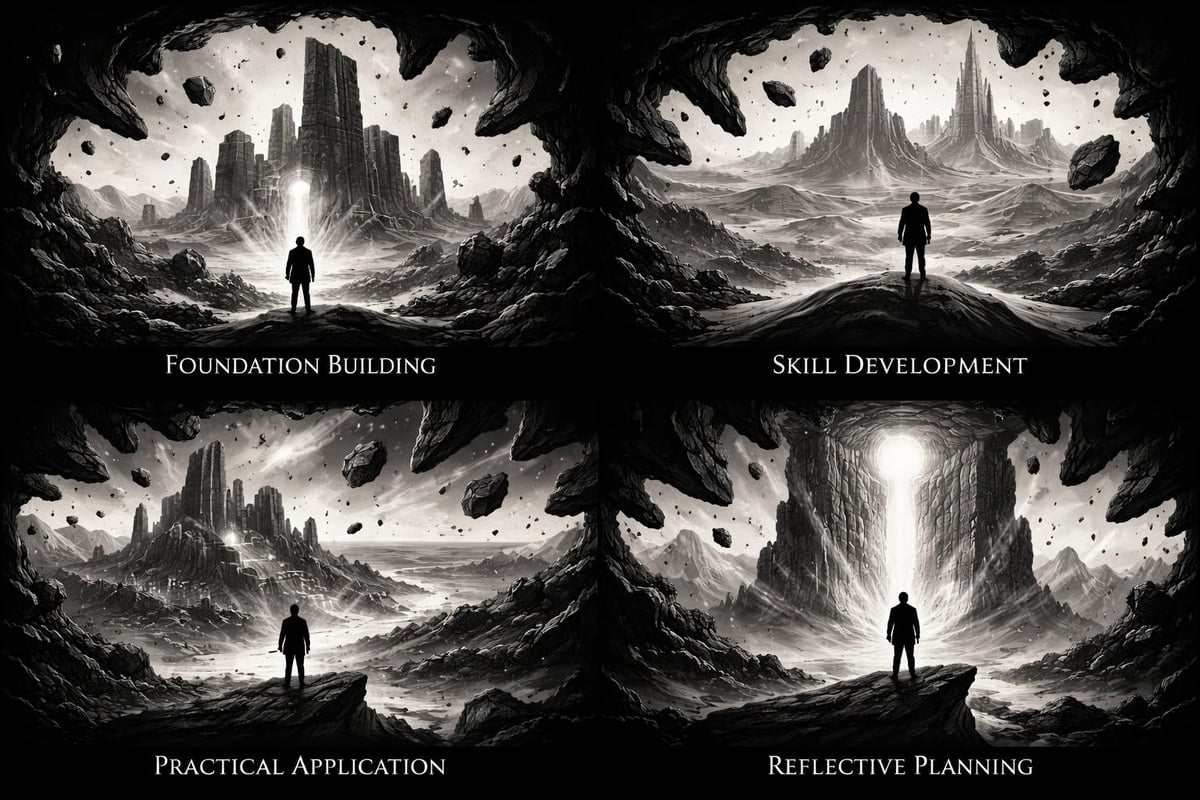
Quarter 1 (January-March 2026): Foundation building
- Identify your top three professional growth areas
- Research resources, courses, or mentors
- Begin one concrete skill-building activity
Quarter 2 (April-June 2026): Skill development
- Deepen your primary skill focus
- Start networking with intentionality
- Document your learning and progress
Quarter 3 (July-September 2026): Application and expansion
- Apply new skills to real projects
- Seek feedback from trusted colleagues
- Begin a second growth area
Quarter 4 (October-December 2026): Reflection and planning
- Assess what worked and what didn't
- Celebrate progress, even small wins
- Plan next year's goals for professional growth
Addressing the Internal Barriers
Let's talk about what really holds us back from professional growth-it's rarely a lack of opportunities or resources. More often, it's the stories we tell ourselves about our capabilities, worthiness, and potential.
Common Mental Roadblocks
Impostor syndrome whispers that you're not qualified, skilled, or deserving of advancement. When setting goals for professional growth, this voice gets louder, trying to keep you safe by keeping you small.
Perfectionism convinces you that if you can't do something flawlessly, you shouldn't try at all. This binary thinking eliminates the messy, imperfect middle ground where actual learning happens.
Comparison tricks you into measuring your progress against someone else's highlight reel, making your legitimate achievements feel inadequate.
Recognizing these patterns is the first step. The second is developing compassion for yourself as you work through them. Changing your mindset isn't about positive thinking-it's about challenging unhelpful thoughts with evidence and choosing beliefs that serve your growth.
Building Resilience Through Setbacks
You will encounter obstacles. Projects will fail. Feedback will sting. Opportunities will fall through. This isn't a sign that you're on the wrong path-it's proof that you're on a growth path.
When setbacks occur:
- Acknowledge the disappointment without dwelling in it
- Extract the lesson without making it mean something about your worth
- Adjust your approach based on new information
- Reach out for support from your network
- Recommit to your goals with updated strategies
Measuring Progress That Matters
Traditional metrics like promotions and raises tell part of the story, but they miss the deeper transformations happening within you. Goals for professional growth need holistic measurement approaches.
Quantitative Metrics
Some aspects of professional growth are numerically trackable:
- Skills acquired or certifications earned
- Projects successfully completed
- Presentations delivered
- Networking connections made
- Books or courses finished
- Hours invested in development activities
Qualitative Indicators
Other measures are felt rather than counted:
- Increased confidence in your abilities
- Greater clarity about your career direction
- Improved work-life boundaries
- Stronger relationships with colleagues
- Enhanced sense of purpose in your work
- Reduced anxiety about professional challenges
Both types of measurement matter. Together, they paint a complete picture of your growth trajectory.
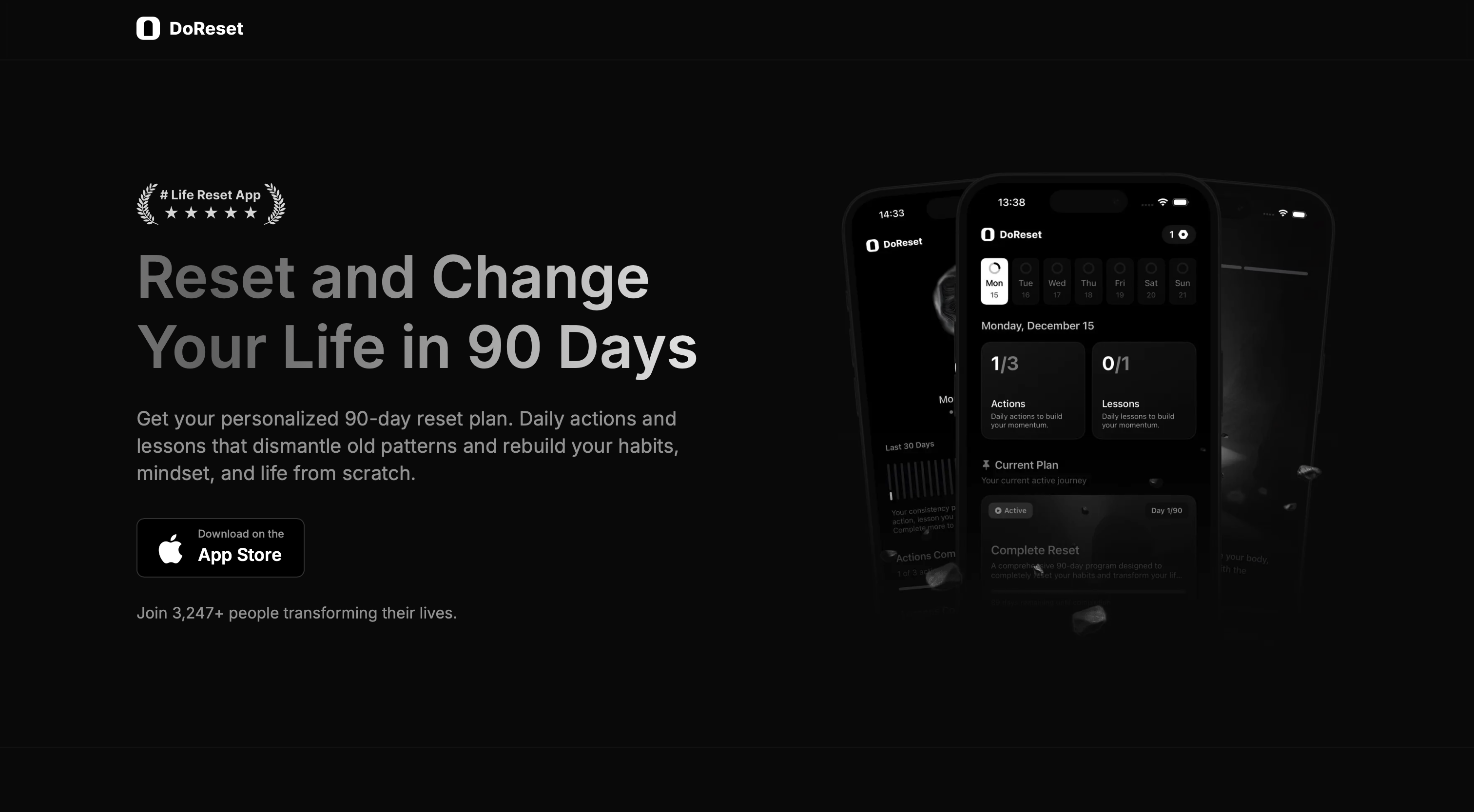
DoReset's personalized approach helps you track both the actionable steps and the internal shifts that define real transformation. Through daily actions and structured lessons over 90 days, you can reset your mindset and establish patterns that support your professional aspirations.
Balancing Professional Growth with Personal Well-being
Here's a truth that doesn't get discussed enough: professional growth shouldn't come at the expense of your health, relationships, or peace of mind. The most sustainable goals for professional growth incorporate work-life balance and stress management from the beginning.
Integration Rather Than Balance
Instead of treating work and life as competing priorities requiring perfect balance, consider integration. How can your professional development enhance your overall life satisfaction? How can personal growth support your career aspirations?
Integration strategies include:
- Choosing skills that serve both professional and personal interests
- Setting boundaries that protect energy for growth activities
- Aligning career goals with family and lifestyle priorities
- Incorporating wellness practices into your daily work routine
- Pursuing professional connections that become genuine friendships
When you approach growth holistically, progress in one area naturally supports development in others.

Taking Action: Your Next Steps
Knowledge without application remains theoretical. The gap between wanting professional growth and experiencing it is bridged by consistent, intentional action. You don't need to have everything figured out before you begin-you just need to take the first step.
Immediate Actions You Can Take This Week
Monday: Write down three goals for professional growth you'd like to achieve this year. Be specific about what success looks like for each one.
Tuesday: Identify one skill that would make your current work more effective or enjoyable. Research three ways you could begin developing that skill.
Wednesday: Reach out to someone in your network-or someone you'd like to add to your network-for a conversation about their career journey.
Thursday: Assess your current schedule. Where can you carve out 30 minutes three times per week for professional development?
Friday: Choose one resource-a course, book, podcast, or workshop-and commit to engaging with it regularly for the next month.
This week of action sets momentum that carries forward. Small, consistent steps compound into significant change over time.
Creating Accountability Systems
You're more likely to follow through on goals when you've built accountability into the process. This doesn't mean harsh self-judgment when you fall short-it means creating supportive structures that keep you moving forward.
Accountability approaches that work:
- Share your goals with a trusted colleague or friend who checks in regularly
- Join or create a peer accountability group focused on professional development
- Schedule specific times for growth activities on your calendar, treating them as unmovable commitments
- Track your progress visually through journals, apps, or charts
- Work with a coach or mentor who provides guidance and support
- Build daily habits that reinforce your larger objectives
The right accountability system feels supportive rather than punitive. It should motivate you through encouragement, not shame.
Adapting Goals as You Evolve
Here's something liberating: you're allowed to change your mind. The goals for professional growth that excited you six months ago might not fit where you are today, and that's okay. Rigidity in goal-setting often does more harm than good.
Regular Review and Adjustment
Schedule quarterly reviews of your professional development goals. During these sessions, ask yourself:
- Which goals still energize and inspire me?
- Which feel obligatory or misaligned with my current values?
- What have I learned that changes my perspective on what I want?
- What new opportunities or interests have emerged?
- How do my goals need to evolve to reflect my growth?
Adjusting your goals based on new information isn't failure-it's wisdom. You're not abandoning your growth; you're ensuring it remains meaningful and relevant.
The Role of Experimentation
Sometimes you won't know if a particular growth path suits you until you try it. Give yourself permission to experiment with different skills, roles, and approaches. Setting professional goals that include exploratory elements keeps your development journey dynamic and responsive.
Not every experiment will succeed, and that's the point. Through experimentation, you discover what genuinely fits versus what looks good on paper.
Building a Growth-Oriented Environment
Your environment-both physical and social-significantly impacts your ability to pursue professional development. While you can't always control your workplace culture, you can influence your immediate environment and seek out growth-supporting spaces.
Workplace Strategies
If you're in a traditional employment setting:
- Discuss development goals during performance reviews
- Propose projects that stretch your current capabilities
- Volunteer for cross-functional teams that expose you to new areas
- Request feedback regularly, not just during formal evaluations
- Seek lateral moves that broaden your experience
If you're self-employed or freelancing:
- Join professional communities in your field
- Invest in continuing education without waiting for employer sponsorship
- Create your own structure for skill development
- Build relationships with peers facing similar challenges
- Set aside revenue specifically for professional growth
Environmental Design
Your physical and digital environments should facilitate rather than hinder growth. Consider:
- Creating a dedicated space for learning and development work
- Curating your social media feeds to include inspiring, educational content
- Organizing digital resources so they're easily accessible
- Removing distractions during designated growth time
- Surrounding yourself with reminders of your goals and progress
Small environmental changes create friction for old patterns and ease for new ones.
Professional Growth as Life Transformation
The distinction between professional and personal growth blurs when you approach development holistically. The confidence you build at work affects your relationships. The communication skills you develop enhance every area of life. The discipline required for career advancement translates to personal goal achievement.
This is why goals for professional growth matter so profoundly-they're rarely just about work. They're about becoming more capable, confident, and authentic in all areas of your life. When you commit to professional development, you're committing to personal evolution.
The journey isn't linear, and it certainly isn't easy. There will be days when you question whether the effort is worth it, when old patterns feel more comfortable than new growth, when progress seems impossibly slow. Those days are part of the process, not evidence that something's wrong.
What matters is that you keep showing up, keep learning, keep adjusting your approach based on what you discover about yourself and your aspirations. The goals themselves may change, but the commitment to growth-that can remain constant.
Setting meaningful goals for professional growth requires both courage and compassion-courage to pursue what you truly want and compassion for yourself during the inevitable challenges. These goals aren't just career checklist items; they're pathways to becoming the person you're meant to be. If you're ready to make lasting change through structured, supportive guidance, DoReset offers a personalized 90-day plan with daily actions and lessons designed to help you dismantle old patterns and build the habits and mindset that support your professional and personal transformation.