
How to Choose the Right Self Improvement Program

DoReset
May 16, 2026
You've reached a point where you know something needs to change. Maybe it's the same patterns repeating, the goals you never quite reach, or the feeling that you're capable of more. Finding the right self improvement program can be the difference between another false start and genuine transformation. But with countless options promising life-changing results, how do you choose one that actually works for you?
Understanding What Makes a Self Improvement Program Effective
Not all programs are created equal. Some offer vague platitudes while others provide concrete, actionable frameworks. The most effective self improvement program shares several key characteristics that set it apart from motivational fluff.
Structured progression is essential. A quality program guides you through stages of growth rather than overwhelming you with everything at once. Research on self-help interventions demonstrates that structured, progressive approaches yield better outcomes than sporadic efforts.
The best programs also acknowledge that change happens in layers. You can't just decide to be different; you need to systematically dismantle old patterns while building new ones. This dual process requires both reflection and action, understanding and practice.
Core Components to Look For
When evaluating any self improvement program, consider these essential elements:
- Daily action steps that break transformation into manageable pieces
- Educational content that helps you understand why you're changing, not just what to change
- Personalization that adapts to your unique circumstances and challenges
- Accountability mechanisms to keep you on track when motivation wanes
- Realistic timelines that allow for sustainable change
A program should feel challenging but achievable. If it promises overnight transformation, run. If it provides no structure at all, you'll likely drift.
Matching Your Needs to Program Structure
Your current situation determines what kind of self improvement program will serve you best. Someone dealing with chronic stress needs different support than someone seeking career advancement or relationship improvement.

Consider where you are right now. Are you starting from scratch after a major life change? Do you have specific habits you want to break or build? Understanding your starting point helps you select a program with appropriate depth and focus.
Time Commitment and Duration
The length of a self improvement program matters more than you might think. Research shows that 90-day programs offer optimal timeframes for habit formation and pattern change. This duration provides enough time to move through resistance, build consistency, and see measurable results.
| Program Duration | Typical Use Case | Sustainability Level |
|---|---|---|
| 7-30 days | Introduction to new concepts | Low |
| 60-90 days | Habit formation and pattern change | High |
| 6-12 months | Comprehensive lifestyle transformation | Moderate |
| Ongoing | Continuous development | Varies |
Shorter programs can introduce ideas, but lasting change requires extended engagement. The sweet spot for most people falls between 60 and 90 days, allowing enough time to rewire patterns without becoming overwhelming.
Evaluating Evidence and Effectiveness
A worthwhile self improvement program should offer some evidence of effectiveness, whether through research, testimonials, or measurable outcomes. Be skeptical of programs that rely solely on emotional appeals without demonstrating concrete results.
Look for programs based on established psychological principles. Cognitive behavioral approaches have strong evidence supporting their effectiveness in creating meaningful personal change. Similarly, programs incorporating elements of self-management show promising results across various contexts.
Questions to Ask Before Committing
Before investing time and money into any program, get clear answers to these questions:
- What specific outcomes can I expect after completing this program?
- What does daily participation actually require?
- How does the program adapt to individual differences?
- What support is available when I struggle?
- What happens after the program ends?
If a program can't provide clear answers, that's a red flag. Vagueness often masks lack of substance.
The Role of Personalization in Transformation
Generic advice rarely creates lasting change because your circumstances, challenges, and goals are unique. A truly effective self improvement program recognizes this reality and builds in personalization from the start.
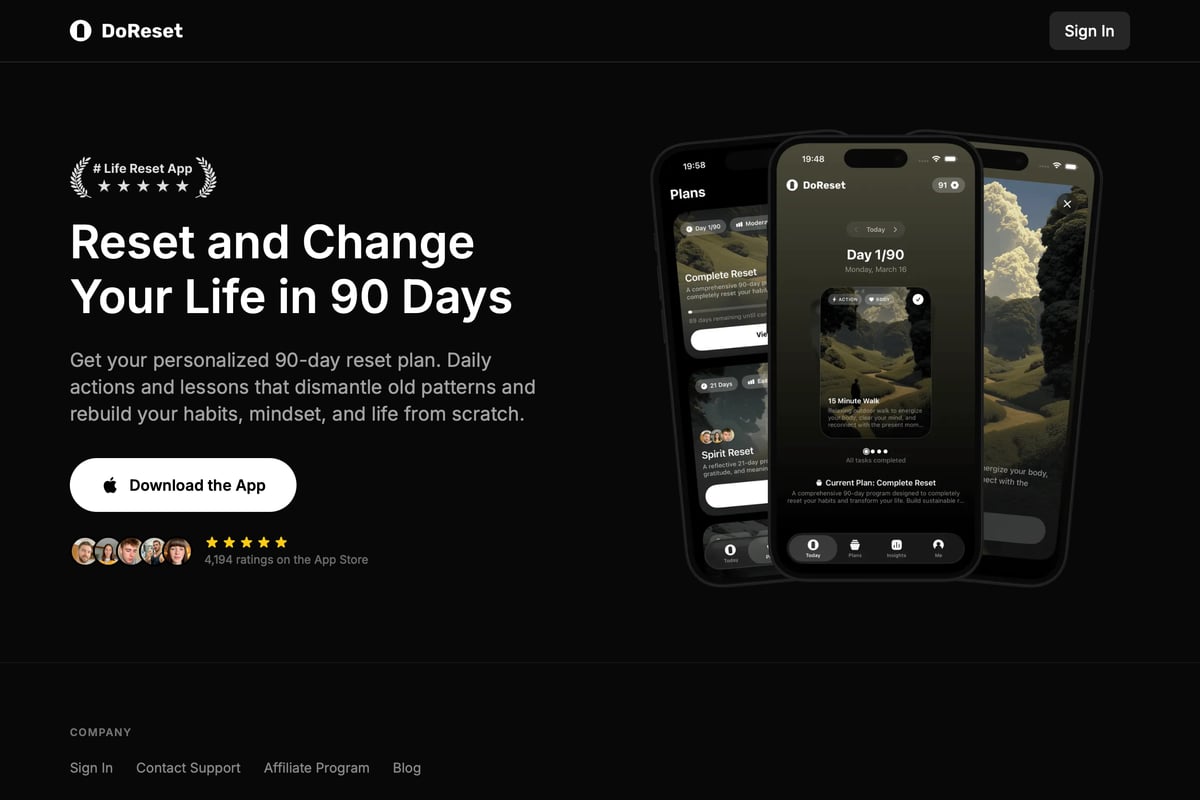
Personalization might mean adjusting the pace of change, focusing on specific areas of life, or adapting recommendations based on your responses. The DoReset mobile app exemplifies this approach by creating individualized 90-day plans that address your specific patterns and rebuild your life according to your unique needs and circumstances.
Some people need more support dismantling old patterns, while others struggle more with building new ones. A one-size-fits-all approach misses these crucial differences. Understanding how to change habits effectively requires acknowledging that different strategies work for different people.
Self-Paced Versus Guided Programs
The structure of delivery also matters significantly when choosing a self improvement program:
Self-paced programs offer flexibility but require high self-discipline. You control when and how you engage, which works well if you have strong internal motivation and clear goals.
Guided programs provide structure through scheduled lessons, milestones, and check-ins. This external framework helps when motivation fluctuates or you're not sure what to do next.
Hybrid approaches combine both elements, offering structured progression while allowing flexibility in timing and application. This tends to work best for most people, providing accountability without rigidity.
Assessing Your Readiness for Change
Even the best self improvement program won't work if you're not ready to commit. Readiness isn't about perfection; it's about honest willingness to do the work required.
Change is uncomfortable. Any legitimate program will push you beyond your comfort zone. Before starting, honestly assess whether you're prepared to feel that discomfort and continue anyway.
Signs You're Ready to Begin
You might be ready for a structured self improvement program if you:
- Feel genuinely dissatisfied with current patterns
- Have reached a natural transition point in life
- Possess willingness to be honest with yourself
- Can commit time daily to the process
- Accept that progress won't be linear
Readiness doesn't mean you have everything figured out. It means you're willing to rebuild your life even when it's difficult.

Building a Support System Around Your Program
No self improvement program exists in isolation. Your environment, relationships, and daily circumstances all influence your capacity for change. Building support systems increases your chances of success dramatically.
Consider who in your life will support your growth and who might unconsciously resist it. Not everyone will celebrate your changes, especially if those changes disrupt established dynamics. Mentorship and guidance can provide external perspective when your existing network doesn't understand your journey.
Creating Environmental Supports
Your physical and digital environment should reinforce the changes you're making:
- Remove temptations that trigger old patterns
- Create visual reminders of your commitment
- Structure your schedule around program requirements
- Limit exposure to contradictory messages
- Surround yourself with inspiration that aligns with your goals
Environmental design isn't about willpower; it's about making good choices easier and bad choices harder. When your environment supports your program, you're working with momentum rather than against it.
Integrating Learning with Action
The gap between knowing and doing derails more self improvement efforts than anything else. An effective self improvement program bridges this gap by integrating learning with immediate application.
Programs that teach concepts without providing structured action steps leave you inspired but unchanged. Conversely, programs that prescribe actions without explaining the underlying principles make it hard to adapt when circumstances change.
The most powerful approach combines both: daily actions paired with lessons that deepen your understanding of why those actions matter. This dual approach builds both competence and confidence.
| Learning Approach | Action Component | Outcome |
|---|---|---|
| Theory only | None | Knowledge without change |
| Action only | Prescribed tasks | Temporary compliance |
| Integrated | Explained actions | Sustainable transformation |
Research on comprehensive intervention programs confirms that combining educational elements with behavioral tasks produces superior outcomes compared to either approach alone.
Measuring Progress Beyond Surface Metrics
How will you know if your self improvement program is working? Most people focus on surface-level metrics like completed tasks or days of participation, but true transformation runs deeper.
Meaningful progress markers include:
- Pattern recognition: Noticing old triggers without automatically reacting
- Response flexibility: Having more choices in how you handle situations
- Internal shifts: Changes in how you think about yourself and your capabilities
- Relationship changes: Different dynamics emerging in how you connect with others
- Sustained effort: Continuing even when initial enthusiasm fades
These subtler indicators often appear before obvious external changes. A quality program helps you recognize and validate these internal shifts, maintaining motivation through the messy middle of transformation.
Adjusting Your Approach Based on Results
No program should be rigidly followed regardless of outcomes. Regular reflection and adjustment ensure you're getting actual value. Studies on self-care programs show that programs allowing for individual adaptation based on ongoing feedback demonstrate better long-term results.
Check in with yourself weekly: What's working? What feels forced or ineffective? Where are you experiencing resistance? This information guides intelligent adjustments that keep your program relevant to your evolving needs.
Addressing Common Obstacles and Resistance
Every self improvement program eventually meets resistance. Knowing this in advance prevents you from interpreting normal difficulty as personal failure.
Motivational dips happen to everyone. The initial excitement fades, and you're left with the daily grind of change. Programs that anticipate this provide strategies to maintain momentum when feelings don't cooperate.
Identity conflict emerges when new behaviors contradict your self-concept. You're literally becoming a different person, and that creates internal friction. Understanding mindset and habit transformation helps navigate this uncomfortable territory.
Environmental pushback occurs when your changes threaten existing systems. Family, friends, or colleagues might subtly or overtly discourage your growth. A solid program prepares you for this resistance and provides strategies to maintain boundaries while staying connected.
Working Through Setbacks
Setbacks aren't failures; they're information. They reveal where you need additional support, different strategies, or deeper work. The effectiveness of self-management programs increases when they normalize setbacks as part of the change process rather than exceptions to it.
When you stumble, ask:
- What triggered the old pattern?
- What was I feeling or thinking just before?
- What would have helped in that moment?
- What can I learn from this experience?
These questions transform setbacks from shameful secrets into valuable data points that inform your ongoing development.
Preparing for Life After the Program
An often-overlooked aspect of choosing a self improvement program is what happens when it ends. The best programs don't just change you temporarily; they equip you with tools to continue growing independently.
Look for programs that explicitly teach you how to maintain progress after completion. This might include creating your own personal growth and development plan, establishing ongoing practices, or joining alumni communities that provide continued support.

The goal isn't perpetual dependence on external programs. It's developing internal capacity to navigate life's challenges and continue building discipline and growth long after formal support ends.
Building Sustainable Practices
The habits and systems you establish during a self improvement program should outlast the program itself. This requires intentionally designing practices that fit your life, not just the program's structure.
Consider which elements you'll maintain:
- Daily reflection or journaling practices
- Regular goal review and adjustment
- Accountability partnerships or check-ins
- Learning activities that support continued growth
- Environmental supports that reinforce new patterns
Sustainability comes from integration, not addition. New practices should enhance your life, not burden it.
Making the Investment Decision
Self improvement programs require investments of time, money, attention, and emotional energy. Making a wise decision means honestly assessing what you can commit and what you'll receive in return.
Consider the total cost, including:
- Direct program fees
- Time required daily and weekly
- Opportunity costs of what you won't do instead
- Emotional energy for doing difficult work
- Potential short-term disruption to existing routines
Balance these against potential benefits:
- Freedom from limiting patterns
- Improved relationships and opportunities
- Enhanced well-being and life satisfaction
- Skills and knowledge that compound over time
- Becoming someone who can navigate challenges effectively
Research on coaching programs for students demonstrates that structured interventions often produce returns far exceeding initial investments when measured across psychological health, performance, and overall satisfaction.
The right self improvement program isn't the cheapest or the most popular. It's the one that matches your needs, meets you where you are, and provides the structure and support necessary for genuine transformation. When you find that alignment, the investment becomes obvious.
Choosing the right self improvement program ultimately comes down to finding structured support that honors your unique journey while providing the accountability and guidance necessary for lasting change. If you're ready to systematically dismantle old patterns and rebuild your life through daily actions and lessons tailored to your specific needs, DoReset offers a personalized 90-day plan designed to transform your habits, mindset, and life from the ground up. Your transformation doesn't require perfection-just commitment to the process and willingness to show up daily.