
Self Development Coaching: Transform Your Life Step by Step

Doreset
May 6, 2026
You've probably felt it before: that nagging sense that you're capable of more, that something needs to change, but you're not quite sure where to start or how to make it stick. Maybe you've tried self-help books, motivational videos, or well-intentioned New Year's resolutions, only to find yourself back in familiar patterns a few weeks later. This is where self development coaching becomes not just helpful, but transformative. It's the difference between knowing what you should do and actually doing it, between temporary motivation and lasting change.
Understanding the Core of Self Development Coaching
Self development coaching is a collaborative partnership focused on helping you identify and achieve your personal growth goals through structured guidance, accountability, and support. Unlike traditional therapy that often explores past trauma, coaching is future-focused and action-oriented.
The foundation of effective self development coaching rests on several key principles. First, it recognizes that you already have the capacity for growth within you. A coach doesn't fix you because you're not broken. They help you access your own wisdom, clarify your vision, and remove the obstacles standing between you and your potential.
The Difference Between Coaching and Other Support Systems
Many people wonder how self development coaching differs from therapy, mentoring, or consulting. Each serves a valuable purpose, but they operate differently:
| Support Type | Primary Focus | Approach | Best For |
|---|---|---|---|
| Self Development Coaching | Future goals and action | Structured accountability and skill-building | Creating new habits and achieving specific outcomes |
| Therapy | Emotional healing | Processing past experiences and trauma | Mental health challenges and deep emotional work |
| Mentoring | Career guidance | Sharing expertise and experience | Industry-specific knowledge and networking |
| Consulting | Problem-solving | Providing expert solutions | Business challenges and technical issues |
Self development coaching sits in a unique space. It acknowledges your emotions and past experiences but keeps the focus firmly on what you want to create moving forward. This approach emphasizes self-awareness and personal development as essential components of sustainable growth.

The Structure That Creates Sustainable Change
One of the most powerful aspects of self development coaching is its structured approach to transformation. Without structure, good intentions dissolve into everyday chaos. With it, change becomes systematic and measurable.
The 90-Day Transformation Framework
Research consistently shows that meaningful behavior change requires consistent action over an extended period. The 90-day framework has emerged as particularly effective because it's long enough to establish new neural pathways but short enough to maintain focus and motivation.
During a typical 90-day self development coaching program, you'll move through several distinct phases:
- Foundation Phase (Days 1-30): Establishing baseline awareness, identifying patterns, and creating clarity around your goals
- Building Phase (Days 31-60): Implementing new behaviors, developing supportive habits, and navigating initial resistance
- Integration Phase (Days 61-90): Solidifying changes, troubleshooting obstacles, and preparing for long-term sustainability
This phased approach mirrors how the brain actually forms new habits. You're not just trying harder; you're working with your neurobiology rather than against it. When you rebuild your life through structured coaching, each phase builds on the previous one, creating compound growth.
Daily Actions: The Building Blocks of Transformation
Grand visions matter, but they mean nothing without daily action. Self development coaching breaks down ambitious goals into manageable, daily behaviors that accumulate into significant change.
Consider the difference between "I want to be healthier" and "I will drink 64 ounces of water, take a 20-minute walk, and prepare one whole-food meal today." The second is specific, measurable, and achievable. Repeat it for 90 days, and you've not just completed tasks; you've become a different person.
The power of daily actions lies in their cumulative effect. Small, consistent behaviors compound over time, creating momentum that makes change feel increasingly natural rather than forced.
The Personal Connection: Why Customization Matters
Generic advice can be inspiring, but it rarely produces lasting results. What works for someone else might not work for you because your circumstances, challenges, strengths, and values are uniquely yours.
Effective self development coaching recognizes this individuality. A skilled coach doesn't apply a one-size-fits-all template. Instead, they work with you to create a personalized roadmap that accounts for your specific situation.
Assessing Your Starting Point
Before you can chart a course forward, you need to understand where you are now. This involves honest self-assessment across multiple dimensions:
- Habits and Routines: What patterns currently shape your days?
- Mindset and Beliefs: What stories do you tell yourself about what's possible?
- Energy and Resources: Where are you investing your time, attention, and energy?
- Relationships and Environment: Who and what surrounds you, and how do they influence your choices?
- Values and Priorities: What truly matters to you beneath the surface-level goals?
This comprehensive assessment reveals not just what needs to change, but why previous attempts at change may have failed. Perhaps your goals weren't aligned with your values, or your environment sabotaged your best intentions. Understanding these dynamics is crucial for changing your mindset in ways that stick.

Dismantling Old Patterns: The Work Nobody Talks About
Here's what most inspirational content won't tell you: real transformation often feels uncomfortable before it feels good. Self development coaching doesn't just add positive habits on top of your existing life. It helps you dismantle the patterns that no longer serve you, and that process can be challenging.
Identifying Your Pattern Triggers
We all have behavioral loops that run automatically. You feel stressed, so you scroll social media. You feel uncertain, so you procrastinate. You feel vulnerable, so you withdraw. These patterns once served a purpose, even if they no longer do.
A self development coach helps you identify these triggers and the functions they serve. Once you understand why you do what you do, you can create alternative responses that meet your needs more effectively.
The Hudson Institute's whole-person approach emphasizes this comprehensive view of pattern recognition, acknowledging that sustainable change requires addressing the full context of your life, not just isolated behaviors.
Creating New Neural Pathways
Your brain is remarkably plastic, meaning it can form new connections throughout your life. But it also loves efficiency, which is why old patterns persist even when you consciously want to change.
Self development coaching leverages this neuroplasticity through:
- Repetition: Consistently practicing new behaviors until they become automatic
- Emotional Engagement: Connecting new actions to meaningful outcomes
- Environmental Design: Structuring your surroundings to support new patterns
- Reflection: Regularly examining what's working and adjusting course
When you change habits, you're literally rewiring your brain. This takes time and patience, which is why coaching support is so valuable during the awkward middle phase when you're no longer who you were but not yet who you're becoming.
The Role of Accountability in Sustainable Growth
You can have all the self-awareness and strategies in the world, but without accountability, follow-through remains optional. This is perhaps the most underrated aspect of self development coaching.
Beyond Simple Check-Ins
Effective accountability isn't about someone monitoring your compliance or making you feel guilty when you fall short. It's about creating a structured relationship where someone holds space for your commitments and helps you navigate the inevitable obstacles.
True accountability in self development coaching includes:
- Regular touchpoints that keep your goals front and center
- Non-judgmental exploration of what's blocking progress
- Celebration of wins, even small ones
- Honest conversations about whether your goals still align with your values
- Adjustment of strategies when the original plan isn't working
This type of supportive accountability differs dramatically from the shame-based accountability many of us experienced growing up. It creates safety while maintaining standards, compassion while expecting growth.
Building Internal Accountability
The ultimate goal of self development coaching isn't to make you dependent on external accountability forever. It's to help you develop robust internal accountability so you become your own best coach.
This happens gradually as you experience the rewards of following through, build trust with yourself, and develop the self-awareness to notice when you're drifting off course. The coaching relationship serves as training wheels until your internal systems are strong enough to sustain your momentum independently.
Integrating Cognitive Science and Humanistic Approaches
The most effective self development coaching blends evidence-based strategies from cognitive science with humanistic psychology's emphasis on human potential and self-actualization. This integration creates a comprehensive approach that's both practical and inspiring.
Self-actualization coaching recognizes that you're not just trying to fix problems or achieve external markers of success. You're working toward becoming more fully yourself, expressing your unique capabilities, and living in alignment with your deepest values.
The Science of Behavior Change
Modern self development coaching draws on decades of research into how people actually change:
- Implementation Intentions: Specific "if-then" plans that increase follow-through by 200-300%
- Habit Stacking: Linking new behaviors to existing routines to leverage established neural pathways
- Progress Monitoring: Regular tracking that provides feedback and maintains motivation
- Social Support: Leveraging human connection to reinforce commitment and celebrate progress
These aren't just theoretical concepts. They're practical tools that coaches help you implement in your specific context, customized to your personality and circumstances.
The Humanistic Foundation
Beneath the strategies and techniques, effective self development coaching rests on humanistic principles that honor your autonomy, wisdom, and capacity for growth. This means:
Believing in your potential: You're not broken or deficient. You're capable of more than you've yet expressed.
Respecting your pace: Growth unfolds in its own time. Sustainable change can't be rushed, only supported.
Honoring your values: Your goals should serve your authentic values, not someone else's definition of success.
Trusting your wisdom: You know yourself better than any expert. Coaching helps you access and trust that inner knowing.
This philosophical foundation shapes every aspect of the coaching relationship, creating space for genuine transformation rather than superficial compliance.

Practical Tools and Resources for Your Journey
Self development coaching provides both the relationship and the resources to support your growth. While the partnership with your coach is central, the tools you use daily make abstract concepts tangible and actionable.
Leveraging Technology for Consistent Support
In 2026, technology has transformed how self development coaching reaches people. While the human connection remains irreplaceable, digital tools can provide structure, reminders, and resources between coaching sessions.
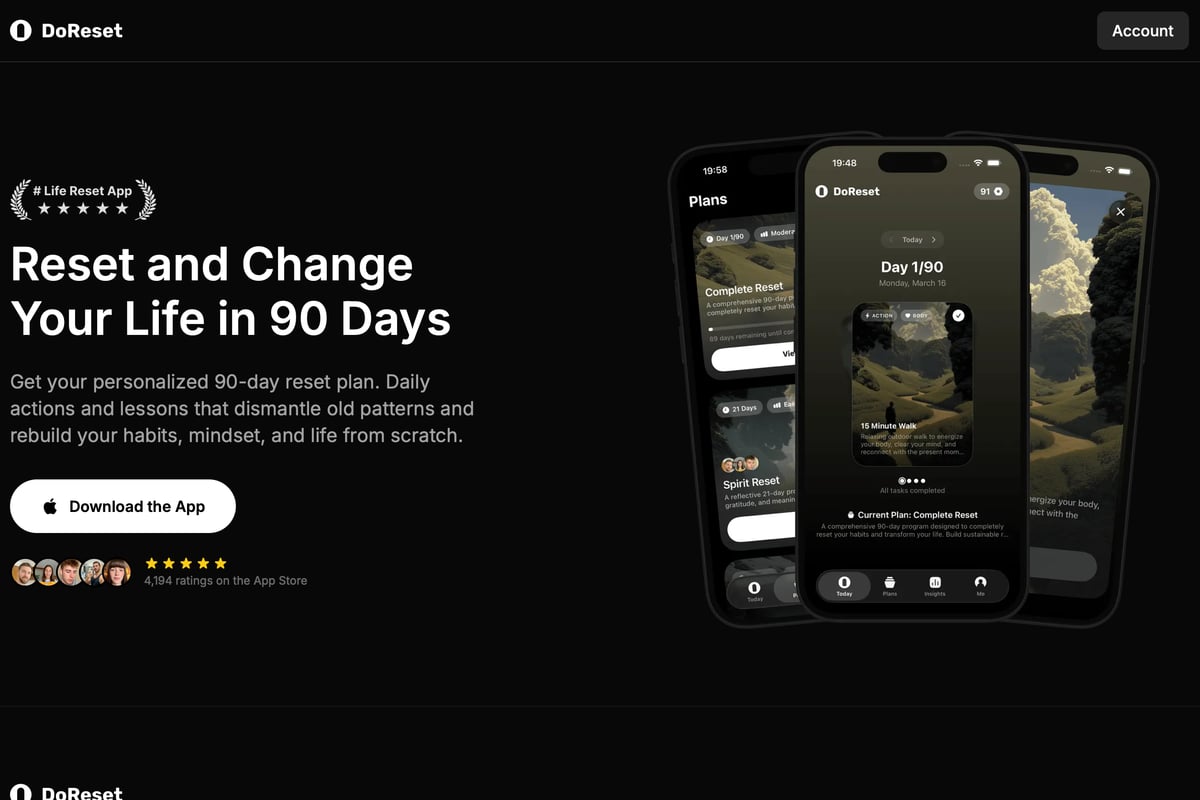
Personalized mobile applications now offer daily actions and lessons that guide you through systematic transformation. These aren't generic tips pulled from a database. They're structured programs that break down the 90-day journey into manageable daily steps, each building on the last.
The DoReset mobile app exemplifies this approach, providing a personalized 90-day reset plan that dismantles old patterns and rebuilds your habits, mindset, and life from scratch. With daily actions and lessons tailored to your specific needs, it serves as a constant companion in your transformation journey, ensuring that the insights from coaching sessions translate into consistent action.
Reflection and Self-Assessment Tools
Meaningful growth requires regular reflection. Self development coaching typically incorporates various tools for examining your progress and maintaining self-awareness:
| Tool Type | Purpose | Frequency | Benefit |
|---|---|---|---|
| Daily Journals | Track actions, emotions, insights | Daily | Builds awareness, identifies patterns |
| Weekly Reviews | Assess progress, adjust strategies | Weekly | Maintains momentum, celebrates wins |
| Monthly Assessments | Evaluate overall trajectory, realign goals | Monthly | Provides perspective, prevents drift |
| Quarterly Integration | Synthesize learning, plan next phase | Every 90 days | Consolidates growth, sets new direction |
These structured reflection practices prevent you from sleepwalking through your transformation. They create regular pause points where you can notice what's shifting, what's challenging, and what needs adjustment.
Navigating Common Obstacles and Resistance
Let's be honest: if changing were easy, you wouldn't need self development coaching. The path includes predictable obstacles that nearly everyone encounters. Knowing what to expect helps you navigate them with less frustration.
The Initial Enthusiasm Dip
Week one feels exciting. You're energized, hopeful, and ready to conquer the world. Then week three arrives, and suddenly everything feels hard. Your old patterns reassert themselves. The new behaviors require conscious effort. Doubt creeps in.
This dip is completely normal. It's not evidence that coaching isn't working or that you're failing. It's simply your brain resisting the discomfort of change. Self development coaching helps you anticipate this dip and develop strategies for moving through it rather than giving up.
The Identity Crisis of Transformation
As you begin to change, you might experience an unexpected discomfort: your old identity no longer fits, but your new one doesn't feel fully formed yet. Who are you if you're no longer the person who procrastinates, avoids conflict, or stays in your comfort zone?
This liminal space, while uncomfortable, is where real transformation happens. A skilled coach helps you navigate this identity transition with compassion, recognizing it as a sign of progress rather than a problem to solve. When you're rebooting your life, this in-between phase is not just inevitable but necessary.
Environmental Resistance
Your environment was designed for your old patterns. The people in your life are accustomed to the old you. Your physical space supports old habits. As you change, this environmental mismatch creates friction.
Self development coaching addresses this by helping you:
- Redesign your environment to support new behaviors
- Communicate your changes to important people in your life
- Establish boundaries that protect your transformation
- Find communities that reinforce your new identity
Change doesn't happen in isolation. Your coaching work extends to reshaping the context in which you live, not just your internal world.
The Long-Term Vision: Life Beyond the Program
Effective self development coaching isn't about creating dependency on the coach. It's about building your capacity for ongoing self-directed growth long after the formal coaching relationship ends.
Developing Your Inner Coach
Throughout the coaching process, you're not just working on specific goals. You're learning a methodology for ongoing development. You're internalizing the questions your coach asks, the frameworks they use, and the perspectives they offer.
Over time, you develop what experts call the "self as coach" capability. You can step back from your immediate experience, assess situations objectively, identify patterns, and make conscious choices about how to respond. This meta-awareness becomes one of the most valuable outcomes of coaching.
Resources on self-development from thought leaders in the field can complement your coaching work, providing additional perspectives and tools for your continued growth.
Creating Sustainable Systems
The true test of self development coaching success isn't what happens during the 90 days of intensive work. It's what happens in the months and years after. Do the changes stick? Do you continue growing? Or do you gradually drift back to old patterns?
Sustainable systems make the difference. These include:
- Morning and evening routines that anchor your day in intentional practices
- Weekly planning sessions that ensure your actions align with your priorities
- Monthly reviews that maintain perspective and celebrate progress
- Quarterly reassessments that allow for course corrections and new goal-setting
- Annual reflections that honor how far you've come and envision where you're heading
When you plan your life with these nested rhythms of reflection and action, growth becomes a way of life rather than a one-time project.
Recognizing When to Re-engage
Even with robust systems, there are times when re-engaging with formal self development coaching makes sense. Life transitions, new challenges, and plateaus all present opportunities to deepen your work with professional support.
Recognizing these moments isn't a failure. It's evidence of self-awareness and wisdom. Just as professional athletes work with coaches throughout their careers despite being at the top of their game, individuals committed to ongoing growth often engage in multiple coaching relationships across their lifetime.
Each engagement builds on the previous one, addressing new layers of growth and more nuanced challenges. This isn't starting over; it's spiraling upward, visiting similar themes from a more developed perspective.
Making Self Development Coaching Work for You
If you're considering self development coaching, certain factors will significantly influence your experience and results. Understanding these upfront helps you approach the process with realistic expectations and optimal positioning for success.
Readiness Assessment
Coaching works best when you're genuinely ready for change, not just intellectually interested in it. Ask yourself:
- Am I willing to be uncomfortable as I grow?
- Can I commit time and energy to this process?
- Am I ready to take responsibility for my choices rather than blaming circumstances?
- Do I believe change is possible for me, even if I'm uncertain how it will unfold?
If you answered yes to these questions, you're likely in a good position to benefit from self development coaching. If you hesitated, that's valuable information too. Perhaps you need to address other priorities first, or maybe you need to explore what's creating the resistance.
Setting Yourself Up for Success
Beyond readiness, certain practices maximize the value you receive from coaching:
- Be honest: Coaching only works if you're truthful about your experiences, challenges, and resistance
- Do the work: Sessions are valuable, but the real transformation happens in your daily actions between meetings
- Ask questions: Challenge assumptions, seek clarity, and engage actively rather than passively receiving advice
- Track your progress: Maintain awareness of changes through journaling, metrics, or other tracking methods
- Celebrate wins: Acknowledge progress, especially the small daily victories that compound into major change
The quality of your engagement directly correlates with the results you achieve. Self development coaching is collaborative; your coach provides expertise, structure, and support, but you bring the commitment and action.
Evaluating Quality and Fit
Not all self development coaching is created equal, and not every coach is right for you. When evaluating options, consider:
- Training and credentials: What specific training has the coach received in behavior change, psychology, or coaching methodologies?
- Approach and philosophy: Does their framework align with your values and learning style?
- Structure and accountability: What systems do they use to maintain momentum between sessions?
- Chemistry and trust: Do you feel safe being vulnerable with this person?
- Results and testimonials: What outcomes have their clients experienced?
The evaluation of self-help resources applies equally to coaching services. Quality matters, and investing time in finding the right fit pays dividends throughout your transformation journey.
When you reset your mindset through effective coaching, you're not just achieving specific goals. You're developing a new relationship with yourself, your potential, and your capacity for ongoing growth. That foundation serves you for the rest of your life, making the investment in quality coaching one of the most valuable you can make.
Self development coaching offers a structured, compassionate path to becoming who you're meant to be, not through willpower alone but through systematic support, personalized guidance, and consistent action. The transformation you seek is possible when you combine your commitment with the right framework and accountability. DoReset provides exactly this combination with a personalized 90-day reset plan that dismantles old patterns and rebuilds your habits, mindset, and life through daily actions designed specifically for your journey. Start your reset today and discover what becomes possible when structure meets intention.