
Feeling Lost in Your 20s: A Compassionate Guide Forward

DoReset
May 30, 2026
If you're feeling lost in your 20s, I want you to know something important: you're not alone, and there's nothing wrong with you. This decade brings unprecedented freedom alongside paralyzing uncertainty. You're navigating career choices, relationships, identity questions, and societal expectations all at once, often without a roadmap. The disorientation you feel isn't a personal failing. It's a natural response to one of life's most transformative periods.
Why Your 20s Feel Like Navigating Without a Map
Your twenties represent a fundamental shift from structured life to open-ended possibility. For most of your life until now, the path was clear: elementary school, middle school, high school, maybe college. Someone else set the curriculum, the schedule, the milestones.
Then suddenly, everything changes.
The structure disappears, and you're expected to create your own direction. This transition causes what many therapists recognize as a common psychological challenge during early adulthood. Your brain is still developing its prefrontal cortex (the part responsible for decision-making and planning) until around age 25, yet society expects you to make life-defining choices.
The Pressure Cooker of Expectations
Social media intensifies the confusion. You're bombarded with carefully curated highlight reels of peers who seem to have everything figured out. They've launched startups, traveled to exotic locations, found their soulmates, or landed dream jobs. Meanwhile, you might be living with roommates, working a job that feels meaningless, or questioning every major decision you've made.
The reality? Most of those people are also struggling, also uncertain, also scared. They're just not posting about it.

Here's what contributes to feeling lost in your 20s:
- Decision paralysis: Too many options without clear criteria for choosing
- Financial instability: Student loans, entry-level salaries, and rising living costs
- Identity exploration: Figuring out who you are separate from family expectations
- Relationship uncertainty: Navigating friendships, romantic relationships, and changing social circles
- Career confusion: Discovering your actual interests often differs from what you studied
- Comparison culture: Constant measuring yourself against others' perceived success
The Hidden Gift in This Uncertainty
I know this might sound counterintuitive when you're struggling, but feeling lost in your 20s can actually be a profound opportunity. This discomfort signals growth. You're not meant to have everything figured out right now. You're meant to be exploring, experimenting, failing, learning, and discovering who you truly are.
The psychologist Erik Erikson called this "identity versus role confusion," a crucial developmental stage. You're actively constructing your adult identity, and that process requires trying on different versions of yourself. Some will fit. Many won't. All provide valuable information.
Reframing "Lost" as "Exploring"
What if you're not lost at all? What if you're exactly where you need to be, gathering the experiences and insights that will eventually clarify your direction?
Consider these alternative perspectives:
| Feeling Lost Might Mean... | Reframe It As... |
|---|---|
| "I don't know what I want" | "I'm gathering data about my preferences" |
| "Everyone else is ahead of me" | "I'm on my own timeline, not theirs" |
| "I've wasted so much time" | "I've gained important experience" |
| "I should have it together by now" | "I'm building my foundation" |
Research on expressions of self-doubt among young adults shows that these feelings are remarkably common, even if they're not always visible. You're part of a generation navigating unprecedented challenges: economic uncertainty, climate anxiety, social media comparison, and rapidly changing job markets.
Practical Steps to Find Your Footing
While understanding why you feel this way helps, you also need actionable strategies to move forward. Here's what actually works when you're feeling lost in your 20s.
Create Small Experiments, Not Permanent Decisions
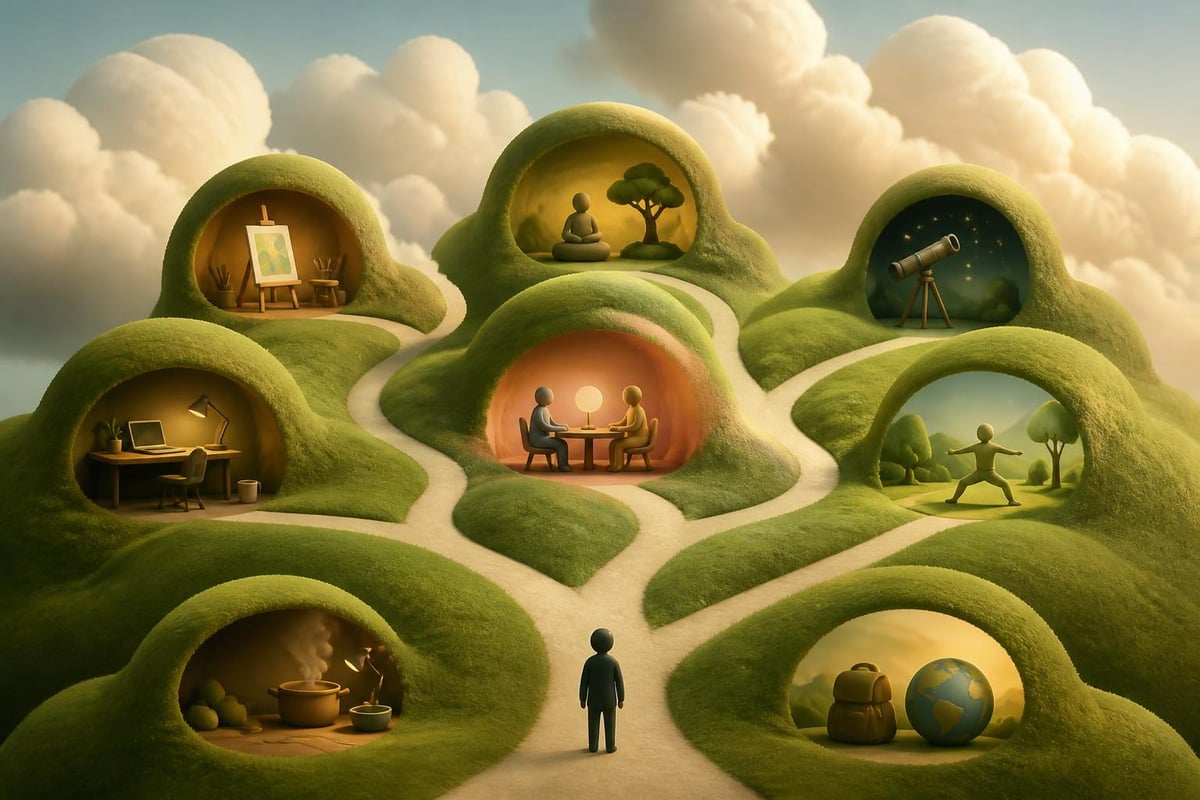
You don't need to choose your entire life path right now. Instead, run small experiments:
- Identify one area causing the most uncertainty (career, relationships, location, purpose)
- Design a 30-day experiment to explore that area without commitment
- Gather data about how it feels, what you learn, what energizes or drains you
- Reflect and adjust based on what you discovered
- Repeat with the next experiment
This approach removes the paralyzing pressure of making "the right choice" and replaces it with curiosity and learning. You're not committing to a career forever when you take a temporary job in a new field. You're gathering information.
Build Your Self-Knowledge Foundation
Clarity comes from understanding yourself, not from finding the perfect external opportunity. Invest time in discovering:
- Your values: What actually matters to you, not what you think should matter
- Your energy patterns: What activities energize versus drain you
- Your skills: Both what you're good at and what you enjoy doing
- Your deal-breakers: What you absolutely won't tolerate in work or relationships
- Your growth edges: Where you want to develop and evolve
Many people find that working through a structured personal development plan helps organize this self-discovery process. Having a framework prevents the overwhelming feeling of not knowing where to start.
Embrace Small, Consistent Actions
The antidote to feeling stuck isn't one massive decision or dramatic life change. It's consistent small actions that compound over time. This concept underlies effective personal growth and self-development strategies.
When you're feeling lost, focus on what you can control today:
- One conversation with someone in a field that interests you
- One application to an opportunity that sparks curiosity
- One hour learning a skill you've been drawn to
- One boundary set in a draining relationship
- One morning routine that centers you before the day begins
These actions might seem insignificant individually, but they create momentum. Momentum creates confidence. Confidence creates clarity.
Rebuilding When Everything Feels Broken
Sometimes feeling lost in your 20s goes deeper than normal uncertainty. Maybe you're recovering from burnout, emerging from a painful breakup, or realizing that the path you've been on isn't actually yours. You might need more than tweaks. You might need a complete reset.
That's okay. Actually, it's more than okay. It's courageous.
The Power of Intentional Reset
Research on loneliness and isolation among young adults reveals that many people in their twenties experience profound disconnection from themselves and others. If this resonates with you, a structured approach to rebuilding your life can provide the framework you're craving.
A comprehensive reset involves several key components:
Dismantling old patterns: Identifying which beliefs, habits, and behaviors no longer serve you Creating space: Letting go of commitments, relationships, or pursuits that drain your energy Rebuilding intentionally: Constructing new habits, mindset, and routines aligned with your actual values Maintaining momentum: Sustaining changes through consistent daily actions
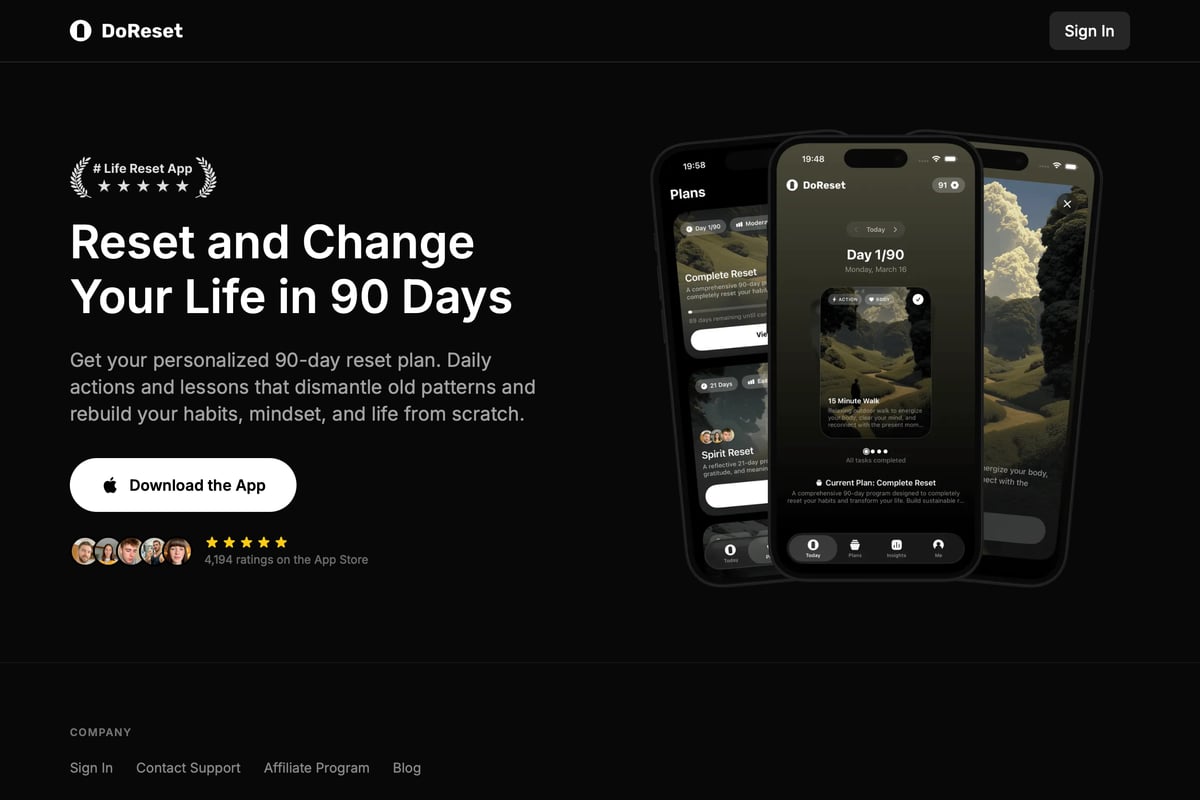
If you're ready to take this step, the DoReset mobile app offers a personalized 90-day reset plan designed specifically for this kind of transformation. It provides daily actions and lessons that guide you through dismantling old patterns and rebuilding your habits, mindset, and life from scratch.
Daily Practices That Anchor You
While you're navigating uncertainty, certain daily practices create stability:
| Practice | Purpose | Time Required |
|---|---|---|
| Morning pages | Process thoughts, gain clarity | 15-20 minutes |
| Movement | Regulate nervous system, reduce anxiety | 20-30 minutes |
| Learning | Build skills, create direction | 30-60 minutes |
| Connection | Combat isolation, gain perspective | Varies |
| Reflection | Track growth, identify patterns | 10-15 minutes |
These aren't about adding more to your plate. They're about creating anchors when everything else feels unstable. You can start with just one and build from there.
Building a Support System That Actually Helps
Feeling lost in your 20s can feel incredibly isolating. You might hesitate to share your struggles because everyone around you seems to have it together. But as this perspective from young adults reveals, most of your peers are experiencing similar challenges.
Who to Turn To (and Who to Avoid)
Not all support is created equal. You need people who can hold space for your uncertainty without rushing to fix you or minimize your experience.
Seek out:
- People who've navigated similar transitions successfully
- Mentors who remember their own confused twenties
- Peers who are honest about their own struggles
- Professionals (therapists, coaches) trained in this developmental stage
- Communities focused on personal growth and development
Limit exposure to:
- People who compare your journey to others
- Those who dismiss your feelings as "normal growing pains"
- Individuals invested in you following a specific path
- Endless social media scrolling that triggers comparison
The Value of Structured Guidance
Sometimes self-directed exploration isn't enough. You might benefit from external structure and accountability. This is where practical strategies for finding direction become invaluable.
Working with a framework that provides daily actions can prevent the paralysis that comes from too much freedom. You wake up knowing what to focus on, which reduces decision fatigue and builds momentum.
Making Peace With the Process
Here's something I wish someone had told me earlier: your 20s don't have to be perfect to be valuable. In fact, the messy, confusing, uncomfortable parts often teach you more than the moments when everything clicks into place.
Letting Go of the Timeline
Society imposes arbitrary timelines: graduated by 22, established career by 25, married by 30, kids by 35. These timelines are becoming increasingly irrelevant, yet they still create internal pressure.
What if you released those expectations entirely? What if you trusted that your path is unfolding exactly as it needs to, even when it doesn't look like anyone else's?
This doesn't mean passive acceptance of circumstances you want to change. It means actively working toward what you want while releasing the white-knuckled grip on how and when it should happen. Understanding transition and transformation helps distinguish between productive action and anxious striving.
Celebrating Small Wins
When you're feeling lost in your 20s, it's easy to fixate on everything you haven't accomplished yet. Counter this by actively celebrating small victories:
- You tried something new, even though it scared you
- You ended a relationship that wasn't serving you
- You asked for help instead of suffering alone
- You showed up for yourself on a hard day
- You learned something valuable from a failure
These aren't consolation prizes. They're evidence of growth, resilience, and courage. Document them. Remember them when the doubt creeps in.
Your Twenties as Foundation, Not Destination
The most important realization about feeling lost in your 20s is this: this decade isn't about arriving at your final destination. It's about building the foundation for everything that comes next.
You're developing:
- Resilience through navigating uncertainty
- Self-knowledge through experimentation and failure
- Skills that will serve you for decades
- Relationships that will shape your future
- Values that will guide your decisions
Every confusing moment, every wrong turn, every uncomfortable feeling is contributing to this foundation. Nothing is wasted. Nothing is wrong.
The Long View
Research consistently shows that life satisfaction often increases with age. Your 30s, 40s, and beyond typically bring more clarity, confidence, and contentment than your 20s. This isn't just because circumstances improve. It's because you develop the wisdom, self-knowledge, and skills to create a life that truly fits you.
Your 20s are the groundwork. You're gathering the materials, testing different architectural plans, and learning the skills you'll use to build your life. The construction might look messy right now, but it's happening exactly as it should.
Feeling lost in your 20s isn't a problem to solve immediately. It's an experience to move through with compassion, curiosity, and consistent action. The disorientation you feel signals transformation, not failure. If you're ready for structured support through this journey, DoReset offers a personalized 90-day plan with daily actions and lessons designed to help you dismantle old patterns and intentionally rebuild your habits, mindset, and life. You don't have to navigate this alone, and you don't have to have it all figured out right now.