
My Personal Development Plan: A Roadmap to Your Best Self

DoReset
May 21, 2026
Creating my personal development plan felt overwhelming at first. I knew I wanted to change, grow, and become a better version of myself, but I didn't know where to start. Maybe you're feeling the same way right now-stuck between the life you have and the life you want, uncertain about how to bridge that gap. The truth is, transformation doesn't happen by accident. It requires intention, structure, and a clear roadmap that guides you from where you are to where you want to be.
Understanding What My Personal Development Plan Really Means
My personal development plan isn't just a document or a list of wishes. It's a living, breathing commitment to myself. Think of it as your personal GPS for growth-a strategic framework that identifies where you currently stand, where you want to go, and the specific steps you'll take to get there.
When I started creating my personal development plan, I realized it needed to address multiple dimensions of my life simultaneously. Personal growth isn't compartmentalized. Your career affects your relationships. Your health impacts your mindset. Your habits shape your future.
The Core Components That Make It Work
Every effective personal development plan shares several foundational elements:
- Self-assessment: Understanding your current strengths, weaknesses, values, and patterns
- Clear vision: Defining what success looks like for you specifically
- Measurable goals: Setting concrete targets that track progress
- Action steps: Breaking down big goals into daily, manageable tasks
- Accountability mechanisms: Creating systems that keep you on track
- Flexibility: Building in room to adjust as you learn and grow
The beauty of my personal development plan is that it evolves with me. What I needed six months ago differs from what I need today, and that's not just okay-it's expected.
Conducting an Honest Self-Assessment
Before I could plan where to go, I had to understand where I was. This step challenged me more than I anticipated. Self-assessment requires brutal honesty, and sometimes the truth hurts.
I started by examining my current habits without judgment. What patterns had I developed over the years? Some served me well. Others held me back. I looked at my daily actions and asked: are these moving me toward my goals or keeping me stuck?

Questions That Revealed My Truth
Here are the questions that helped me see clearly:
- What energizes me versus what drains me?
- Where do I spend my time, and does it align with my values?
- What fears are holding me back from taking action?
- Which relationships support my growth and which ones don't?
- What skills do I need to develop to reach my next level?
Writing these answers down transformed vague feelings into concrete data. I could see patterns I'd been blind to for years. This awareness became the foundation for rebuilding my life intentionally.
Setting Goals That Actually Matter
Goals in my personal development plan needed to be more than wishful thinking. I learned the hard way that "I want to be happier" doesn't create change. Specificity does.
I broke my goals into three time horizons:
| Timeline | Focus | Example |
|---|---|---|
| 90 days | Habit formation and immediate skills | Establish morning routine, complete online course |
| 1 year | Significant milestones and transitions | Career change, relationship improvements, health transformation |
| 5 years | Vision and legacy | Leadership position, financial freedom, impact on community |
The 90-day framework became particularly powerful for me. Three months provides enough time to see real change but isn't so distant that motivation fades. Research on 90-day habits shows this timeframe is optimal for creating lasting transformation.
Making Goals Actionable
Each goal in my personal development plan needed clear success metrics:
- Career: "Increase income by 20%" not "make more money"
- Health: "Exercise 4 times weekly for 30 minutes" not "get fit"
- Relationships: "Schedule weekly date nights" not "improve marriage"
- Personal growth: "Read 15 minutes daily and complete 1 book monthly" not "read more"
The more specific I made my goals, the easier it became to take action. Vague aspirations stayed aspirations. Specific targets became achievements.
Creating Daily Actions That Build Momentum
My personal development plan lived or died based on what I did each day. Grand visions matter, but daily actions create the actual transformation.
I realized I couldn't overhaul my entire life overnight. That approach had failed me before. Instead, I focused on small, consistent actions that compounded over time. One percent better each day doesn't feel dramatic, but over 90 days, the cumulative effect is remarkable.
The Power of Morning and Evening Routines
Bookending my day with intentional routines became non-negotiable:
Morning routine (30 minutes):
- 10 minutes meditation or journaling
- 10 minutes reviewing daily intentions
- 10 minutes learning (reading, podcast, course)
Evening routine (20 minutes):
- Reflect on the day's wins and lessons
- Plan tomorrow's top three priorities
- Gratitude practice
These routines anchored my personal development plan in reality. Even on chaotic days, these touchpoints kept me connected to my bigger vision.

Addressing Mindset and Mental Patterns
The most profound insight in my personal development plan came from recognizing that external change starts internally. I could set perfect goals and take consistent action, but if my mindset sabotaged me, nothing would stick.
I had to confront limiting beliefs I'd carried for years. "I'm not disciplined enough." "I always start but never finish." "People like me don't achieve that level of success." These thoughts weren't truths-they were stories I'd told myself so many times I believed them.
Changing your mindset requires patience and repetition. I couldn't just decide to think differently and have it magically happen. I had to catch negative thoughts, question them, and consciously replace them with empowering alternatives.
Techniques That Shifted My Internal Dialogue
- Affirmations: Creating positive statements and repeating them daily
- Evidence collection: Documenting past successes to counter "I can't" thoughts
- Reframing: Finding growth opportunities in setbacks and challenges
- Visualization: Mentally rehearsing success to build confidence
- Self-compassion: Treating myself with kindness when I stumbled
Understanding the transition from transformation helped me see that change isn't linear. Some days I'd take two steps forward. Other days, one step back. Both were part of the process.
Building Accountability Into Your Plan
My personal development plan worked best when I wasn't doing it alone. Accountability transformed my intentions into commitments.
I tried several approaches to find what worked for me:
| Accountability Method | Pros | Cons |
|---|---|---|
| Accountability partner | Personal connection, mutual support | Requires coordinating schedules |
| Mastermind group | Multiple perspectives, networking | Can lack depth if group is too large |
| Coach or mentor | Expert guidance, personalized feedback | Financial investment required |
| Public commitment | Social pressure to follow through | Risk of judgment or comparison |
| Tracking apps | Data-driven insights, reminders | Can feel impersonal or mechanical |
For me, a combination worked best. I found an accountability partner who shared similar goals, worked with a mentor quarterly, and used a 90-day planner to track my daily progress. When you're working to reset your mindset and rebuild your life, having support makes the difference between giving up and pushing through.
Tracking Progress and Celebrating Wins
I learned to measure what mattered in my personal development plan. Not everything important is quantifiable, but tracking progress kept me motivated and honest about whether my actions aligned with my goals.
Weekly reviews became sacred time. Every Sunday evening, I assessed:
- What went well this week?
- What challenges did I face?
- What did I learn about myself?
- What needs to adjust for next week?
Monthly reviews zoomed out further, looking at trends and patterns. Was I making progress toward my 90-day goals? Which habits had stuck and which needed reinforcement? According to research on personal development planning, regular reflection significantly increases the likelihood of achieving your objectives.
Celebrating Small Victories
I used to dismiss small wins, thinking only big achievements deserved recognition. This mindset kept me constantly dissatisfied. Now, my personal development plan includes celebration as a strategic element.
Completed my morning routine five days straight? Celebration. Had a difficult conversation I'd been avoiding? Celebration. Chose the healthy option when stressed? Celebration.
These acknowledgments reinforced positive behavior and reminded me that progress was happening, even when the finish line seemed distant.
Overcoming Obstacles and Staying Committed
My personal development plan faced its biggest tests during difficult periods. When life got hard-and it always does-maintaining focus required conscious effort.
I anticipated obstacles and planned for them:
- Time scarcity: Identified "minimum viable progress" on busy days
- Motivation loss: Created a "why" document I reviewed when struggling
- Self-doubt: Built a support network I could reach out to
- Competing priorities: Protected non-negotiable development time in my calendar
- Burnout: Scheduled rest and recovery as part of the plan
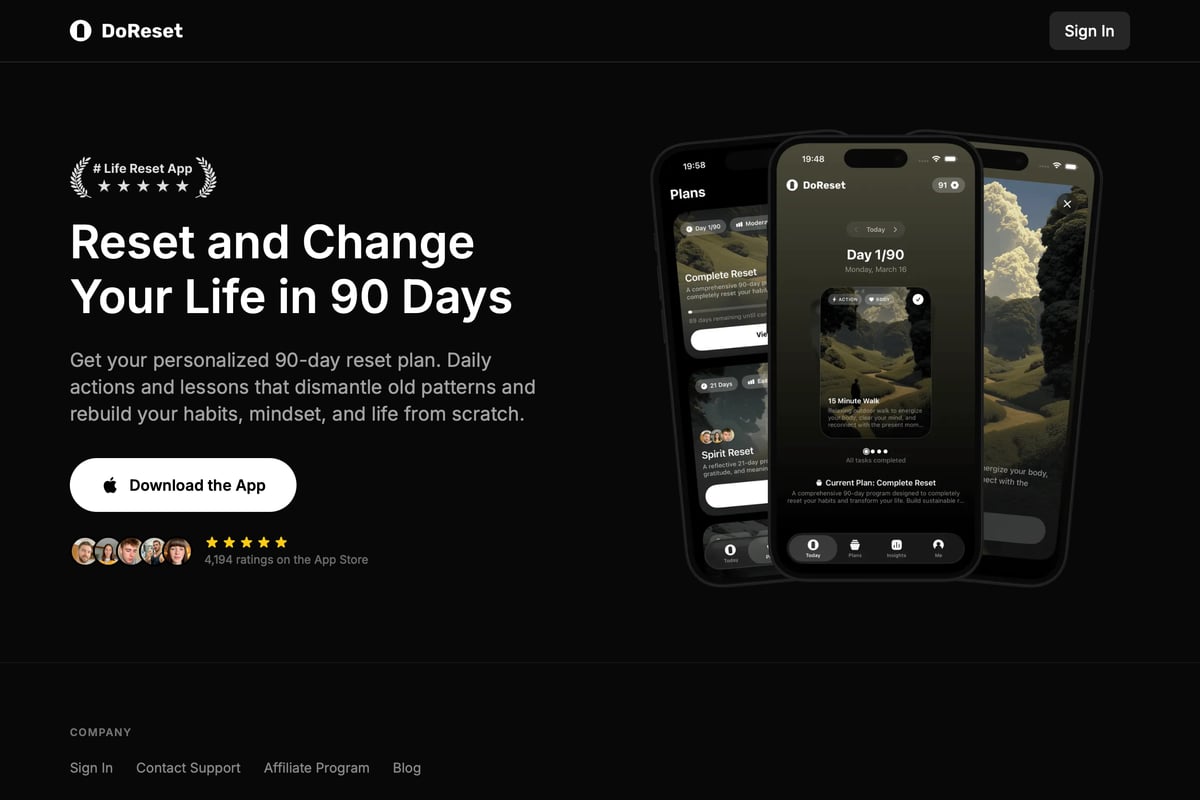
The DoReset mobile app provides exactly this kind of structure-a personalized 90-day reset plan with daily actions and lessons that keep you moving forward even when motivation wanes. Having that external structure helped me dismantle old patterns and rebuild my habits systematically.
Adjusting and Evolving Your Plan
My personal development plan isn't static. As I grew, my plan needed to grow with me. What challenged me at the beginning became comfortable over time, signaling the need for new goals.
I built in quarterly reviews specifically to evaluate whether my plan still served me. Sometimes goals needed adjusting because circumstances changed. Other times, I'd achieved what I set out to do and needed to aim higher.
This flexibility prevented me from either clinging to outdated objectives or abandoning the entire plan when one aspect didn't work out. Building discipline means staying committed to the process while remaining open to refining the approach.
Signs It's Time to Adjust
Watch for these indicators that your personal development plan needs updating:
- You're consistently achieving goals too easily (aim higher)
- Goals feel overwhelming and unattainable (break them down further)
- Your values or priorities have shifted (realign your plan)
- You're going through the motions without engagement (reconnect to your why)
- External circumstances have fundamentally changed (adapt your approach)
Integrating Multiple Life Areas
The most effective version of my personal development plan addressed all dimensions of my life, not just one area. Focusing solely on career while neglecting health or relationships created imbalance that eventually sabotaged my progress.
I used a holistic framework that included:
- Physical: Health, fitness, energy, sleep
- Mental: Learning, skills, intellectual growth
- Emotional: Self-awareness, emotional regulation, therapy
- Social: Relationships, community, networking
- Spiritual: Purpose, meaning, values alignment
- Professional: Career advancement, income, impact
- Financial: Savings, investments, security
Rather than trying to transform everything simultaneously, I prioritized based on what needed attention most urgently. Some quarters focused heavily on health. Others emphasized career transitions. The key was maintaining awareness of all areas while concentrating effort where it mattered most.

Learning From Setbacks and Failures
My personal development plan included setbacks. Not as possibilities, but as certainties. I would fail. I would stumble. I would have days when I ignored every commitment I'd made.
The question wasn't whether I'd fail, but how I'd respond when I did. Viewing setbacks as data rather than verdicts changed everything. When I missed a week of workouts, instead of spiraling into shame, I asked: What got in the way? What does this teach me about my current system? How can I design around this obstacle?
This approach, covered extensively in resources about personal growth and development planning, treats failure as feedback. Every misstep revealed information about what wasn't working, giving me the opportunity to adjust and improve.
Resources and Tools That Support Growth
Creating my personal development plan became easier when I leveraged available resources. I didn't have to reinvent the wheel or figure everything out alone.
Books, courses, podcasts, and communities provided frameworks, inspiration, and practical techniques. I invested in online self-development courses that taught specific skills I needed to develop.
Practical tools that enhanced my plan included:
- Habit tracking apps: Visual progress monitoring
- Journaling platforms: Reflection and pattern recognition
- Calendar blocking: Protected time for development activities
- Project management tools: Organizing goals and tasks
- Financial trackers: Monitoring economic goals
- Fitness apps: Health and wellness metrics
The right tools didn't create change by themselves, but they reduced friction and made consistent action easier. When planning your life, selecting tools that match your learning style and preferences increases the likelihood you'll actually use them.
Making It Sustainable for the Long Term
The biggest challenge with my personal development plan wasn't starting-it was sustaining. Initial enthusiasm faded. The novelty wore off. The gap between where I was and where I wanted to be sometimes felt impossibly wide.
Sustainability required building systems that didn't depend on motivation. I created automatic processes that continued even when I didn't feel inspired. Direct deposits into savings. Recurring calendar events for learning time. Meal prep systems that supported health goals. Pre-committed accountability check-ins.
These systems, explained in depth in articles about changing habits to change life, removed decision fatigue from the equation. I didn't have to decide each day whether to take action. The decision was already made. I just had to follow the system.
Long-term thinking also helped. When I viewed my personal development plan as a lifelong practice rather than a temporary fix, I gave myself permission to move at a sustainable pace. Slow, consistent progress beat intense bursts followed by burnout every single time.
Building my personal development plan transformed how I approach growth, replacing random effort with intentional progress across every area of life. The structure, accountability, and daily actions create momentum that compounds over time, turning small steps into significant transformation. If you're ready to stop spinning your wheels and start making real progress, DoReset offers a personalized 90-day reset plan with daily actions and lessons designed to dismantle old patterns and rebuild your habits, mindset, and life from the ground up.