
Emotional Exhaustion: Signs, Causes, and Recovery

DoReset
May 28, 2026
You know that feeling when you wake up already tired, despite sleeping eight hours? When the thought of responding to one more email, having one more conversation, or making one more decision feels like climbing a mountain? That's not just regular tiredness. You might be experiencing emotional exhaustion, a state where your mental and emotional reserves have been depleted to the point where functioning feels nearly impossible. Unlike physical fatigue that resolves with rest, emotional exhaustion seeps into every aspect of your life, affecting your relationships, work performance, and sense of self. Understanding this condition is the first step toward reclaiming your energy and rebuilding a life that sustains rather than drains you.
Understanding Emotional Exhaustion Beyond Simple Tiredness
Emotional exhaustion represents a chronic state of mental and emotional depletion that develops when you've given more than you can sustainably provide for an extended period. Medical News Today explains that this condition often develops gradually, making it difficult to recognize until you're already deeply affected.
The difference between regular tiredness and emotional exhaustion lies in its persistence and pervasiveness. Regular fatigue responds to rest. Emotional exhaustion doesn't.
The Physical Manifestations Nobody Talks About
Your body keeps score, even when your mind tries to push through. Emotional exhaustion manifests physically in ways that often get misdiagnosed or dismissed:
- Chronic headaches that seem to have no clear trigger
- Persistent muscle tension, especially in shoulders and neck
- Digestive issues that fluctuate with stress levels
- Weakened immune system leading to frequent illnesses
- Sleep disturbances despite feeling utterly drained
Recent research published in Scientific Reports demonstrates how parasympathetic nervous system reactivity to everyday stress connects directly to momentary emotional exhaustion, revealing the deep physiological roots of this condition.

Recognizing the Warning Signs Before Complete Burnout
Emotional exhaustion doesn't appear overnight. It builds gradually, sending signals that we often ignore or rationalize away. Recognizing these early warning signs can prevent you from reaching a breaking point where recovery becomes significantly more challenging.
The Emotional Indicators
You might notice yourself feeling:
- Cynical or detached from activities you once enjoyed
- Irritable or short-tempered with loved ones over minor issues
- Hopeless or trapped in your current circumstances
- Numb or disconnected from your own emotions
- Overwhelmed by tasks that previously felt manageable
The emotional numbness deserves special attention. Many people describe emotional exhaustion as feeling like they're watching their own life from behind glass, present but not truly engaged.
Behavioral Changes That Signal Trouble
Beyond feelings, emotional exhaustion changes how you act:
| Behavior Pattern | What It Looks Like | Why It Matters |
|---|---|---|
| Withdrawal | Avoiding social interactions, canceling plans frequently | Isolation deepens exhaustion |
| Procrastination | Delaying tasks despite knowing consequences | Energy too depleted for decision-making |
| Decreased performance | Missing deadlines, making errors, losing focus | Cognitive resources compromised |
| Self-medication | Increased reliance on alcohol, food, or other substances | Attempting to numb or escape feelings |
When you notice yourself changing habits in ways that don't serve you, it's often your system crying out for attention and care.
The Root Causes: Why Emotional Exhaustion Develops
Understanding what drives emotional exhaustion helps you address it at the source rather than just managing symptoms. The causes are rarely singular; they typically interweave in complex patterns that vary from person to person.
Chronic Stress Without Recovery Periods
Modern life often glorifies constant productivity and availability. You might pride yourself on handling multiple responsibilities, but without intentional recovery periods, even positive stress accumulates into exhaustion. Research in the Journal of Business and Psychology highlights how workplace factors, including safety climate concerns, contribute to emotional exhaustion among professionals, particularly those in high-stress roles.
The issue isn't just about having stress. It's about the chronic absence of restoration.
Misalignment Between Values and Daily Actions
One of the most insidious causes of emotional exhaustion comes from living in ways that contradict your core values. When you spend your days doing work that feels meaningless, maintaining relationships that drain you, or pursuing goals that don't genuinely matter to you, every action requires extra emotional energy because you're fighting against your authentic self.
This misalignment creates what psychologists call "cognitive dissonance," requiring constant mental energy to reconcile the gap between who you are and how you're living. Over time, this internal conflict depletes your emotional reserves faster than almost any external stressor.

Perfectionism and Impossibly High Standards
Setting high standards drives achievement, but perfectionism creates an exhausting treadmill where nothing ever feels good enough. When you constantly move the goalpost, denying yourself acknowledgment for what you've accomplished, you drain your emotional reserves without ever refilling them through satisfaction or pride.
Common perfectionist patterns that lead to exhaustion include:
- Overworking to avoid potential criticism
- Difficulty delegating because others won't do it "right"
- Ruminating over small mistakes for days or weeks
- Comparing your behind-the-scenes to others' highlight reels
- Tying self-worth entirely to productivity and achievement
Creating Your Recovery Framework
Recovery from emotional exhaustion requires more than a weekend away or a bubble bath, though those certainly don't hurt. True recovery involves rebuilding your life in ways that prevent depletion from recurring.
Establishing Non-Negotiable Boundaries
Boundaries aren't walls; they're the parameters that define what you can sustainably give without depleting yourself. Many people struggling with emotional exhaustion have spent years prioritizing everyone else's needs over their own, creating an untenable situation.
Start with these boundary-setting steps:
- Identify your energy drains by tracking what depletes versus energizes you for one week
- Choose one boundary to establish rather than overhauling everything at once
- Communicate clearly using "I" statements about your needs and limits
- Prepare for pushback from people accustomed to unlimited access to your time and energy
- Reinforce consistently even when it feels uncomfortable initially
Remember that people who respect you will respect your boundaries. Those who don't were likely contributing to your exhaustion.
Rebuilding Through Micro-Restorations
While major life changes might be necessary long-term, immediate relief comes from integrating small restoration practices throughout your day. These aren't luxuries or indulgences; they're essential maintenance for your emotional well-being.
| Time Investment | Restoration Practice | Benefit |
|---|---|---|
| 5 minutes | Deep breathing or brief meditation | Activates parasympathetic nervous system |
| 15 minutes | Nature exposure or sunlight | Reduces cortisol, improves mood |
| 30 minutes | Physical movement you enjoy | Releases endorphins, processes stress hormones |
| 60 minutes | Creative activity or hobby | Engages flow state, provides accomplishment |
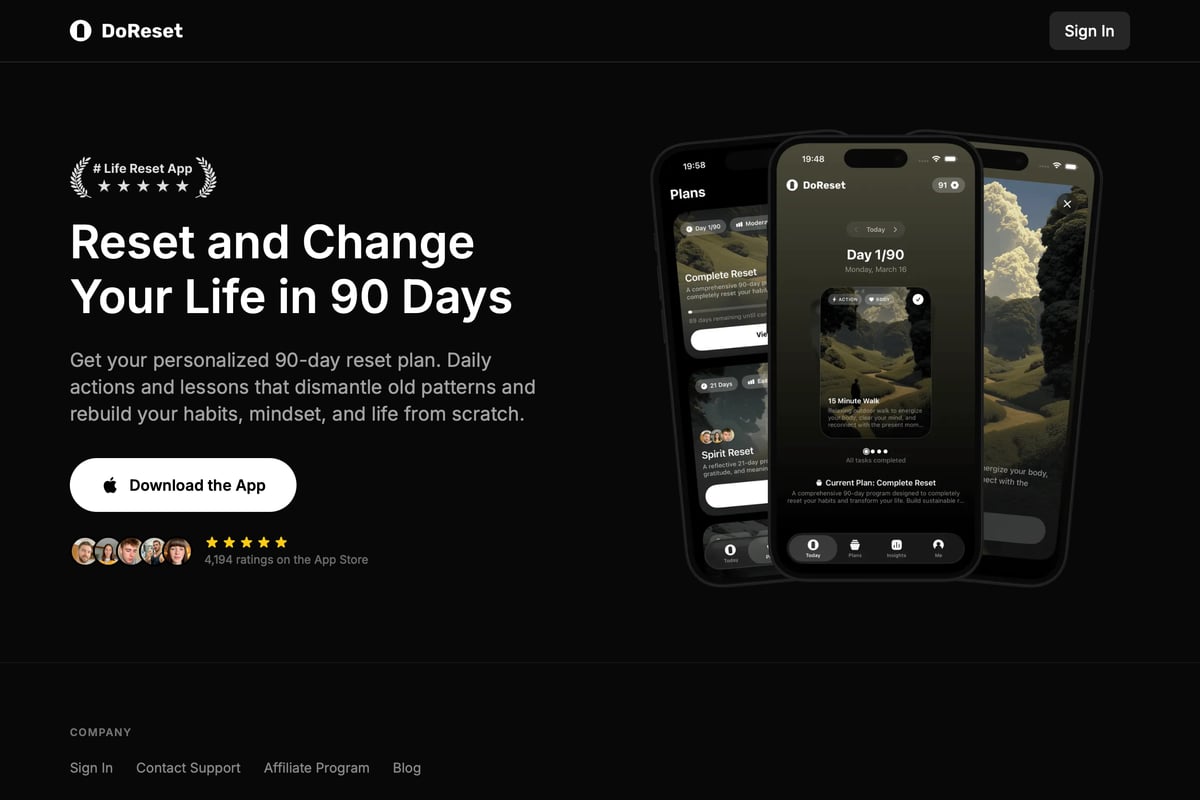
The DoReset mobile app provides personalized daily actions specifically designed to help you rebuild sustainable habits, offering structured guidance through your recovery journey with lessons that address both mindset shifts and practical implementation.
Transforming Your Mindset and Patterns
Recovering from emotional exhaustion isn't just about removing stressors; it's about fundamentally changing your mindset about productivity, worth, and sustainable living. This transformation requires examining the beliefs that led to depletion in the first place.
Questioning Your "Shoulds"
Much emotional exhaustion stems from living according to internalized "shoulds" rather than authentic wants and needs. You might believe you should always be available, should never disappoint anyone, should maintain certain standards regardless of cost, or should be able to handle everything without help.
Ask yourself about each major commitment:
- Whose expectation is this really? Mine or someone else's?
- What happens if I don't meet it? Real consequences or imagined catastrophes?
- Does this align with my values? Or just with what I think I'm supposed to value?
- What would I tell a friend in this situation?
These questions help differentiate between genuine obligations and self-imposed pressures that drain without serving you.
Redefining Productivity and Success
Healthline's comprehensive guide emphasizes that addressing emotional exhaustion often requires redefining what constitutes a productive or successful day. If your current definitions require constant output at the expense of your well-being, they're not sustainable.
Consider measuring success by:
- Energy preserved or restored rather than tasks completed
- Quality of presence in interactions rather than quantity
- Alignment with values rather than achievement volume
- Sustainable pace rather than maximum speed
This shift doesn't mean abandoning ambition. It means pursuing your goals in ways that build you up rather than break you down.

Building Sustainable Support Systems
No one recovers from emotional exhaustion in isolation. Humans are inherently social creatures who need connection, understanding, and support to thrive. Yet many people experiencing emotional exhaustion have inadvertently isolated themselves, either through shame, exhaustion that makes socializing feel impossible, or relationships that have become one-sided.
Identifying Your Support Needs
Different situations require different types of support. Consider what would actually help you right now:
- Practical support: Help with tasks, errands, or responsibilities
- Emotional support: Someone who listens without judgment or trying to fix
- Informational support: Guidance from people who've navigated similar challenges
- Companionship support: Presence without agenda, just being together
You don't need the same person to provide all types of support. In fact, spreading different needs across your network often works better than expecting one person to meet everything.
When Professional Support Becomes Essential
While friends and family provide invaluable support, some situations require professional intervention. Consider seeking help from a therapist or counselor if you're experiencing:
- Persistent thoughts of self-harm or that life isn't worth living
- Inability to function in daily activities for extended periods
- Emotional exhaustion stemming from trauma or complex situations
- Substance use that's become a primary coping mechanism
- Physical symptoms that interfere with quality of life
Professional support isn't a sign of weakness or failure. It's a recognition that some challenges require specialized tools and expertise to navigate effectively. The Journal of Occupational Rehabilitation published research demonstrating how multimodal monitoring and professional intervention significantly improve outcomes for individuals experiencing emotional exhaustion during major life transitions.
Implementing Daily Actions for Long-Term Recovery
Knowledge alone won't restore your emotional reserves. Recovery requires consistent action over time, which is why having a structured approach makes such a significant difference. The transformation from emotional exhaustion to sustainable vitality happens through accumulated small steps, not dramatic overnight changes.
Creating Your Morning Foundation
How you begin your day sets the tone for everything that follows. When emotionally exhausted, mornings often feel like starting a marathon already depleted. Rebuilding a morning routine that supports rather than drains you creates momentum.
Effective morning practices for recovery:
- Wake at a consistent time to regulate your circadian rhythm
- Avoid immediate phone checking to prevent reactive rather than intentional start
- Engage in gentle movement to activate your body without overwhelming it
- Eat nourishing breakfast to provide actual fuel rather than quick fixes
- Set one intention for the day focused on how you want to feel, not just achieve
Notice these aren't about maximizing productivity. They're about establishing conditions that make sustainable functioning possible.
Midday Check-Ins and Course Corrections
Emotional exhaustion often involves powering through until collapse. Recovery means building awareness and making adjustments before you reach that point. Implement brief midday check-ins where you assess:
| Question | Purpose | Possible Action |
|---|---|---|
| How's my energy level right now? | Awareness of current state | Take a brief restorative break if depleted |
| What's one thing I can release? | Permission to adjust expectations | Delegate, postpone, or eliminate something |
| Have I moved my body today? | Physical restoration check | Quick walk or stretching session |
| When did I last eat or hydrate? | Basic needs assessment | Nourishing snack and water |
| Am I holding tension anywhere? | Stress accumulation check | Progressive muscle relaxation |
These micro-adjustments prevent the accumulation that leads back into exhaustion cycles.
Recognizing and Celebrating Progress
One challenge in recovering from emotional exhaustion is that progress often feels invisible. You're not dramatically transforming overnight; you're gradually rebuilding capacity. Learning to recognize and acknowledge small wins becomes essential for maintaining motivation and perspective.
Shifting Your Measurement Criteria
Instead of measuring recovery by how much you accomplish, try tracking:
- Days you maintained boundaries without guilt
- Moments you caught yourself before spiraling into old patterns
- Times you asked for help instead of struggling alone
- Instances where you chose rest over pushing through
- Situations where you felt emotions rather than numbing them
These markers indicate genuine personal growth even when external circumstances haven't dramatically changed yet.
Understanding Non-Linear Recovery
Recovery from emotional exhaustion rarely follows a straight upward trajectory. You'll have days that feel like setbacks, moments when old patterns resurface, and periods where progress seems to stall. This doesn't mean you're failing or that recovery isn't working.
Expect fluctuation. Plan for it. When difficult days arise, they're opportunities to practice the self-compassion and resilience you're building, not evidence that you're broken beyond repair.
The journey from emotional exhaustion to sustainable vitality requires patience with yourself, consistent action aligned with your values, and willingness to fundamentally change how you approach life. You didn't arrive at exhaustion overnight, and you won't leave it behind that quickly either. But every small step toward recovery matters, building the foundation for a life that energizes rather than depletes you.
Emotional exhaustion doesn't have to be your permanent state, though recovery requires genuine commitment to transforming the patterns that led to depletion. If you're ready to systematically rebuild your habits, mindset, and daily practices in ways that create sustainable energy rather than chronic drain, DoReset offers a personalized 90-day reset plan with daily actions and lessons designed specifically for this kind of fundamental transformation. Your emotional reserves can be restored, one intentional day at a time.