
Self Improvement Goals That Actually Transform Your Life

DoReset
May 10, 2026
Setting self improvement goals can feel overwhelming when you're staring at a blank page, wondering where to even begin. You might feel stuck in patterns that no longer serve you, or perhaps you've tried to change before but found yourself back where you started. I understand how frustrating that can be. The truth is, meaningful transformation doesn't happen through wishful thinking or vague intentions. It happens when you identify specific, actionable goals that align with who you want to become and commit to the journey ahead, even when it gets difficult.
Why Self Improvement Goals Matter More Than Ever
In 2026, we're navigating a world that demands constant adaptation. The skills that served us yesterday might not be enough for tomorrow. That's not meant to stress you out but rather to highlight why intentional growth matters.
When you set clear self improvement goals, you're taking control of your narrative. You're no longer passively letting life happen to you. Instead, you're actively shaping your future.
Here's what happens when you commit to meaningful goals:
- You develop greater self-awareness and understanding of your patterns
- You build resilience through facing challenges head-on
- You create momentum that carries into every area of your life
- You prove to yourself that change is possible
The research backs this up. Setting SMART goals for self-improvement provides structure and increases your likelihood of success dramatically compared to vague intentions.

Identifying Your Core Self Improvement Goals
Before you dive into creating a massive list, pause. Take a breath. The most effective self improvement goals aren't the ones that sound impressive to others. They're the ones that address what's genuinely holding you back.
Start with Honest Self-Assessment
Ask yourself these questions without judgment:
- What patterns keep showing up in my life that I want to change?
- Where do I feel most stuck or frustrated?
- What would my ideal day look like six months from now?
- Which areas of my life need the most attention right now?
Write down your answers. Don't edit them. Just let the truth flow onto the page.
Focus on These Key Areas
Most meaningful self improvement goals fall into several categories. You don't need to tackle all of them at once. In fact, please don't. That's a recipe for burnout.
| Goal Category | Examples | Why It Matters |
|---|---|---|
| Physical Health | Exercise routine, nutrition, sleep habits | Foundation for energy and mental clarity |
| Mental Wellness | Mindfulness, therapy, stress management | Emotional resilience and stability |
| Relationships | Communication skills, boundaries, quality time | Connection and support systems |
| Career Growth | New skills, leadership, professional development | Purpose and financial security |
| Personal Development | Reading, learning, creative pursuits | Continuous growth and fulfillment |
Consider exploring 25 transformative self-improvement goals across different life areas to see what resonates with you.
Creating Goals That Actually Stick
I've seen countless people set ambitious self improvement goals in January only to abandon them by February. It's not because they lack willpower. It's because the goals weren't designed for sustainability.
Make Them Specific and Measurable
"Be healthier" isn't a goal. It's a wish. Compare that to "Walk 10,000 steps five days per week" or "Prepare home-cooked meals four nights each week." See the difference?
Transform vague intentions into clear targets:
- Identify the specific behavior you want to change
- Define what success looks like in measurable terms
- Set a realistic timeframe
- Determine how you'll track progress
- Plan for obstacles before they arise
Start Small, Think Big
The most powerful self improvement goals often start with micro-commitments. Want to become a reader? Start with five pages daily, not fifty. Want to meditate? Begin with three minutes, not thirty.
Small wins create momentum. Momentum builds confidence. Confidence fuels bigger changes.
When you're ready to rebuild your life, these foundational habits become the building blocks for massive transformation.

The Eight Essential Self Improvement Goals for 2026
Based on what I've observed working with people navigating personal transformation, certain goals create ripple effects across your entire life. Psychology Today identifies key self-improvement goals that align with current research on wellbeing.
Building Emotional Resilience
Life will knock you down. That's not pessimism; it's reality. The question is how quickly you get back up. Emotional resilience means developing the capacity to adapt to stress, bounce back from setbacks, and maintain equilibrium during chaos.
This might look like:
- Developing a daily mindfulness practice
- Working with a therapist or coach
- Creating healthy coping mechanisms
- Building a support network you can rely on
Cultivating Better Habits
Your life is essentially the sum of your habits. What you do daily matters infinitely more than what you do occasionally. The challenging part? Changing habits requires changing your mindset first.
Focus on these habit categories:
- Morning routines that set a positive tone
- Evening rituals that improve sleep quality
- Productivity practices that maximize focus
- Self-care activities that prevent burnout
Enhancing Communication Skills
Whether in relationships, at work, or within your community, how you communicate shapes your experience. Better communication means clearer boundaries, deeper connections, and less unnecessary conflict.
Work on:
- Active listening without planning your response
- Expressing needs directly and compassionately
- Managing difficult conversations with grace
- Reading nonverbal cues more effectively
Prioritizing Physical Wellness
You can't show up as your best self when you're exhausted, undernourished, or sedentary. Physical wellness isn't about achieving some idealized body. It's about having the energy and vitality to pursue what matters to you.
| Wellness Area | Practical Goals | Weekly Commitment |
|---|---|---|
| Movement | Find activities you enjoy | 3-5 sessions |
| Nutrition | Cook more meals at home | 4-6 meals |
| Sleep | Consistent sleep schedule | 7-9 hours nightly |
| Hydration | Drink adequate water | 64+ ounces daily |
Developing Financial Literacy
Money stress affects everything. Your relationships, your health, your peace of mind. Building financial literacy among your self improvement goals isn't materialistic. It's foundational to security and freedom.
Start here:
- Track spending for one month without judgment
- Create a realistic budget you can maintain
- Build an emergency fund, even if it's $10 weekly
- Learn one new financial concept monthly
Fostering Meaningful Connections
Loneliness is an epidemic in 2026, even as we're more "connected" than ever digitally. Quality relationships require intentional effort and vulnerability.
Make it a priority to:
- Schedule regular time with people who matter
- Be fully present during interactions (phone away)
- Practice vulnerability and authentic sharing
- Show up for others, especially during hard times
Pursuing Continuous Learning
The world changes rapidly. The skills you have today might be obsolete tomorrow. But more importantly, learning keeps your mind sharp and life interesting.
This doesn't mean formal education necessarily. It could be:
- Reading books outside your usual genre
- Taking online courses in areas of interest
- Learning a new language or instrument
- Developing a creative skill
- Seeking mentorship in your field
Explore 365 daily tips for self-improvement to discover new learning opportunities every single day.
Creating Purpose and Meaning
Perhaps the most important of all self improvement goals is discovering what makes your life feel meaningful. This isn't something you figure out once and you're done. It's an ongoing exploration.
Questions to guide you:
- What activities make you lose track of time?
- What would you do if money weren't a concern?
- What problems in the world do you care most about?
- What legacy do you want to leave?

Turning Goals into Daily Actions
Here's where most people stumble. They have beautiful self improvement goals written in journals or saved in apps. But there's no bridge between the goal and daily life.
The Power of Systems Over Goals
Goals tell you where you want to go. Systems get you there. Instead of focusing solely on the outcome (lose 30 pounds), focus on the system (what you eat and how you move daily).
When you're working on building discipline, you need frameworks that support you when motivation fades. Because motivation will fade. It always does.
Build systems by:
- Creating environment triggers that make good choices easier
- Reducing friction for desired behaviors
- Increasing friction for unwanted behaviors
- Tracking consistently without obsessing over perfection
The 90-Day Reset Approach
Why 90 days? It's long enough to create real change but short enough to maintain focus. Three months gives you time to work through resistance, build momentum, and see tangible results.
A structured approach helps you break down yearly self improvement goals into manageable phases. You can implement daily actions that compound over time, creating transformation that sticks.
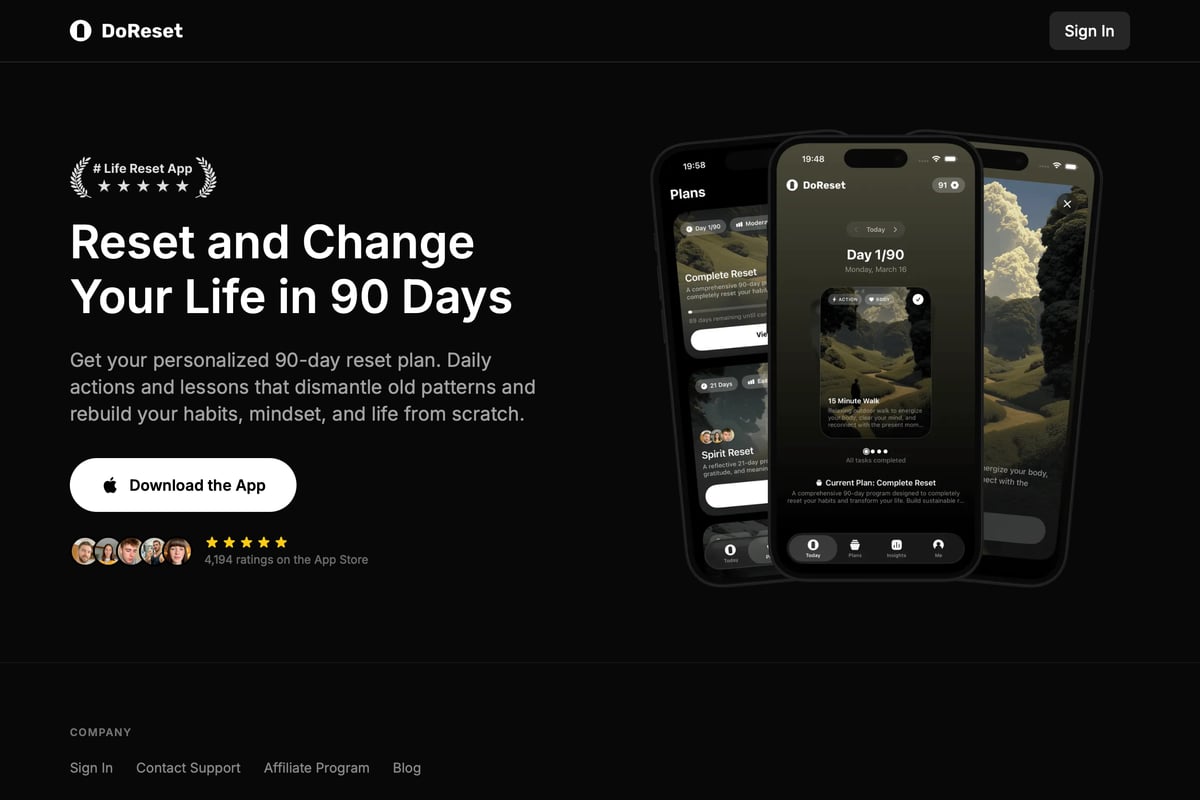
The DoReset mobile app provides exactly this kind of structure, offering personalized daily actions and lessons designed to systematically dismantle old patterns and rebuild your habits, mindset, and life from scratch over a focused 90-day period.
Accountability Makes Everything Easier
You don't have to do this alone. In fact, you probably shouldn't. Accountability dramatically increases follow-through on self improvement goals.
Options include:
- Finding an accountability partner with similar goals
- Joining a community focused on personal growth
- Working with a coach or mentor
- Using apps that track and remind you
- Sharing your journey publicly (if that motivates you)
Overcoming Common Obstacles
Let's be real. You will face challenges. That's not a sign you're failing. It's a sign you're doing something meaningful.
When You Feel Overwhelmed
Sometimes you'll look at your self improvement goals and feel paralyzed. Too many things to change. Too far to go. Not enough time or energy.
In those moments:
- Zoom in. Focus only on today, this hour, this moment.
- Choose one thing. What's the single most important action right now?
- Lower the bar. Can't do 30 minutes? Do five. Five is infinitely more than zero.
- Extend compassion. You're doing hard work. Be kind to yourself.
When Progress Feels Slow
You've been at this for weeks and barely see results. I hear you. It's discouraging. But remember: transformation isn't always linear.
Sometimes you're doing profound internal work that hasn't manifested externally yet. Trust the process. Keep showing up.
When You Experience Setbacks
You will miss days. You will make choices that don't align with your goals. You will revert to old patterns occasionally. This is completely normal and doesn't erase your progress.
What matters is what you do next:
- Acknowledge what happened without harsh judgment
- Identify what triggered the setback
- Adjust your approach based on what you learned
- Resume your commitment immediately
- Remember that one setback doesn't define your journey
Consider reading about 15 powerful self-growth goals to stay inspired during challenging times.
Measuring Progress Beyond the Obvious
Numbers tell part of the story, but not all of it. Yes, track your workouts, your savings, your reading streak. But also notice the subtle shifts.
Internal Indicators of Growth
- How you respond to stress versus how you used to
- The quality of your self-talk throughout the day
- Your capacity to sit with discomfort
- The depth of your relationships
- How quickly you recover from setbacks
- Your overall sense of wellbeing
These matter just as much as external metrics, maybe more.
Regular Reflection Practices
Build in time to assess your self improvement goals regularly:
| Frequency | Reflection Focus | Key Questions |
|---|---|---|
| Daily | Actions and mindset | What went well? What challenged me? |
| Weekly | Progress and patterns | Am I moving toward my goals? What needs adjustment? |
| Monthly | Bigger picture | What changed this month? What's my focus for next month? |
| Quarterly | Major assessment | Which goals are working? Which need to shift? |
When you plan your life with intention, these reflection points become invaluable navigation tools.
Adjusting Goals as You Evolve
Here's something many people don't realize: your self improvement goals should evolve as you do. What you needed six months ago might not be what you need now. That's not failure. That's growth.
Give yourself permission to:
- Let go of goals that no longer serve you
- Modify targets based on new information
- Add goals as new interests emerge
- Celebrate completion and set new challenges
The point isn't to achieve every goal you ever set. The point is to keep growing, keep challenging yourself, and keep becoming more aligned with who you want to be.
Setting meaningful self improvement goals is about more than checking boxes or transforming yourself into someone you're not. It's about removing what's holding you back and building a life that feels authentic and fulfilling. If you're ready to stop cycling through the same patterns and commit to real, lasting change, DoReset offers a structured 90-day reset plan with daily actions and lessons designed specifically to help you dismantle old patterns and rebuild your habits, mindset, and life from the ground up.