
Personal Growth Challenge: Transform Your Life Step-By-Step

DoReset
May 14, 2026
Starting a personal growth challenge feels like standing at the base of a mountain. You know the view from the top will be breathtaking, but the climb ahead feels overwhelming. Maybe you've tried before and stumbled. Maybe you're not sure where to begin. Here's the truth: transformation doesn't happen through a single grand gesture. It happens through small, intentional steps taken consistently over time. A personal growth challenge gives you the structure, accountability, and momentum you need to create meaningful change in your life.
Understanding What Makes a Personal Growth Challenge Effective
A personal growth challenge isn't just about setting goals and hoping for the best. It's a deliberate framework that guides you through change systematically.
The most powerful challenges combine three essential elements: clear direction, manageable daily actions, and built-in accountability. When these pieces work together, you create an environment where growth becomes inevitable rather than accidental.
Think about the last time you tried to change something significant in your life. Did you have a clear plan? Did you know exactly what to do each day? Most of us start with good intentions but without the structure needed to sustain progress. This is where a well-designed personal growth challenge makes all the difference.
The Psychology Behind Successful Challenges
Your brain craves patterns and predictability. When you commit to a structured challenge, you're working with your neurology rather than against it.
Research on the power of believing that you can improve shows that adopting a growth mindset fundamentally changes how we approach obstacles. Instead of seeing challenges as threats, we begin viewing them as opportunities to develop new capabilities.
A personal growth challenge leverages this mindset by breaking down overwhelming transformation into bite-sized pieces. Each small win reinforces your belief that change is possible, creating a positive feedback loop that sustains motivation even when things get difficult.

Designing Your Personal Growth Challenge Framework
The difference between a challenge that transforms your life and one that fizzles out within weeks comes down to intentional design. You need more than motivation. You need a system.
Choosing the Right Timeline
90 days has emerged as the sweet spot for meaningful transformation. Here's why:
- Long enough to build genuine habits and see real results
- Short enough to maintain focus without losing momentum
- Provides multiple checkpoints for adjustment and reflection
- Aligns with quarterly planning cycles many people already use
Shorter challenges (30 days) can kickstart change but often don't provide enough time for deep pattern disruption. Longer timelines (6 months or a year) can feel overwhelming and lack the urgency that drives daily action.
When you're ready to commit to structured transformation, a 90 days planner gives you the framework to track progress, identify patterns, and adjust your approach based on what's working.
Identifying Your Core Focus Areas
Trying to change everything at once guarantees you'll change nothing. Effective personal growth challenges narrow their focus to 3-5 key areas maximum.
Consider these common focus categories:
| Focus Area | Example Goals | Daily Action Types |
|---|---|---|
| Mindset | Develop resilience, reduce negative self-talk | Journaling, affirmations, meditation |
| Health | Improve energy, establish exercise routine | Movement, nutrition tracking, sleep habits |
| Relationships | Deepen connections, set boundaries | Intentional conversations, quality time |
| Skills | Learn new capabilities, advance career | Practice sessions, courses, projects |
| Environment | Create supportive spaces, reduce clutter | Organization tasks, design improvements |
Your focus areas should address the root patterns holding you back, not just surface-level symptoms. If you struggle with consistency, don't just focus on time management. Explore the underlying beliefs and habits that drive procrastination.
Building Daily Actions That Compound Over Time
The magic of a personal growth challenge happens in the daily actions. These aren't random tasks. They're carefully chosen activities that compound over time to create dramatic transformation.
The Power of Micro-Commitments
Start smaller than feels necessary. If you want to meditate daily, begin with two minutes. If you want to write, start with one paragraph. These micro-commitments remove the friction that prevents action.
Why this works:
- Removes the excuse of "not having time"
- Builds the identity of someone who follows through
- Creates immediate wins that boost confidence
- Establishes the pattern before increasing intensity
Once the habit loop is established, you can naturally expand. But the foundation must be so easy that you can't talk yourself out of it, even on your worst days. This is how you change habits in a sustainable way.
Creating Your Action Blueprint
Each day of your personal growth challenge should have clear, specific actions. Vague intentions like "work on mindset" or "be healthier" don't translate into behavior change. Specific actions like "write three gratitudes" or "walk for 15 minutes" do.
Your action blueprint should include:
- Morning rituals that set your mindset for the day
- Core actions directly tied to your focus areas
- Reflection practices that build self-awareness
- Accountability checkpoints where you track progress
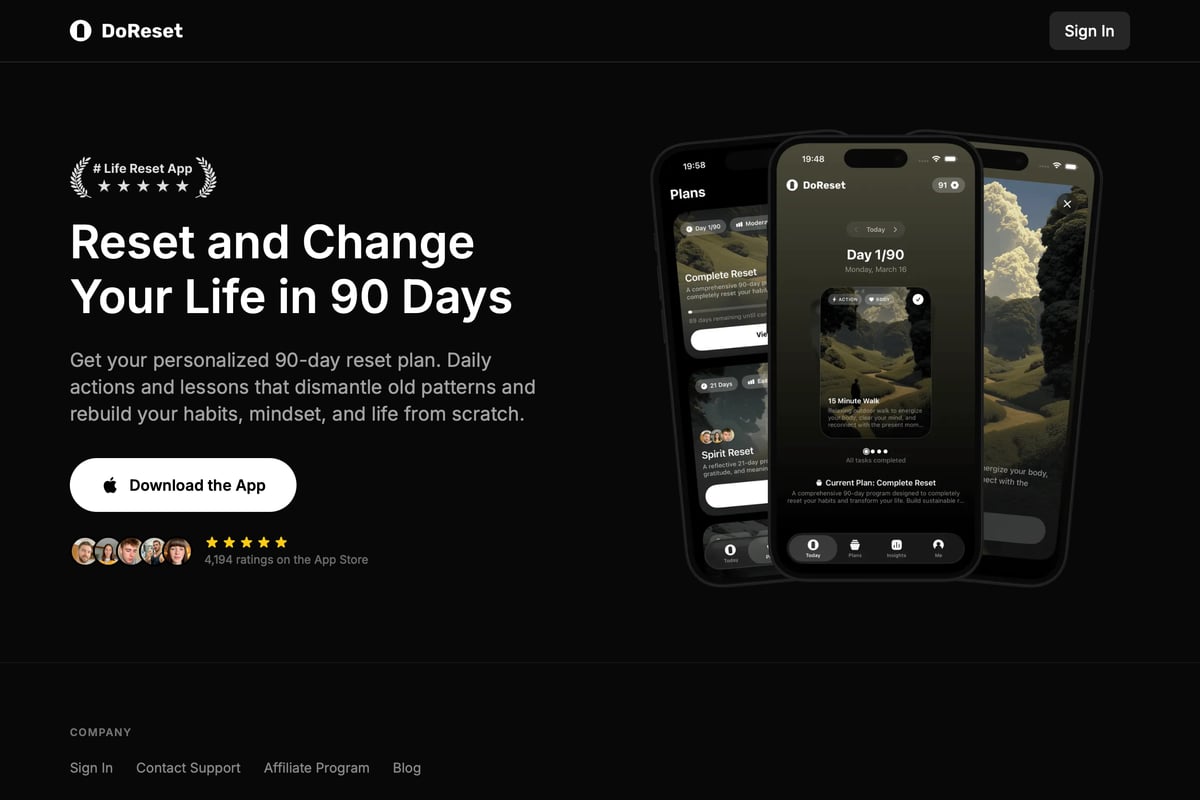
The DoReset mobile app provides a personalized 90-day reset plan that delivers exactly these kinds of daily actions tailored to your specific transformation goals, removing the guesswork and giving you a clear path forward each day.

Navigating the Predictable Obstacles
Every personal growth challenge follows a predictable emotional arc. Knowing what's coming helps you prepare rather than panic when motivation inevitably wavers.
The Enthusiasm Drop (Days 7-14)
The initial excitement fades around the second week. This is completely normal and doesn't mean you've failed or chosen the wrong challenge.
What's happening: Your brain is resisting the new pattern and trying to pull you back to familiar comfort zones, even if those zones weren't serving you.
How to navigate it:
- Expect this dip and don't let it surprise you
- Focus on showing up, even if imperfectly
- Reconnect with your "why" through journaling or visualization
- Reach out to accountability partners or communities
- Review your early wins to remember progress is happening
This phase tests your commitment. Those who push through emerge with genuine momentum. Understanding the transition from transformation helps you recognize this as a normal part of the journey rather than a personal failure.
The Plateau Period (Days 30-45)
You're doing the work, but results feel stagnant. Growth happens beneath the surface before it becomes visible, like a bamboo plant building its root system before shooting upward.
During plateaus, shift your focus from outcomes to process. Celebrate showing up consistently. Trust that invisible changes are happening in your neural pathways, belief systems, and behavioral patterns.
The Integration Challenge (Days 60-75)
As you approach the end of your challenge, anxiety about maintaining changes can surface. You wonder: "What happens when this structure ends?"
This is actually the perfect time to begin planning your next chapter. Personal development isn't a destination. It's a continuous practice of personal growth and development that evolves as you do.
Measuring Progress Beyond the Obvious Metrics
Numbers tell part of the story, but they miss the deeper transformation happening within you. A complete personal growth challenge includes both quantitative and qualitative measurements.
Quantitative Tracking
These are your objective data points:
- Completion rate: Percentage of daily actions completed
- Streak days: Longest consecutive period of consistency
- Habit establishment: New behaviors performed automatically
- Goal achievement: Specific milestones reached
- Time invested: Hours dedicated to growth activities
Track these metrics, but don't obsess over them. They provide useful feedback, not your worth as a person.
Qualitative Assessments
The real transformation shows up in subtler ways:
| Assessment Area | Questions to Ask | How to Track |
|---|---|---|
| Self-awareness | How do I respond to stress differently now? | Weekly journal reflections |
| Relationships | What patterns have shifted in my connections? | Monthly relationship reviews |
| Emotional regulation | How quickly do I return to center after upset? | Mood tracking and notes |
| Decision-making | Am I making choices aligned with my values? | Decision logs and reviews |
| Energy levels | When do I feel most alive and engaged? | Daily energy ratings and patterns |
Consider recording a video or audio journal entry at the start, middle, and end of your personal growth challenge. Hearing yourself talk about your experiences, fears, and hopes provides powerful perspective on how far you've come.
Creating Accountability Systems That Actually Work
Willpower is a myth. You don't need more discipline. You need better systems. Accountability transforms abstract intentions into concrete commitments.
Types of Accountability
Solo accountability involves creating personal contracts, tracking systems, and self-reflection practices. This works well for highly self-motivated individuals but can falter when life gets chaotic.
Partnership accountability means finding one person committed to growth who checks in regularly. You share progress, challenges, and insights. The relationship becomes mutually supportive rather than one-sided.
Community accountability happens in groups focused on personal development. Seeing others navigate similar challenges normalizes struggles and celebrates wins together.
Structured program accountability provides professional guidance and systematic check-ins. This often delivers the highest success rates because someone else holds the space for your growth.
Building Your Accountability Framework
Choose accountability methods that match your personality and circumstances. Extroverts might thrive in group challenges while introverts prefer one-on-one partnerships.
Whatever you choose, establish clear expectations:
- How often will you check in?
- What specifically will you share?
- How will you support each other?
- What happens if someone misses commitments?
The goal isn't judgment. It's gentle truth-telling and consistent encouragement. When you're working to rebuild your life, having someone witness your journey makes the invisible progress feel real.

Integrating Lessons Into Lasting Change
The final phase of your personal growth challenge is actually the most important: integration. This is where temporary actions become permanent patterns.
The Transition Window (Final 10 Days)
As your challenge nears completion, begin asking different questions:
- Which practices have become non-negotiable parts of my routine?
- What actions still feel like effort versus naturally embedded?
- Where do I want to deepen versus maintain current progress?
- What new areas are calling for attention?
Use this window to design your post-challenge approach. Some people immediately start a new challenge in different focus areas. Others extend their current challenge with evolved goals. Many cycle between intensive growth periods and integration periods.
Building Your Sustainable Practice
Personal growth challenges work best as part of a larger rhythm, not as isolated events. Consider creating an annual pattern:
- Quarter 1: Intensive personal growth challenge focused on mindset and habits
- Quarter 2: Integration and maintenance with light accountability
- Quarter 3: New challenge targeting skills or relationships
- Quarter 4: Reflection, planning, and renewal
This approach prevents burnout while ensuring you're always growing. The structure of resetting your mindset every few months keeps you from settling into complacency.
Adapting Your Challenge When Life Happens
Perfect execution is impossible and unnecessary. Life will interrupt your personal growth challenge. The question isn't whether obstacles will appear but how you'll respond when they do.
The Flexibility Principle
Rigid adherence to a challenge can create shame spirals when you inevitably miss days or face unexpected circumstances. Build flexibility into your framework from the start.
Options for maintaining momentum during disruptions:
- Define "minimum viable days" where you complete just one core action
- Create a "pause protocol" for legitimate emergencies (illness, crisis, major life events)
- Practice self-compassion rather than self-criticism when you stumble
- Focus on the trend line rather than individual data points
Missing a day or even a week doesn't erase your progress. The neural pathways you've built remain. The self-awareness you've gained persists. You simply pick up where you left off without drama or punishment.
Course-Correcting Without Starting Over
Sometimes you realize partway through that your challenge needs adjustment. Maybe your daily actions aren't aligned with your real goals. Maybe you chose too many focus areas. Maybe your schedule changed dramatically.
Adjust rather than abandon. Take a day for reflection. Identify what's working and what isn't. Make targeted tweaks to your action blueprint. This iterative approach mirrors how actual growth happens - through experimentation, feedback, and refinement.
When you're committed to truly changing your life, flexibility becomes strength, not weakness. The goal is transformation, not perfection.
Common Personal Growth Challenge Pitfalls
Learning from others' mistakes saves time and heartache. These patterns derail even well-intentioned challenges.
The Ambition Trap
Setting goals that require complete life overhauls guarantees overwhelm. Wanting to meditate for an hour, exercise twice daily, read three books monthly, learn a language, and master a new skill simultaneously sounds inspiring but creates paralysis.
The fix: Choose one primary focus with two supporting areas maximum. Go deep rather than wide. True transformation in one area naturally influences others.
The Comparison Spiral
Seeing others' highlight reels on social media makes your behind-the-scenes struggle feel inadequate. Remember: you're comparing your chapter three to someone else's chapter twenty.
The fix: Curate your inputs carefully. Follow accounts that inspire rather than discourage. Focus on your own progress metrics. Consider a social media break during intense growth periods.
The "All or Nothing" Mindset
Believing that missing one day ruins everything leads to abandoning challenges entirely. This black-and-white thinking sabotages long-term success.
The fix: Embrace the "never miss twice" rule. If you skip a day, ensure you show up the next day no matter what. Progress isn't linear, and perfection isn't the goal.
The Isolation Error
Attempting transformation alone when you're wired for connection creates unnecessary struggle. Humans are social creatures who thrive with support.
The fix: Share your challenge with at least one trusted person. Join a community focused on similar goals. Consider working with a personal growth coach who can provide expert guidance and accountability.
Celebrating Milestones and Honoring Progress
Growth deserves recognition. Celebration isn't frivolous. It's neurologically essential for sustaining motivation and reinforcing new patterns.
Creating Celebration Rituals
Build in specific moments to acknowledge progress throughout your personal growth challenge:
Weekly wins review - Every seven days, write down three victories, no matter how small. Shared a difficult truth in a relationship? Win. Completed all daily actions for five days? Win. Chose a supportive thought over a critical one? Absolutely a win.
Monthly milestone markers - At the 30 and 60-day points, do something special that honors your commitment. This might be a favorite meal, a day in nature, buying yourself something meaningful, or simply taking time to reflect on how far you've come.
Completion celebration - When you finish your 90-day challenge, mark the occasion intentionally. Share your journey with your community. Write a letter to your future self. Create a visual representation of your transformation.
These rituals aren't about external rewards. They're about acknowledging the courage it takes to change your mindset and rebuild patterns that no longer serve you.
Documenting Your Transformation Story
Your personal growth challenge is a story worth capturing. Future you will benefit from understanding how current you navigated this journey.
Consider maintaining a transformation journal where you record:
- Specific challenges you faced and how you worked through them
- Surprising insights that emerged during the process
- Quotes, lessons, or resources that particularly resonated
- Moments when you almost quit but chose to continue
- Evidence of changes in your thoughts, feelings, and behaviors
This documentation serves multiple purposes. It provides motivation during difficult moments. It offers a roadmap if you undertake future challenges. Most importantly, it validates that your experience and growth are real and significant.
A personal growth challenge isn't about becoming someone different. It's about becoming more fully yourself by releasing the patterns, beliefs, and habits that obscure your authentic potential. The journey requires courage, consistency, and compassion - for yourself and the process. When you're ready to commit to structured, meaningful transformation, DoReset provides a personalized 90-day plan with daily actions and lessons designed to help you dismantle what's not working and rebuild from a foundation of clarity and intention.