
Professional Discipline: Build Lasting Success Daily

Doreset
March 28, 2026
We've all experienced that Monday morning moment when motivation feels impossibly distant and our best intentions seem to evaporate. You're not alone in this struggle. The gap between who we are and who we want to become often feels overwhelming, but that's exactly where professional discipline becomes your most valuable ally. It's not about harsh self-criticism or rigid perfection. Rather, it's the compassionate, consistent practice of showing up for yourself and your goals, even when everything inside you wants to hit the snooze button.
Understanding Professional Discipline Beyond Willpower
Professional discipline isn't about forcing yourself into an uncomfortable mold or becoming someone you're not. It's fundamentally different from motivation, which comes and goes like waves on a shore.
Think of professional discipline as the infrastructure of success. While motivation might get you started, discipline keeps you going when the initial excitement fades. This is the quiet strength that separates those who achieve their goals from those who perpetually restart.
The Science Behind Sustainable Discipline
Research in behavioral psychology shows that professional discipline relies on systems, not just personal strength. When we understand this, we can stop blaming ourselves for past failures and start building better frameworks.
Key components of lasting discipline include:
- Environmental design that removes friction from desired behaviors
- Habit stacking that connects new actions to existing routines
- Progress tracking that provides tangible evidence of growth
- Recovery protocols for when you stumble (because you will)
Your brain responds to consistency by creating neural pathways that make disciplined actions progressively easier. This neuroplasticity means that what feels impossibly hard today becomes automatic tomorrow, but only if you stick with it long enough.

Building Your Foundation: Small Steps That Transform
The biggest mistake people make with professional discipline is starting too big. We've seen it countless times: someone decides to completely overhaul their life overnight, only to crash within a week.
Start where you are, not where you think you should be. If you can only commit to five minutes of focused work, that's your starting point. Five minutes of consistent action beats an hour of sporadic effort every single time.
The Two-Minute Rule in Professional Practice
When rebuilding your life feels overwhelming, break everything down into actions that take two minutes or less. This isn't about staying small forever; it's about building momentum that carries you forward.
- Choose one professional behavior you want to develop
- Reduce it to a two-minute version (example: "exercise 30 minutes" becomes "put on workout clothes")
- Do only the two-minute version for one week
- Gradually expand once the behavior feels automatic
- Stack new habits onto this foundation
| Starting Point | Two-Minute Version | Expanded Practice |
|---|---|---|
| Write daily reports | Open document and write one sentence | Complete full report with analysis |
| Learn new skills | Read one paragraph of learning material | Study for 25-minute focused sessions |
| Network professionally | Send one genuine message | Attend events and build relationships |
This approach honors where you are while creating the pathway to where you want to go. It's compassionate and effective.
Navigating the Inevitable Setbacks
Let's be honest about something important: you will have days when your professional discipline completely falls apart. You'll skip the important task, choose the easy path, or abandon your commitments entirely.
This doesn't mean you've failed. It means you're human.
Developing a Reset Mindset
The difference between those who succeed long-term and those who give up lies in how they handle these moments. Professional discipline includes the ability to reset your mindset after setbacks.
Your recovery protocol should include:
- Acknowledging what happened without harsh self-judgment
- Identifying the specific trigger or circumstance
- Adjusting your system to prevent similar situations
- Returning to your practice immediately, not "starting Monday"
When you miss a day, you haven't broken your streak-you've simply encountered data about your system that needs refinement. This perspective shift transforms failure into feedback.
Creating Accountability Structures That Support You
Professional discipline doesn't mean doing everything alone. In fact, trying to rely solely on personal willpower is one of the fastest paths to burnout.
Building external accountability creates safety nets for the moments when your internal motivation wavers. These structures catch you before small slips become major derailments.
Types of Accountability That Actually Work
Different people need different support systems. Some thrive with public commitment, while others need private check-ins. Experiment to find what resonates with you.
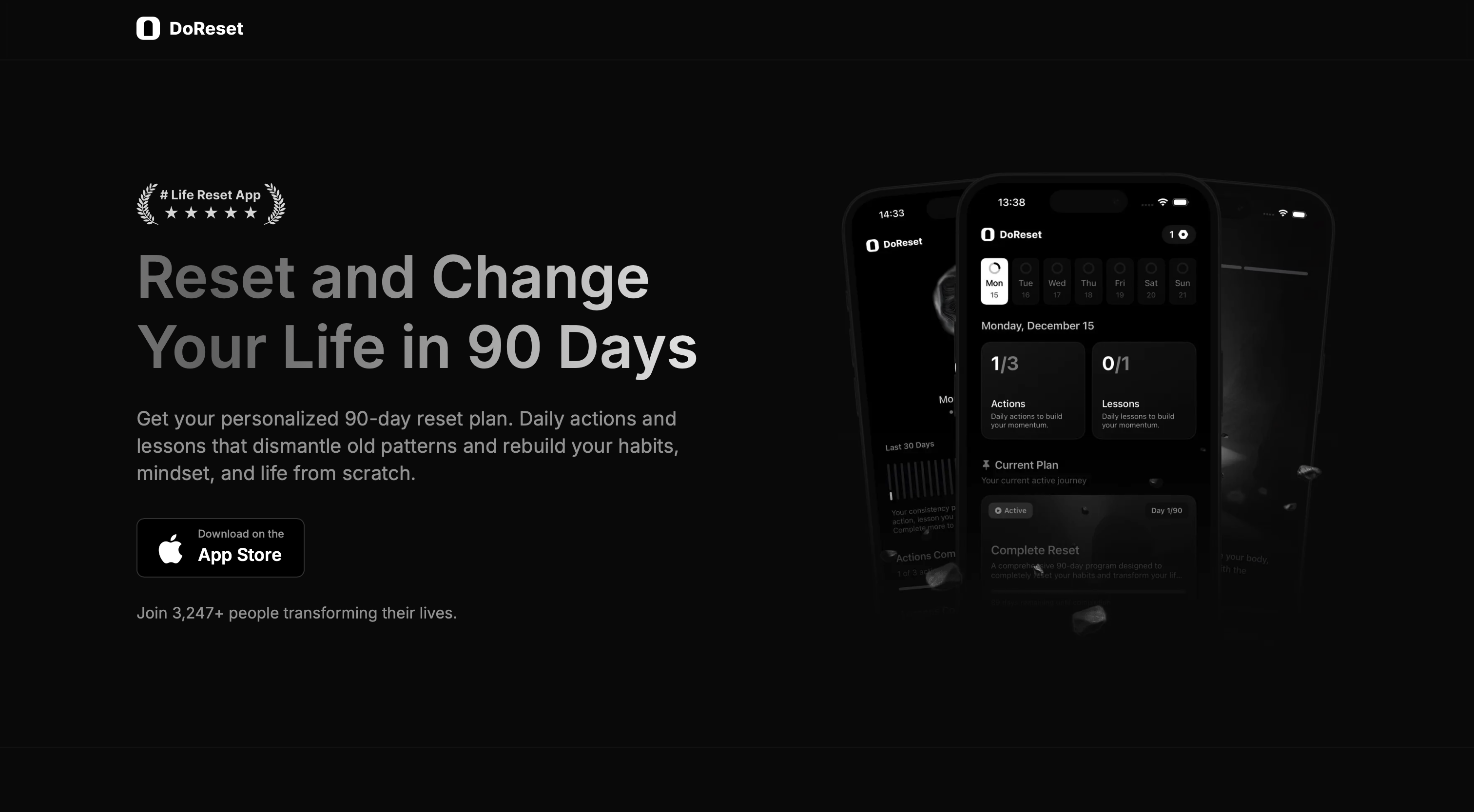
The DoReset mobile app provides personalized daily actions and lessons that create consistent accountability without overwhelming pressure. Its 90-day structure gives you enough time to build genuine habits while maintaining focus on your transformation journey.
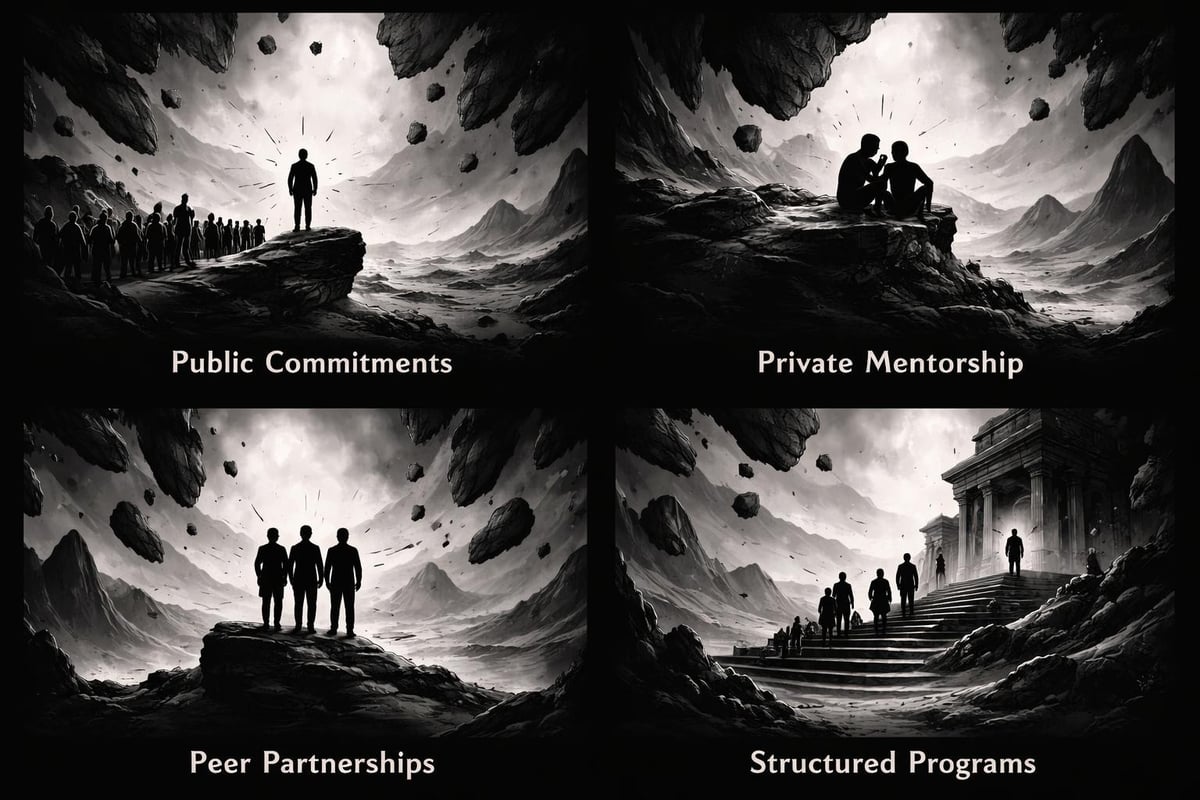
Consider these accountability options:
| Accountability Type | Best For | Implementation |
|---|---|---|
| Peer partnership | Those who need mutual support | Weekly check-ins with someone pursuing similar goals |
| Professional coaching | Those investing in guidance | Regular sessions with structured progress reviews |
| Public commitment | Those motivated by social pressure | Sharing goals and updates on professional platforms |
| Tracking systems | Data-driven individuals | Apps, journals, or spreadsheets documenting daily actions |
The Role of Identity in Maintaining Discipline
Professional discipline becomes significantly easier when it aligns with your sense of self. When you see yourself as "someone who shows up," showing up becomes natural rather than forced.
This identity shift doesn't happen overnight. It emerges gradually through repeated action and conscious self-talk.
Rewriting Your Internal Narrative
Pay attention to how you describe yourself, both internally and to others. These descriptions shape your behavior more powerfully than you might realize.
Instead of "I'm trying to be more disciplined," consider "I'm someone who honors commitments." Instead of "I should exercise more," try "I'm an active person." These subtle language changes signal to your brain who you're becoming.
The journey of changing your mindset requires patience with yourself. You're not fixing something broken; you're evolving into a new version of yourself.
Managing Energy: The Missing Piece
Here's something rarely discussed about professional discipline: it requires energy, and energy is a finite resource that needs intentional management.
You can have perfect systems and strong identity alignment, but if you're constantly depleted, discipline becomes an uphill battle you can't win.
Strategic Energy Allocation
Professional discipline means being selective about where you invest your limited energy reserves. Not everything deserves your full effort, and recognizing this is wisdom, not weakness.
Priority matrix for energy investment:
- High-impact professional tasks: Maximum focus during peak energy hours
- Routine responsibilities: Automated systems and templates
- Low-value activities: Delegate, eliminate, or do during low-energy periods
- Recovery activities: Non-negotiable protected time
When you plan your day around your natural energy rhythms rather than fighting against them, discipline requires less willpower. Morning people should tackle challenging work early; night owls should protect their evening focus time.

Building Professional Discipline Across Different Life Areas
The beautiful thing about developing professional discipline in one area is that it often spreads to others. The confidence and competence you build become transferable skills.
However, trying to transform everything simultaneously usually backfires. Sequential development works better than parallel overhaul.
The Ripple Effect Strategy
Start with your highest-leverage area-the one that, if improved, would positively impact multiple other areas of your life. For many people, this is sleep, exercise, or morning routines.
As professional discipline takes root in this foundation area, you'll notice improvements bleeding into other domains naturally. Your improved sleep makes work focus easier. Your consistent exercise builds confidence that transfers to career challenges.
This is how lifelong lessons are built-not through dramatic overhauls, but through patient, consistent practice in key areas that create cascading benefits.
The Compassionate Approach to Professional Standards
Let's address a common fear: that professional discipline means becoming rigid, joyless, or losing spontaneity. This misconception keeps many people from even attempting to build better habits.
True professional discipline actually creates more freedom, not less. When your important work gets done consistently, you have genuine space for play, rest, and spontaneity without guilt or anxiety.
Flexibility Within Structure
The goal isn't robotic perfection. It's reliable consistency with room for human variation.
Build flexibility into your systems from the start. If your discipline practice requires perfect conditions, it will crumble the moment life gets messy (which it always does).
Flexible discipline includes:
- Alternative options for different circumstances (home workout vs. gym)
- Permission to modify without abandoning (15 minutes instead of 30)
- Scheduled breaks and recovery periods
- Adjustment protocols when life changes significantly
This approach honors both your ambitions and your humanity. You can maintain professional discipline while still being kind to yourself.
Measuring Progress Without Obsession
What gets measured gets managed, but obsessive tracking can become its own problem. Finding the balance between accountability and anxiety requires thoughtfulness.
Professional discipline benefits from some measurement, but not everything meaningful can be quantified. Sometimes progress looks like handling stress better or feeling more aligned with your values.
Meaningful Metrics vs. Vanity Metrics
Focus on tracking inputs (actions you control) more than outputs (results that depend on many factors). You control whether you do the work; you don't always control the immediate outcome.
| Input Metrics (Control) | Output Metrics (Partial Control) |
|---|---|
| Days you followed your morning routine | Career promotions or raises |
| Hours of focused professional development | External recognition or awards |
| Number of meaningful professional connections made | Immediate business results |
| Consistency with key daily actions | Long-term life transformation |
Track enough to maintain accountability, but not so much that tracking becomes a substitute for action. Your discipline should serve your life, not the other way around.
Sustaining Discipline During Major Life Transitions
Life changes-job shifts, relocations, relationship transitions, health challenges-test professional discipline like nothing else. Your carefully built systems can feel completely irrelevant when your circumstances transform.
This is when many people abandon their discipline entirely, thinking they'll "restart when things settle down." But life rarely fully settles, and waiting for perfect conditions means indefinitely postponing your growth.
Maintaining Core Practices Through Chaos
Instead of abandoning everything, identify your absolute non-negotiables-the two or three practices that keep you grounded regardless of circumstances.
During turbulent times, permission to let go of everything except these core practices isn't failure. It's strategic adaptation. You're maintaining the thread of discipline that you can rebuild from once stability returns.
When you're ready to change your life after a major transition, you'll restart from a foundation rather than from zero.
Professional discipline is the bridge between your current reality and your desired future, built one consistent action at a time. It's not about perfection or harsh self-judgment, but about showing up for yourself with compassion and commitment. If you're ready to build this foundation with structured support and daily guidance, DoReset offers a personalized 90-day plan that helps you dismantle old patterns and rebuild sustainable habits one day at a time. Your transformation doesn't require dramatic overnight changes-just the courage to begin and the discipline to continue.