
Personal Growth Therapy: Your Path to Lasting Change

DoReset
May 11, 2026
You've likely felt it before-that nagging sense that you're capable of more, that something needs to shift, or that old patterns keep holding you back from the life you envision. Personal growth therapy offers a pathway to address these feelings, not by fixing what's "broken," but by nurturing what's ready to grow. Unlike traditional therapeutic approaches that primarily focus on treating mental illness or resolving past trauma, personal growth therapy centers on helping you expand your potential, develop deeper self-awareness, and create intentional change in your life.
Understanding Personal Growth Therapy
Personal growth therapy represents a unique intersection between mental health support and self-development work. This approach recognizes that therapy doesn't need to wait for crisis-it can be a proactive choice for anyone seeking to live more authentically and purposefully.
What Makes It Different
The foundation of personal growth therapy lies in its future-oriented, strength-based perspective. Rather than dwelling exclusively on what's wrong, therapists working in this modality help you explore what's possible. They partner with you to identify limiting beliefs, uncover hidden strengths, and develop the skills needed for sustainable transformation.
This therapeutic approach acknowledges that personal development isn't a linear process. You might experience breakthroughs followed by plateaus, moments of clarity alongside periods of confusion. That's not failure-that's growth in its most authentic form.

Core Elements That Drive Transformation
Personal growth therapy incorporates several key components that work together to facilitate meaningful change. Understanding these elements helps you approach your own development journey with clarity and intention.
Self-Awareness as Foundation
Everything begins with awareness. You can't change what you don't recognize. Therapists guide you through reflective processes that illuminate your patterns, triggers, values, and unconscious motivations.
- Identifying automatic thoughts and behavioral responses
- Exploring the origins of your beliefs about yourself and the world
- Recognizing how past experiences shape present choices
- Understanding the gap between who you are and who you want to become
Emotional Intelligence Development
Personal growth therapy strengthens your ability to understand, process, and regulate emotions. This isn't about suppressing feelings-it's about developing a more sophisticated relationship with your emotional landscape.
You learn to notice emotions as they arise, understand what they're communicating, and choose responses that align with your values rather than reacting from habit. This emotional strengthening process creates resilience that supports you through life's inevitable challenges.
Behavioral Pattern Recognition
Many of us repeat the same patterns without realizing it. We choose similar relationships, encounter the same workplace conflicts, or self-sabotage in predictable ways. Personal growth therapy helps you see these patterns clearly so you can interrupt and redesign them.
| Pattern Type | Common Examples | Growth Opportunity |
|---|---|---|
| Relationship | Attraction to emotionally unavailable partners | Developing secure attachment style |
| Career | Avoiding leadership opportunities | Building confidence and visibility |
| Self-Care | Neglecting needs until burnout occurs | Establishing sustainable boundaries |
| Communication | Difficulty expressing needs directly | Developing assertiveness skills |
The Therapeutic Relationship as Catalyst
The connection between you and your therapist serves as more than background-it's often the most powerful vehicle for change. In personal growth therapy, this relationship provides a safe space to experiment with new ways of being.
Your therapist offers what you might not have received consistently before: unconditional positive regard, genuine empathy, and authentic presence. Within this relationship, you can practice vulnerability, receive honest feedback, and experience being fully seen without judgment.
This therapeutic alliance also mirrors patterns that show up in other relationships. Do you minimize your needs? Seek excessive approval? Withdraw when emotions intensify? The therapeutic space becomes a laboratory where you can recognize these tendencies and develop healthier alternatives.
Working Through Resistance
Growth isn't always comfortable. Personal growth therapy acknowledges that part of you might resist change, even when you consciously desire it. Old patterns, however limiting, feel familiar and safe.
A skilled therapist helps you explore this resistance with curiosity rather than judgment. What is this hesitation protecting you from? What would you have to give up to grow? These questions often reveal the deeper work that needs attention.
Practical Approaches in Personal Growth Work
Personal growth therapy draws from various evidence-based modalities, each offering unique tools for transformation. Therapists often integrate multiple approaches to match your specific needs and goals.
Cognitive-Behavioral Frameworks
These methods help you identify thought patterns that limit your potential and develop more balanced, realistic thinking. You learn to question automatic assumptions and create cognitive flexibility.
For instance, if you habitually think "I'm not capable enough," you'd examine the evidence for and against this belief, consider alternative perspectives, and practice more accurate self-assessment. This process doesn't involve forced positive thinking-it's about seeing reality more clearly.
Existential and Humanistic Perspectives
Existential approaches address fundamental questions about meaning, purpose, freedom, and responsibility. This philosophical dimension of personal growth therapy helps you examine how you want to live and what values you want to embody.
You might explore questions like:
- What gives my life meaning?
- How do I want to be remembered?
- What am I avoiding through my current choices?
- Where am I giving away my power or responsibility?
These reflections often catalyze profound shifts in perspective and priority.

Narrative and Story-Based Methods
Your life story matters. The way you narrate your experiences shapes how you understand yourself and what you believe is possible. Foundational story work helps you examine the stories you've inherited and created, then consciously revise narratives that no longer serve you.
This might involve reframing past "failures" as learning experiences, recognizing your resilience in surviving difficult circumstances, or claiming aspects of your identity you've previously denied or minimized.
The Role of Daily Practice in Sustained Growth
Therapy sessions provide insight and direction, but transformation happens in the daily choices you make between appointments. Personal growth therapy emphasizes practical application-taking what you discover in session and integrating it into your everyday life.
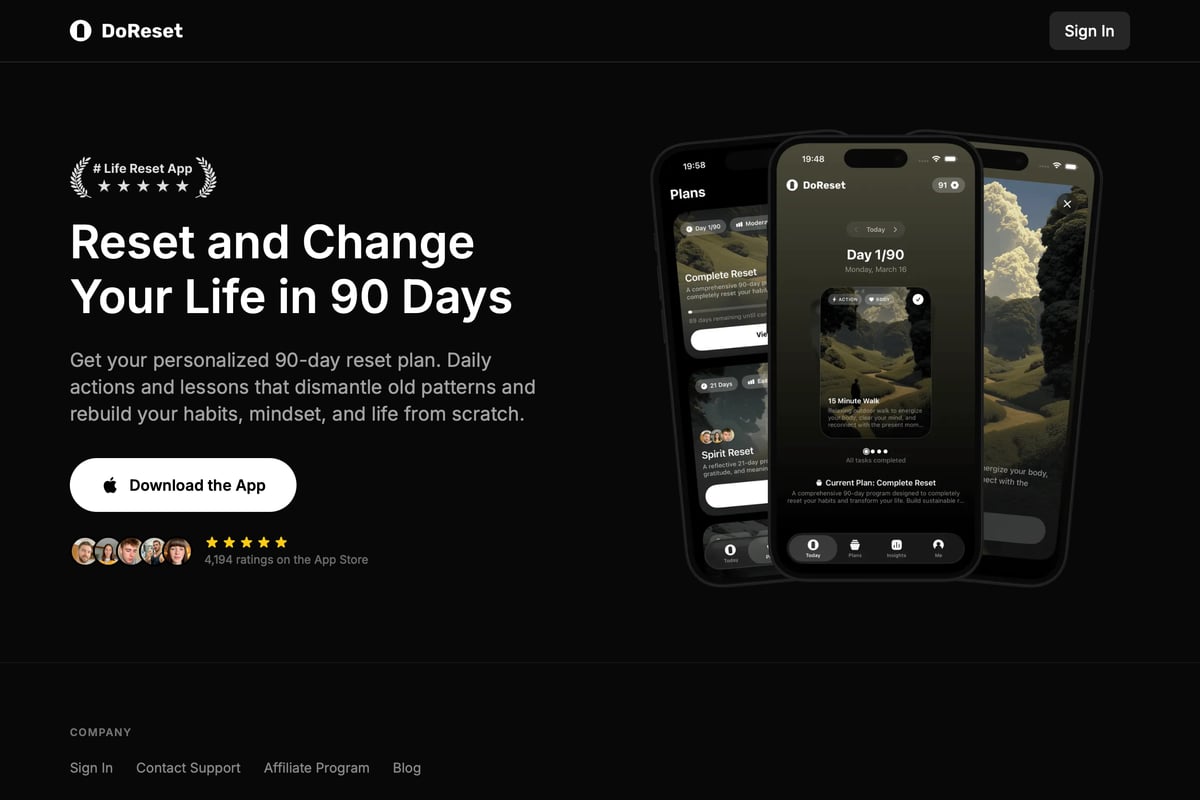
This is where structured support makes a significant difference. Having a framework for daily actions helps you maintain momentum and build new patterns consistently. The DoReset mobile app offers exactly this kind of scaffolding-a personalized 90-day reset plan with daily actions and lessons that help you dismantle old patterns and rebuild your habits, mindset, and life from scratch. This combination of therapeutic insight and daily practice creates powerful synergy for lasting change.
Building Sustainable Habits
Personal growth therapy recognizes that willpower alone rarely creates lasting change. Instead, you need to design your environment and routines to support your development goals. Your therapist might help you:
- Identify keystone habits that create cascading positive effects
- Design implementation intentions that specify when, where, and how you'll practice new behaviors
- Establish accountability systems that support consistency
- Develop self-compassion for inevitable setbacks
- Create measurement systems to track meaningful progress
Addressing Common Challenges in Growth Work
The personal growth journey isn't always smooth. Understanding common obstacles helps you navigate them with greater ease and less discouragement.
The Plateau Effect
After initial progress, many people experience periods where growth seems to stall. Nothing's wrong-you're often consolidating gains and preparing for the next developmental leap. Personal growth therapy helps you recognize these plateaus as natural parts of the process rather than signs of failure.
During these times, your therapist might encourage you to:
- Focus on maintaining progress rather than seeking breakthrough
- Explore areas of your life you haven't yet addressed
- Deepen practices that are already working
- Rest and replenish your resources for the next growth phase
Identity Disruption
As you change, your sense of who you are naturally shifts. This can feel unsettling, even when the changes are positive. You might lose interest in relationships or activities that once mattered. People who've known you in certain ways might resist your evolution.
Personal growth therapy provides support as you navigate this identity transition, helping you grieve what you're releasing while embracing what's emerging. This process connects deeply with understanding transition and transformation as distinct but related experiences.
Relationship Impacts
Your growth inevitably affects your relationships. As you develop stronger boundaries, communicate more directly, or shift your priorities, the people around you must adjust. Some will celebrate your development; others might feel threatened by it.
Therapists help you anticipate these dynamics and develop strategies for maintaining important relationships while honoring your growth. Sometimes this means educating loved ones about your changes. Other times it requires accepting that not everyone will come with you on this journey.
Measuring Progress Beyond Symptoms
Traditional therapy often measures success by symptom reduction. Personal growth therapy requires different metrics because the goal isn't primarily about feeling less bad-it's about living more fully.
| Growth Dimension | Possible Indicators |
|---|---|
| Self-Awareness | Noticing patterns in real-time; understanding motivations; recognizing triggers earlier |
| Emotional Regulation | Shorter duration of emotional reactivity; wider range of emotional expression; self-soothing capacity |
| Relationship Quality | Greater intimacy; more authentic communication; healthier conflict resolution |
| Values Alignment | Decisions increasingly reflect stated values; reduced internal conflict; greater integrity |
| Life Satisfaction | Increased engagement; deeper sense of purpose; more moments of contentment |
You might also notice subtler shifts: feeling more at home in your own skin, responding to challenges with curiosity instead of defensiveness, or experiencing quiet confidence that doesn't need external validation.
Integrating Resources Beyond the Therapy Room
Personal growth therapy often incorporates supplementary resources that extend learning beyond sessions. This might include bibliotherapy, journaling assignments, mindfulness practices, or creative expression.
Your therapist might recommend specific books, podcasts, or courses that complement your therapeutic work. Curated reading resources can provide additional perspectives and tools for your development journey.
Some people benefit from combining individual therapy with group work, workshops, or online self-development courses that address specific skill areas. The key is finding resources that resonate with your learning style and support your unique goals.

When Personal Growth Therapy Is Right for You
This approach works beautifully for people who aren't in crisis but recognize they're not living to their full potential. You might be a good candidate if you:
- Feel stuck in patterns you want to change but haven't been able to shift alone
- Want to develop greater self-awareness and emotional intelligence
- Seek to align your daily life more closely with your values
- Desire support in navigating a major life transition
- Want to explore existential questions about meaning and purpose
- Recognize you're ready to invest in your own development
Personal growth therapy complements other forms of support you might be receiving. Many people work with both a traditional therapist for mental health maintenance and a growth-oriented therapist for development work. Others find that personal growth therapy addresses both dimensions simultaneously.
Creating Your Personal Growth Framework
While your therapist provides guidance, you remain the expert on your own life. Personal growth therapy emphasizes collaboration-you and your therapist working together to design approaches that fit your specific context, values, and goals.
This might involve:
- Establishing clear development objectives for different life areas
- Creating a personal growth and development plan with concrete milestones
- Identifying which therapeutic modalities resonate most with you
- Determining the right session frequency and duration for your needs
- Building systems for applying insights outside of therapy
The 90-Day Reset Approach
Many people find that focused, time-bound development periods create effective structure for growth. A 90-day framework offers enough time to build new neural pathways and establish habits while maintaining motivation through visible progress points.
This approach aligns with how our brains actually change. Neuroplasticity research shows that consistent practice over approximately three months can create lasting behavioral and cognitive shifts. Whether you're rebuilding your life after a major setback or simply seeking to reset your mindset, this timeframe provides a realistic container for transformation.
The Distinction Between Therapy and Personal Growth
It's worth exploring the nuanced relationship between therapy and personal growth. While they overlap significantly, they operate from different starting assumptions.
Traditional therapy often begins with a diagnosis and treatment plan aimed at reducing symptoms or resolving specific problems. Personal growth therapy starts with your vision for who you want to become and what you want to create.
Both are valuable. Sometimes you need to address acute mental health concerns before focusing on growth. Other times, pursuing growth naturally resolves underlying issues as you develop new capacities and perspectives.
The most important factor isn't which label applies to your work-it's whether the approach helps you move toward the life you want to live.
Finding the Right Therapist for Growth Work
Not every therapist specializes in personal growth work. When seeking support, look for professionals who:
- Ask about your aspirations, not just your problems
- View you as capable and resourceful
- Demonstrate genuine curiosity about your unique path
- Offer concrete tools and practices alongside insight
- Support your autonomy in making decisions
- Have done their own significant personal growth work
The therapeutic relationship matters more than any specific credential or modality. Trust your instincts about fit. A therapist who's brilliant on paper but doesn't resonate with you won't serve your growth as well as someone you genuinely connect with.
Many people interview several therapists before choosing one. This isn't excessive-it's wise. You're investing time, energy, and resources in this relationship. Finding the right match matters.
Personal growth therapy offers a compassionate, structured approach to becoming who you're meant to be. By combining professional support with daily practice, you create conditions for sustainable transformation rather than temporary change. DoReset provides the framework to translate therapeutic insights into daily actions through personalized 90-day reset plans, helping you dismantle old patterns and rebuild your habits, mindset, and life with consistency and care.